
Trying to keep your garden colorful from late spring right through early fall? It’s not always easy! So many flower beds just fizzle out by midsummer, but perennial flowers that bloom all summer are a game changer. These plants that flower all summer come back every year, reducing maintenance while providing a constant display.
If you are looking for the longest flowering perennials, the trick is picking varieties that suit your garden’s light and soil. For those with bright spaces, full sun flowering plants and full sun perennial shrubs provide structure and vibrant color. You can even incorporate perennial wildflowers for a more natural look that lasts.
Whether you need tall perennial flowers that bloom all summer to add height or specific August perennials to bridge the gap into autumn, there are plenty of late summer flowering perennials to choose from. By mixing and matching sun-lovers with shade-tolerant varieties, you can keep the color show going all summer long.
1) Black-Eyed Susan (Rudbeckia hirta)
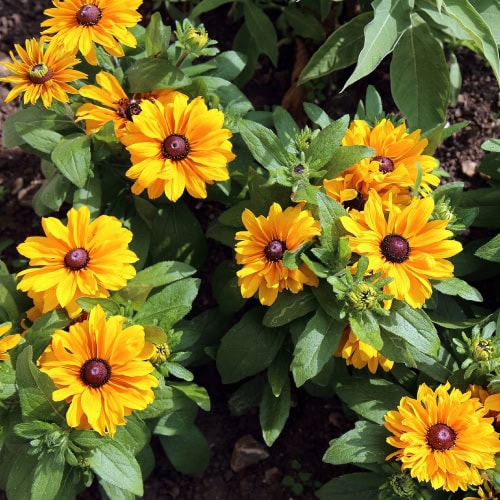
Black-Eyed Susans are those cheerful golden-yellow flowers with dark centers that just seem to keep going from midsummer to fall. These hardy perennials bloom from June right up to September, and some even hang on until frost.
They’re easygoing, and pollinators love them. The blooms can get pretty big (up to 2.5 inches across) so you get a nice burst of color when a lot of other flowers are winding down.
2) Echinacea (Coneflower)
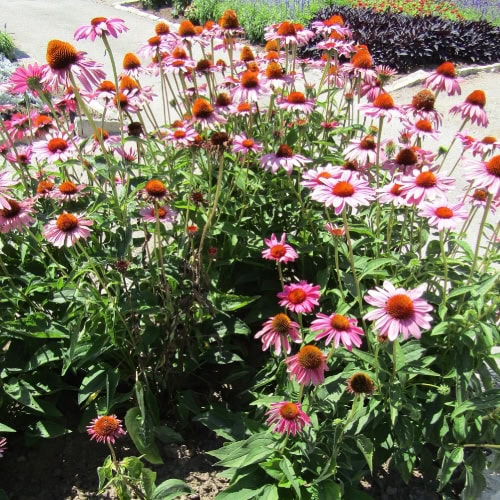
Echinacea, or coneflower, comes from North America and does well in zones 3 through 9. Its cone-shaped centers and droopy petals make it easy to spot, and it blooms from mid-summer into fall.
Once it’s settled in, echinacea barely needs you. It likes full sun, shrugs off drought, and brings in bees, butterflies, and even hummingbirds. Plus, it doesn’t mind poor soil. Birds will snack on the seed heads in fall and winter, so you get a little wildlife bonus.
3) Coreopsis (Tickseed)
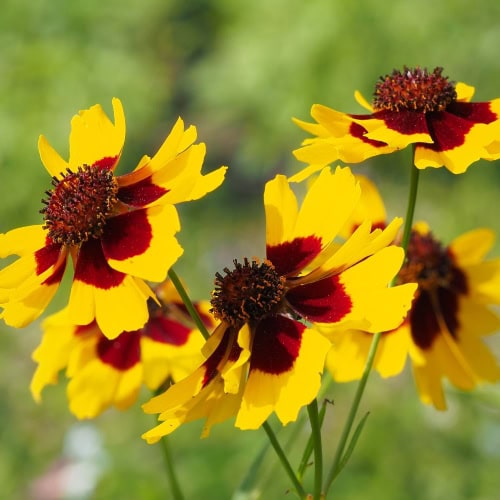
Coreopsis is one of those plants you can almost forget about; just plant it and watch it do its thing. It’s covered in sunny, daisy-like blooms from early summer all the way to frost. This native handles zones 2-10 and doesn’t fuss if it gets a bit dry.
It spreads a bit through rhizomes and self-seeds, so you might end up with more than you started with. Deadheading helps, but honestly, it’ll keep blooming either way. Give it full sun and well-drained soil and it’ll reward you.
4) Shasta Daisy (Leucanthemum × superbum)

Shasta daisies are the classic white and yellow daisies – simple, cheerful, and reliable. They usually bloom from late spring into early summer and reach about 2 to 3 feet tall.
These low-maintenance flowers come back year after year in zones 5 through 9. They like sun but can handle a bit of shade, as long as the soil drains well. Great for bouquets, and pollinators seem to appreciate them too.
5) Bee Balm (Monarda didyma)
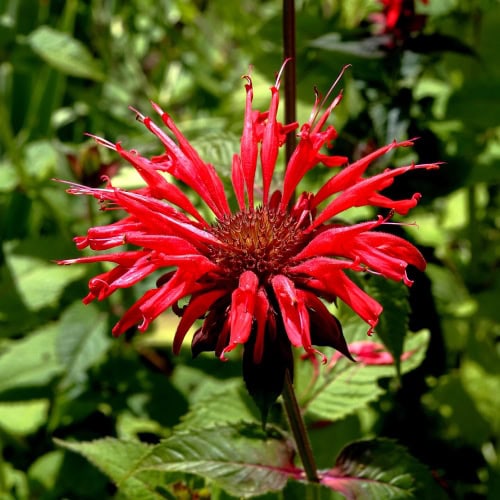
Bee balm is a favorite if you want some bold color, as its scarlet red blooms show up from June through August. The flowers are like little fireworks on top of sturdy stems, and they’re a magnet for hummingbirds and butterflies.
This perennial likes its soil on the moist side. The leaves are aromatic, with a minty scent when you brush past. Definitely adds a sensory bonus to the garden.
6) Agastache (Hyssop)
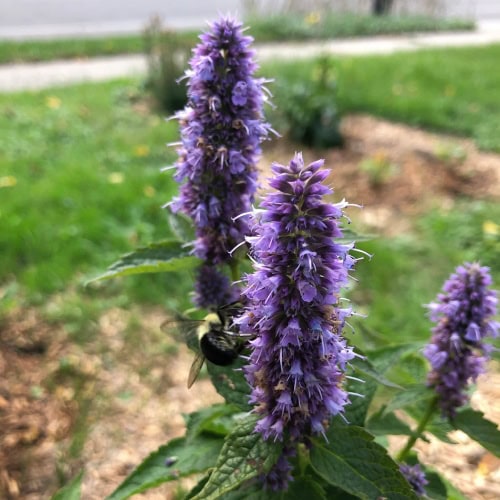
Agastache, or hummingbird mint, sends up tall spikes of tubular flowers from summer into fall. The colors range from purple to pink, red, orange, even white.
It doesn’t mind heat or drought once it’s established. The leaves are fragrant, and the blooms stick around for ages. Plus, it’s one of those plants that deer and rabbits just leave alone, always a plus!
7) Yarrow (Achillea millefolium)

Yarrow is kind of a set-it-and-forget-it perennial. It starts blooming in late spring and keeps going through summer. The flower heads are flat-topped and come in white, pink, or yellow, floating above lacy green foliage.
It prefers full sun and doesn’t care if the soil isn’t perfect. It spreads by rhizomes and can get a bit enthusiastic, but deadheading keeps it tidy and blooming.
8) Salvia (Perennial Sage)
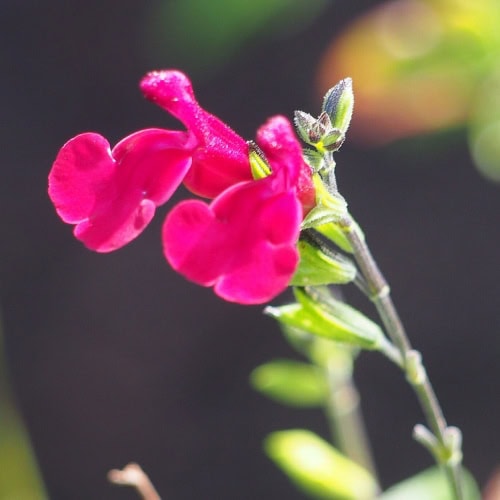
Salvia’s tall spikes of color in purples, blues, reds pinks, and whites show up from late spring right into fall. Pollinators flock to it, and it’s pretty easy to grow.
Most types are drought tolerant and don’t need much fuss once they’re settled. Full sun and well-drained soil are all they ask for. May Night and Autumn Sage are two that really pull their weight in the garden.
9) Butterfly Weed (Asclepias tuberosa)
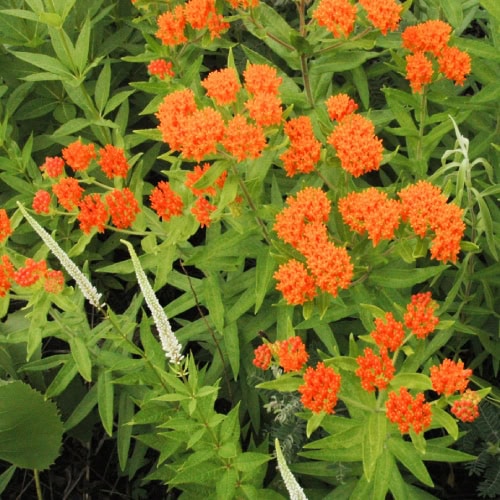
Butterfly weed isn’t subtle: it comes in hot orange clusters from early to late summer and can really light up a garden bed. It’s native to North America and grows about 1 to 3 feet tall in full sun.
Once it’s going, it barely needs you. It handles drought and brings in monarchs, bees, and other pollinators. The bright blooms are both a nectar source and a host plant for caterpillars.
10) Lonicera periclymenum ‘Peaches and Cream’ (Honeysuckle Vine)
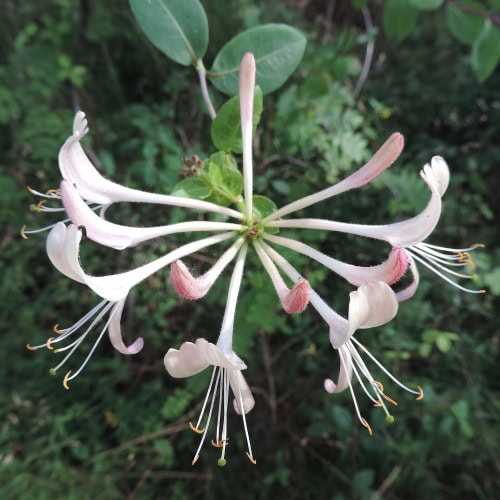
This honeysuckle vine is compact and covered in fragrant, trumpet-shaped blooms from late spring to late summer. The flowers start as deep magenta or purple buds and open to cream, pink, and peach – pretty striking against the dark green leaves.
You can train it up a trellis or let it spill over a wall. It’s tough, tolerates heat and drought, and brings in hummingbirds, bees, and butterflies.
11) Red Switch Grass ‘Cheyenne Sky’
This compact ornamental grass is all about changing color. The blue-green leaves start in spring and turn a rich wine red by early summer.
In late summer, you’ll see delicate pink to purple flower panicles rising above the foliage. It tops out around 30 to 36 inches and keeps a tidy, upright shape, and works just as well in pots as in the ground.
12) Kniphofia x ‘Mango Popsicle’ (Dwarf Poker)
‘Mango Popsicle’ is a compact variety with spikes of mango-orange flowers from early summer into fall. The spikes open from the bottom up, so the show lasts a while.
The plant stays neat, with foliage about a foot tall and flower stems that reach 30 inches. It likes full sun and gets pretty drought tolerant after a while. Pollinators like it, and it fits nicely in borders or containers in zones 6-9.
13) Astilbe
Astilbe is a must for shady spots. Its feathery plumes bloom from late spring into summer, and if you pick different varieties, you can stretch the season even longer. It really shines in moist shade where other perennials struggle.
The flowers come in a bunch of shades, including white, pink, red, lavender. Butterflies love them, and deer usually don’t bother.
14) Blanket Flower (Gaillardia aristata)
Blanket flower is one of those perennials you can count on for non-stop color, as it just keeps blooming from early summer right until the first frost. This North American native throws out vibrant, pinwheel-shaped blooms in fiery red and yellow, and unlike many other plants, it actually thrives when the summer heat really kicks in.
It’s a sun-lover through and through and handles poor, sandy soil like a champ. It usually stays around 1 to 2 feet tall, making it a great choice for the front of a border or a rock garden where you want a splash of color that lasts all season long without any fuss.
15) False Sunflower (Heliopsis helianthoides)
False sunflower, also known as Oxeye sunflower, is a real workhorse for the summer garden. Unlike some other tall yellow flowers that wait until late autumn to bloom, this native starts its show in early summer and keeps those bright yellow, daisy-like blooms going for months on end.
It’s a sturdy plant that can reach 3 to 5 feet tall, so it’s perfect for the middle or back of a flower bed. It’s tough as nails, handling clay soil and dry spells without much trouble, and you’ll find that bees and butterflies are constant visitors from June all the way through September.
16) Winecups (Callirhoe involucrata)
Winecups are a fantastic choice if you want a native groundcover that doesn’t quit. This sprawling perennial produces a constant stream of vibrant, deep magenta, cup-shaped flowers that look like little chalices scattered across its pretty, lobed foliage.
They love hot, sunny spots and are incredibly drought-tolerant thanks to a deep taproot that helps them survive dry spells. They usually stay low to the ground, around 6 to 12 inches tall, but they can spread out a few feet, making them perfect for filling in gaps or trailing over the edge of a sunny stone wall.
17) Stokes’ Aster (Stokesia laevis)
Stokes’ aster is a standout for its large, shaggy, cornflower-blue blooms that bring a unique, fringed texture to the garden. Native to the Southeast, this perennial has a remarkably long blooming season, often staying covered in flowers from June all the way through August.
It’s a compact plant, usually hitting about 1 to 2 feet tall, with leathery green foliage that stays attractive even when the plant isn’t in bloom. It’s very low-maintenance and does best in full sun with well-drained soil; if you keep it deadheaded, it’ll reward you with those striking blue flowers all summer long.
18) Wild Petunia (Ruellia humilis)
Wild petunia is unmistakable with its funnel-shaped, lavender-blue flowers that look a lot like the common garden petunias you see in hanging baskets, but this is a tough-as-nails North American native. While many spring flowers fade away, this one is a true summer survivor, blooming consistently from June all the way through September.
It’s a compact plant, usually staying between 1 and 2 feet tall, with fuzzy, olive-green leaves that are surprisingly resilient. It thrives in full sun and can handle the hottest, driest spots in your garden where other plants might wilt. It’s a great choice for the front of a border or a rocky area, and since it’s a host plant for several butterfly species, it’s a win for your local pollinators too.
19) Lanceleaf Coreopsis (Coreopsis lanceolata)
Lanceleaf coreopsis is one of those cheerful perennials that just keeps the summer vibes going. It’s one of the first native wildflowers to kick off the season with its bright yellow, daisy-like flowers that have distinct serrated edges. If you keep up with deadheading, it’ll reward you by blooming for a long stretch, often staying vibrant well into the late summer.
It usually grows about 1 to 2 feet tall and forms tidy clumps of narrow, green leaves. It’s incredibly easy to grow and isn’t picky about soil, it actually does quite well in poor or sandy spots as long as it gets plenty of sun. It’s a favorite for bees and butterflies and is a great choice for a sunny meadow or the front of a flower bed where you want a reliable, low-maintenance burst of gold.
20) Foxglove (Digitalis)
Foxglove sends up these tall, graceful spikes dotted with bell-shaped flowers that hummingbirds and bees can’t resist. The genus Digitalis covers about 20 species, and most are either true perennials or biennials, depending on what you’ve got.
The classic foxglove (Digitalis purpurea) is usually a biennial, but honestly, tons of newer varieties have been bred to act more like perennials, so you can get those blooms popping up every year. They do best in bright shade, but they’ll handle full sun too, as long as the soil’s rich and drains well.