
If you’re looking for flowers that keep the color coming from those first warm afternoons all the way through the thick of summer, you’re in the right place! Picking plants that bloom across both seasons means you won’t have to stress about replanting or dealing with bare patches. It’s a bit of a cheat code for a lively, ever-changing garden.
Getting the mix right with spring and summer flowering plants is like setting up a relay race, as one group hands off to the next, and your garden just keeps going.
Some flowers wake up early, others wait for the heat. Knowing when each one struts its stuff helps you plan a space that’s never dull. The list below covers everything from those early spring show-offs to the summer regulars, each with its own personality and pop of color.
1) Tulip
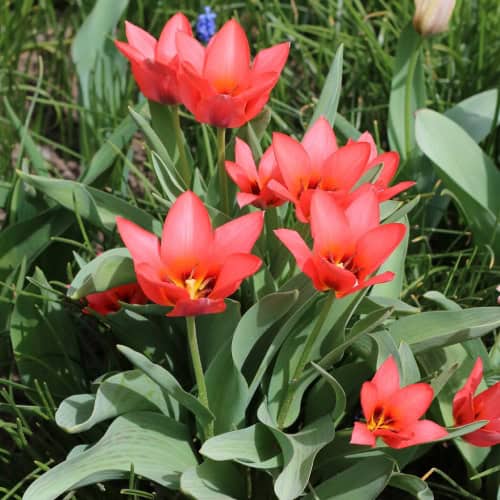
Tulips are classic, and honestly, it’s hard to imagine spring without them. These perennials come in a wild range of colors and shapes, and if you plan it right, you can have tulips blooming from March through May.
Early types pop up as soon as the snow melts, while others hang on until the weather really warms. Plant your bulbs in the fall and let them do their thing. Tulips thrive in zones 3 through 8, and with a little planning, you’ll get weeks of color.
2) Daffodil
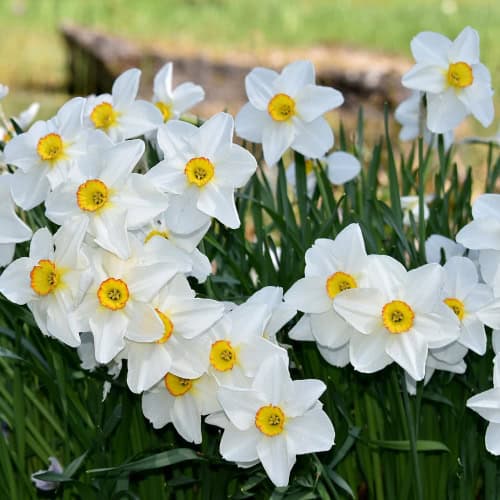
Daffodils are like the garden’s way of saying, “Winter’s over, finally!” You’ll recognize them by their sunny yellow trumpets, but there are actually a lot of shapes and colors out there (13 divisions, if you’re counting!).
If you pick a mix of early, mid, and late-bloomers, your daffodils can stick around for up to three months. They spread on their own, so you’ll get more every year without much effort.
Plus, they’re deer resistant and easy to tuck into borders or sprinkle through your lawn.
3) Hyacinth
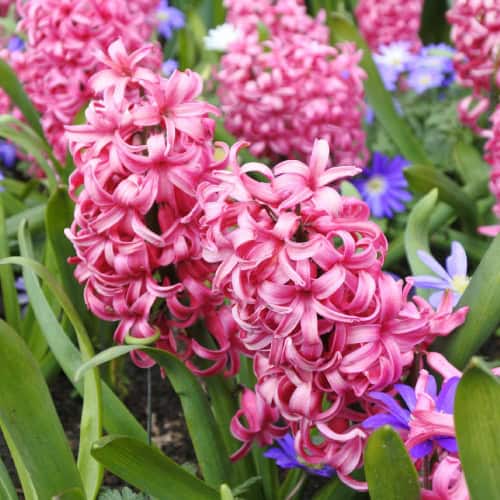
Hyacinths are real show-offs in the spring, and their scent is pretty much unforgettable. These bulbs, part of the Asparagaceae family, are happiest in USDA zones 4 through 8.
You’ll see their dense, upright flower spikes anywhere from early to mid-spring, and that color range from blue, purple, pink, white, even wine red, is hard to beat!
They bloom alongside tulips and daffodils, so your garden gets a real springtime punch of color and fragrance.
4) Crocus
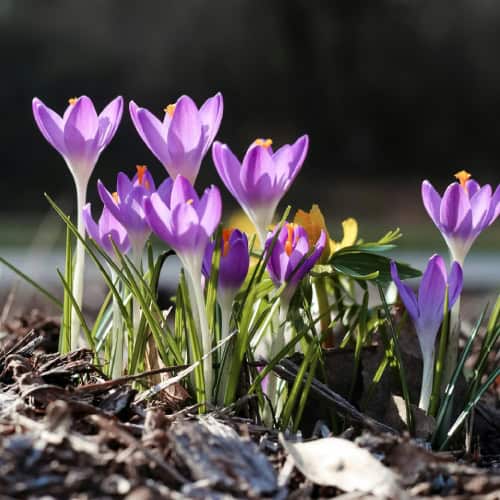
Crocuses are the rebels that pop up even when there’s still snow on the ground. These tiny, tough plants grow from corms and belong to the iris family, with about 100 species to choose from.
They come in purples, whites, yellows, and even bicolors. You plant a few, and before you know it, they multiply into bigger clumps every year. Crocuses are happy in well-drained soil and sun or partial shade; just plant and forget.
5) Primrose
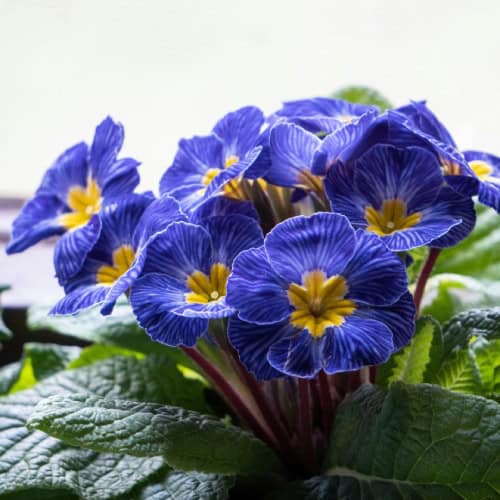
Primroses are some of the first to arrive when winter finally lets go. Their soft colors and gentle blooms just brighten things up. In cooler areas, they’ll keep going into early summer, which is a nice bonus.
You can grow primroses just about anywhere, from borders, containers, and even near water. They like a bit of shade and moist soil, and they don’t ask for much. With so many types, from woodland primroses to the tall candelabra ones, there’s something for everyone.
6) Peony
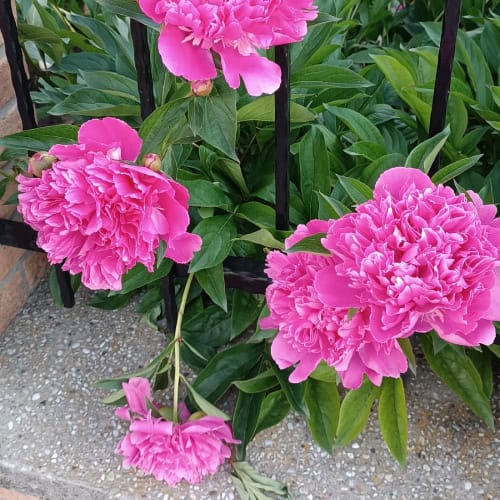
Peonies are the drama queens of late spring and early summer, and I mean that in the best way. Their blooms are huge, fragrant, and come in shades from white and blush pink to coral, crimson, and hot fuchsia.
You get to pick from single, semi-double, or all-out double blooms. Sure, the flowers only last about a week or so, but when they’re out, it’s impossible not to stop and stare.
7) Bleeding Heart
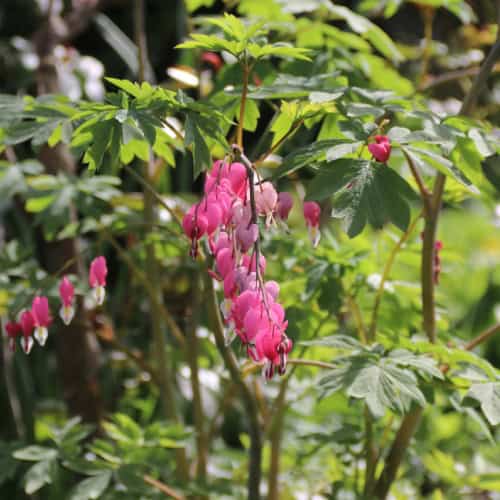
Bleeding hearts are instantly recognizable, thanks to those little heart-shaped flowers dangling from curved stems in early spring. You’ll find them in pinks, whites, and reds and they’re perfect for a shady corner.
They like moist, rich soil and prefer the cooler, shadier spots in your yard. Once the heat hits, bleeding hearts often go dormant, especially if it’s dry, so don’t panic if they disappear for a bit.
8) Phlox
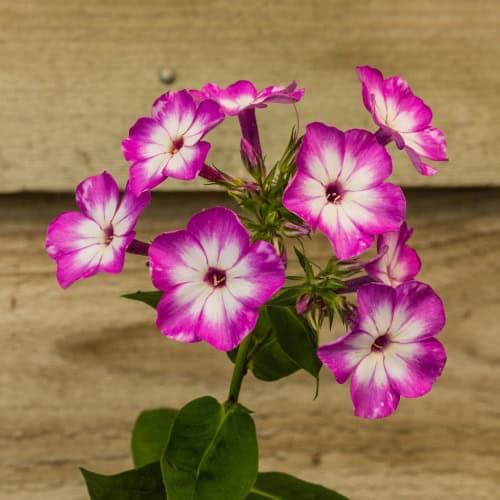
Phlox is one of those plants that just keeps giving. Creeping phlox is a spring ground cover, blanketing the garden in white, pink, or purple. The taller garden phlox blooms later (think mid to late summer) and brings height and color, sometimes up to four feet tall.
They’ll thrive in sun or a bit of shade, and their sweet-smelling flowers are a magnet for pollinators.
9) Forget-Me-Not
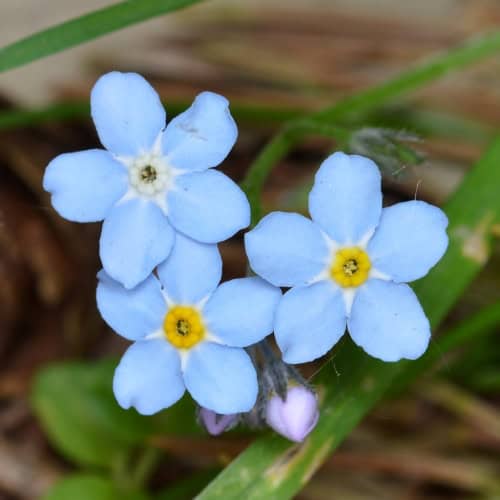
Forget-me-nots are small but mighty, with their delicate blue flowers popping up from late spring into early summer. They only grow about a foot tall and like moist, well-drained soil with a bit of shade.
They’re great for covering up the fading leaves of early bulbs like tulips and daffodils, and their soft, airy look is just right for borders or cottage gardens. Most are biennials, so they’ll flower, set seed, and pop up again the next year.
10) Lupine
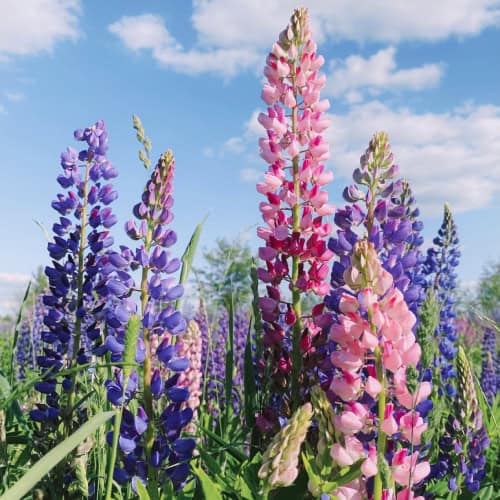
Lupines are all about drama with tall spikes in bold colors like blue, purple, pink, and white. They bloom from late spring into early summer and are a favorite for adding height and interest.
You can plant them in spring or fall. They’re right at home in borders, wild gardens, or among native plants, and they’re good for pollinators (plus, deer usually leave them alone).
11) Columbine
Columbine flowers are a little quirky, in the best possible way, with their spurred petals and bell-like blooms. These perennials show up from late spring to early summer, and the color range is almost endless.
They’ll grow in partial shade or full sun, though they do prefer well-drained, slightly acidic soil. Their foliage is ferny and delicate, and they’ll self-seed, so you might find them popping up in new spots every year.
12) Soldier’s Button
Soldier’s Button, or maybe you know it as Bachelor’s Button, brings those unmistakable blue, thistle-like flowers from spring all the way into fall.
The ruffled petals attract pollinators, and they’re just as good in a vase as they are in the garden. Honestly, they’re low-maintenance and keep things cheerful through the warm months.
13) Black-Eyed Susan
Black-eyed Susans are about as sunny as flowers get. Their golden petals and dark centers show up from late spring through early fall.
Plant them after the last frost, and they’ll reward you with blooms that first summer. They’re tough; full sun, well-drained soil, and they’re not fussy. Plus, they’re great for pollinators and can handle drought.
14) Daylily
Daylilies are the definition of easygoing. They bloom in just about every color except true white, and even though each flower only lasts a day, there are so many buds that the show goes on for weeks.
They’ll grow in full sun or light shade and aren’t picky about soil. Many new varieties will even rebloom through the summer and into fall. With tens of thousands of varieties, you can find one for any spot.
15) Coneflower
Coneflowers (Echinacea) are North American natives that just keep going from late spring right into fall. They’re built for zones 3 to 9 and do best in full sun.
You’ll spot them by their raised cone centers and drooping petals, usually purple, pink, white, or yellow. They’re sturdy, colorful, and bring in loads of bees and butterflies.
16) Bee Balm
Bee balm is a summer staple, with wild, tubular flowers in red, pink, purple, or white. They usually start in July and keep going for weeks.
This native American plant is a pollinator favorite that bees, butterflies, and hummingbirds can’t resist. Deadhead the spent blooms if you want even more flowers, but honestly, they’ll put on a good show either way.
17) Sedum
Sedum, or stonecrop, waits until late summer or fall to really shine. These succulents are drought-tough, with thick, fleshy leaves and star-shaped flower clusters in pink, yellow, or white.
There are low, spreading types and upright ones that can reach two feet. Bees and butterflies love them, and they’re perfect for sunny, dry spots or rock gardens.
18) Shasta Daisy
Shasta daisies are the picture of summer, with classic white petals and yellow centers. They bloom from late spring into early fall and want plenty of sun, at least six hours a day.
They’re easy to grow, don’t need much fertilizer, and deer usually steer clear. Their cheerful look works well in borders or cottage-style gardens.
19) Coreopsis
Coreopsis, or tickseed, brings a burst of daisy-like color from late spring through fall. These natives come in yellow, orange, or pink, and butterflies can’t get enough.
They’re low-maintenance and drought-tolerant once they’re settled in. Deadhead the old flowers to keep them blooming longer, and you’ll have color for months.
Coreopsis fits right in with other summer favorites like coneflowers and black-eyed Susans, whether you plant them in borders, wildflower patches, or containers.
20) Blanket Flower
Blanket flower (Gaillardia) is one of those plants that just grabs your attention with its daisy-like blooms in vibrant shades of red, orange, yellow, and peach. It’s a perennial that really loves full sun and well-drained soil – honestly, if you’ve got a spot that bakes, this is a solid pick for a drought-tolerant garden.
These guys usually keep blooming from early summer right up until the first frost, which is pretty great if you’re after color that hangs around. Expect it to get about two feet tall and spread out a bit, maybe around 20 inches. Plus, pollinators seem to love it, so your garden’s going to be buzzing all season.