
If you’re short on space, or just want to jazz up your patio or windowsill, growing multiple plants in one pot is a game changer. Container gardening lets you mix and match plants that like the same kind of care, so you get more out of every square inch and don’t have to fuss as much. Of course, not every plant wants to be a roommate, so it pays to know which ones actually get along.
Choosing compatible plants with similar light, water, and soil needs is the secret to happy, healthy pots. Studies show that pot size affects plant growth and root systems, so picking the right container matters more than you might think. The trick is to pair up plants that aren’t going to fight over nutrients or elbow each other out.
Here’s a lineup of twenty plant pairings that work surprisingly well in shared containers, including classic houseplants, tasty herbs, and even some showy ornamentals.
1) Spider Plant and Pothos
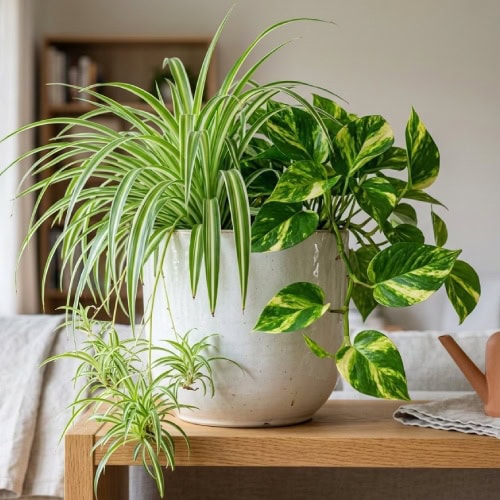
Spider plants and pothos are basically best friends in a pot. They both like indirect light and are fine if you let the soil dry out a bit between waterings.
These indoor plants have been studied for their air-purifying qualities, so they’re not just pretty, as they’re practical too. Stick them in a roomy container, and their arching, trailing leaves will spill over the sides for a lush look.
2) Succulents and Cacti

Succulents and cacti are a classic combo for a reason. Both like their soil fast-draining and hate being overwatered.
When you group cacti and succulents by light and watering needs, you can make some really cool displays, and you don’t have to worry about one outpacing the other if you pick varieties with similar growth rates.
Container-grown succulents are flexible for both indoor and outdoor setups, no matter where you live.
3) Ferns and Ivy
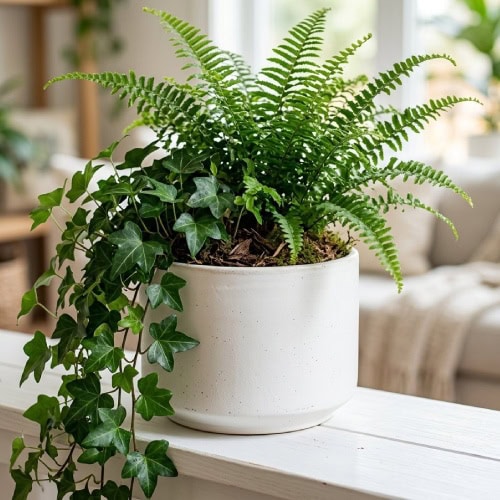
Ferns and ivy? They’re like the dynamic duo for shady spots. Both thrive in partial shade and like their soil to stay on the moist side.
Mix different fern varieties with English ivy or another ivy type. The way ivy cascades down pairs nicely with the upright, feathery fronds of ferns. It’s a combo that just works, especially indoors where you can keep the humidity up.
4) Episcia and Calathea
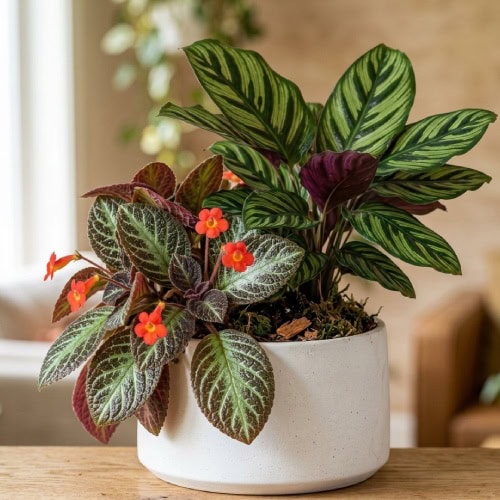
Episcia and Calathea are right at home in the same pot if you can give them what they crave: high humidity and soft, indirect light. They’re a little picky, but the payoff is worth it.
Keep their soil damp (but not soggy). Both are tropical, so they hate the cold. Episcia’s trailing habit looks great next to Calathea’s bold, upright leaves; a little jungle in a pot!
5) Jade Plant and Thimble Cactus
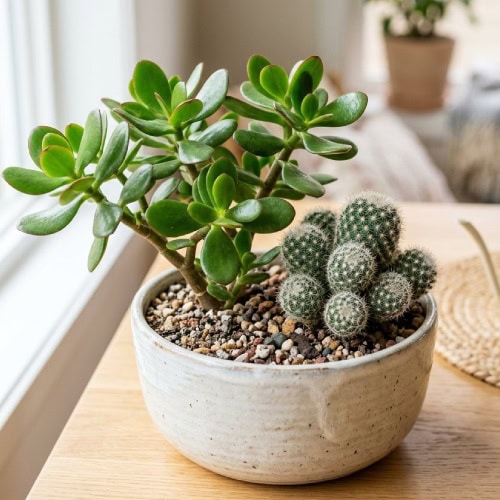
Jade plants and thimble cacti are low-maintenance, drought-tolerant, and pretty forgiving if you forget to water now and then.
Jade plants can tolerate varied conditions and are super adaptable. Thimble cacti stay small, so they won’t crowd out the jade. Just use a gritty, well-draining mix and make sure your pot has drainage holes.
6) Chives and Parsley
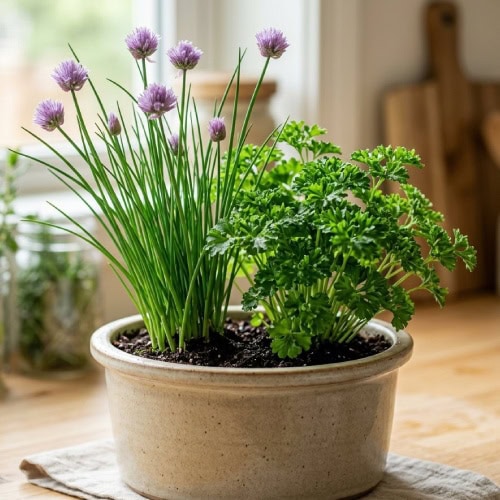
Chives and parsley are a handy pair for the kitchen windowsill. Both like well-draining soil and steady moisture, but don’t drown them.
Chives and parsley can be grown together in a sunny spot (at least six hours of light). Snip them often to keep them bushy and productive. It’s pretty nice having both herbs within arm’s reach when you’re cooking.
7) Spinach and Strawberries

Spinach and strawberries actually get along well in a pot. Strawberries spread out and hug the soil, while spinach pops up more upright.
You can grow strawberries in containers with spinach, especially in early spring when it’s still cool out. Both like regular watering and will fill out a container nicely.
Tuck spinach seeds between your strawberry plants to really use every inch of space in your container garden.
8) Snake Plant and ZZ Plant
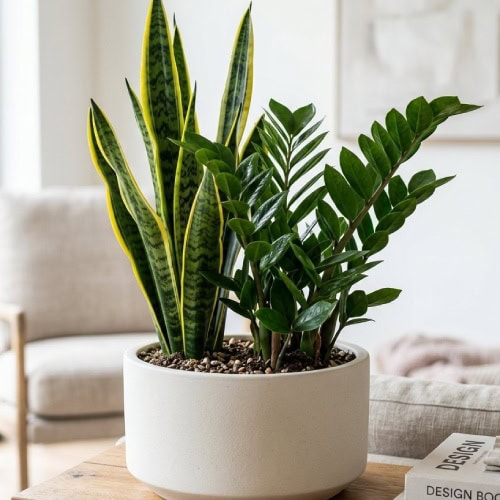
Snake plants and ZZ plants are about as easygoing as it gets. Both can handle low to moderate light and don’t need much water, which is great news if you tend to forget your plants now and then.
They both like well-draining soil and don’t need much fertilizer. Let the soil dry out before watering again, and you’ll be golden.
Neither grows super fast, so they won’t crowd each other. Snake plants are notably hardy, and ZZ plants are just as tough.
9) Peperomia and Fittonia
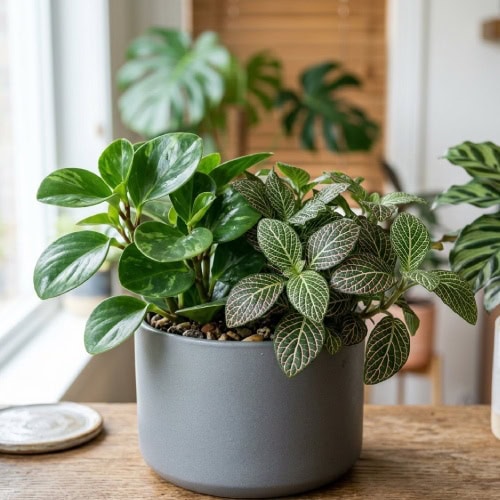
Peperomia and Fittonia get along nicely because they both like indirect light and moderate moisture. No complicated routines here.
They’re great for terrariums and glass containers where humidity stays up. The thick, chunky leaves of Peperomia look cool next to Fittonia’s veined foliage, which results in lots of texture in one pot.
Peperomia is easy to propagate from leaf cuttings, so you can expand your plant family pretty quickly.
10) Basil and Oregano
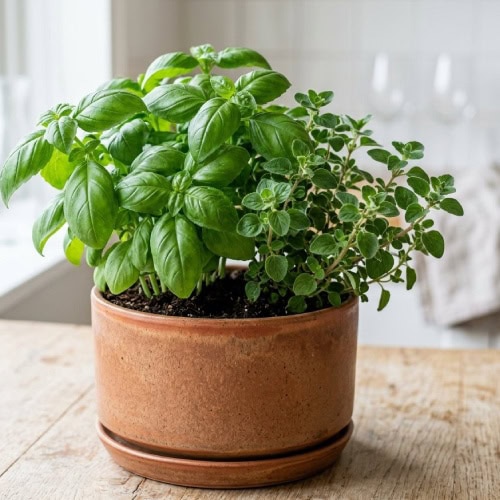
Basil and oregano are a classic pairing for a reason. Both like well-drained containers and need some space to spread out.
You’ll have the best luck with pots bigger than four inches across. Greek oregano with white flowers is especially tasty.
Give them at least six hours of sun a day, and don’t be shy about harvesting, as regular snipping makes them bushier and more productive.
11) African Violet and Begonia
African violets and begonias are happy together indoors. Both like indirect light and steady moisture, but don’t let them sit in soggy soil.
These popular flowering pot plants prefer it warm, with 65 to 75°F being their sweet spot. You can even start new plants from leaf cuttings, which is pretty satisfying.
They stay compact and won’t crowd each other out, and their colorful blooms keep things cheerful year-round.
12) Philodendron and Monstera
Philodendrons and monsteras are basically cousins (yep, both from the Araceae family), and they like the same kind of care. Bright, indirect light is best for both.
They’re both into well-draining soil, regular moisture, and a bit of humidity. No need to overthink it.
Try pairing smaller philodendron varieties with a young monstera for a cool, layered look in one pot.
13) Aloe Vera and Haworthia
Aloe Vera and Haworthia are a low-maintenance duo. Both are succulents, so they want gritty, well-draining soil and only need a drink once the soil’s dry.
They’re happiest in bright, indirect light. Research on establishing Aloe and Haworthia cultures shows they’re a good match, botanically speaking. Their shallow root systems help them share space without crowding.
14) Lavender and Rosemary
Lavender and rosemary are a Mediterranean match made in heaven. Both want well-draining soil and like things on the dry side between waterings.
They need full sun; six to eight hours a day is ideal. Research on container-grown rosemary points out that the right soil mix really matters for both health and flavor.
Plant them together in a big pot with good drainage, and you’ll have fragrant herbs on hand for months.
15) Mint and Thyme
Mint and thyme actually get along surprisingly well in a pot, even though their growth styles couldn’t be more different. Both herbs belong to the Mentheae tribe, which is a fun fact, and they like the same things: well-draining soil and steady moisture.
If you’re giving this combo a go, grab a container that’s at least a foot deep. Mint’s roots are super eager to spread, so keep it in the center. Let thyme hang out near the edge, where it can spill over a bit. It just looks better that way, honestly.
They’re both pretty happy with regular watering and a little fertilizer here and there, and are overall not too fussy.
16) Peace Lily and Dracaena
Pairing peace lilies with dracaenas is actually a solid move if you want easy-care, lush greenery. They both like indirect light and soil that stays moist (but not swampy).
Dracaenas provide structural foliage that plays nicely with the peace lily’s broad leaves and those classic white blooms. The upright shape of dracaena with the bushier peace lily? It just works.
You don’t have to stress about watering, as both are fine with a moderate schedule.
17) Orchids and Ferns
Orchids and ferns are a bit of an underrated pairing, honestly. They both want humidity, indirect light, and well-draining potting mix, so they’re pretty compatible.
Try mixing a smaller orchid with delicate ferns for a container that’s got a little wild, rainforest vibe. The combo is actually common in orchid growing circles if you use the right potting materials. Both like steady moisture, but don’t drown them.
18) Coleus and Caladium
If you’re after bold color, coleus and caladium are basically a dream team in a pot. They both dig partial shade and soil that stays a bit damp; not bone dry, not soggy.
Caladium containers are all about those wild heart-shaped leaves in pink, white, and red, while coleus brings a totally different palette: burgundy, lime, purple, you name it. Put them together and your container will actually look layered, not just crowded.
19) Sedum and Sempervivum
Sedum and sempervivum are basically the low-maintenance duo for anyone who forgets to water. Both love gritty, well-drained soil, lots of sun, and can handle a dry spell without drama.
Sedum and Sempervivum are popular choices for container gardens, especially if you’re into low maintenance setups and cool-looking foliage. Mixing up different types gives you all sorts of leaf shapes and colors. Their roots don’t go deep, so they’re totally fine sharing a pot.
20) Morning Glory and Nasturtium
Morning glory and nasturtium make a surprisingly charming combo in containers, mixing bold, climbing vines with carefree trailing leaves. They both want the same thing – plenty of sun and soil that doesn’t stay soggy for long.
Nasturtiums serve as indicator plants for watering needs, wilting before morning glories when moisture is low. That little warning is actually pretty handy, as it’s like a built-in reminder to water before things get out of hand. Just don’t cram them together; give morning glory vines room to climb and let nasturtiums spill over the edges as they please.