
Vining plants are a pretty clever way to add some vertical flair and lush greenery to both indoor and outdoor spaces. These climbing and trailing plants can turn bare walls, empty corners, trellises, and containers into vibrant, living displays!
From easygoing houseplants that tumble gracefully from baskets to vigorous outdoor climbers that blanket fences and arbors, there’s a vine for every skill level and situation.
Some really don’t ask for much, while others reward you with amazing flowers or delicious scents outside. Knowing what each type needs helps you pick the right ones for your goals and your climate, bur there’s definitely something for everyone here!
1) English Ivy
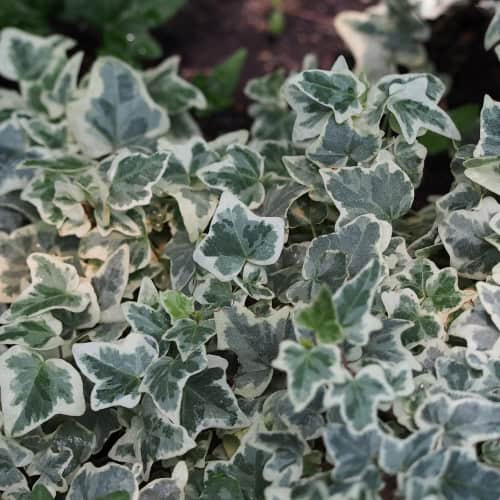
English Ivy (Hedera helix) is a fast-growing evergreen vine that hails from Europe, Northern Africa, and Asia. It’s pretty adaptable, working as a climber or a ground cover in lots of different settings.
The leaves are dark green and kind of waxy, usually with three lobes and a heart-shaped base. Indoors or out, English Ivy is flexible, especially in low light or shady spots.
It climbs with aerial rootlets and tends to spread fast across just about any surface.
2) Boston Fern
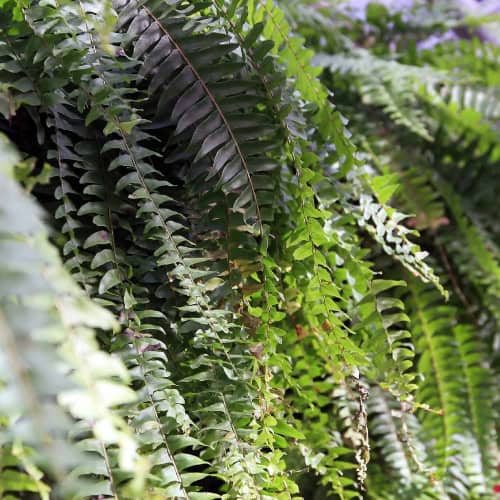
Boston ferns aren’t true vines, but those long, arching fronds really mimic the look of trailing plants. With their feathery branches, they spill nicely from hanging baskets and planters, adding a soft, lush feel.
They like bright, indirect light and need a good bit of humidity; think steamy bathrooms or shaded porches. Keep the soil moist but not soggy. Their arching habit is perfect for bringing some green drama to your home or garden.
3) String of Hearts
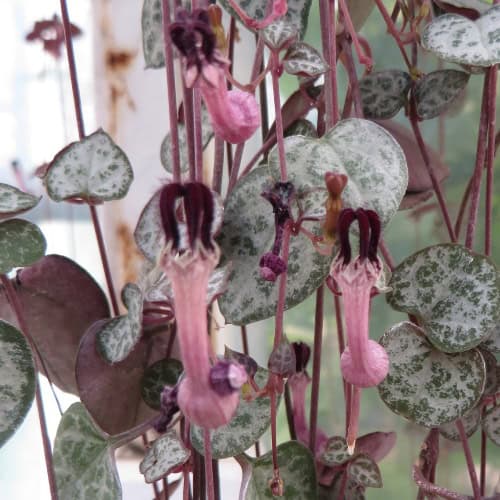
String of Hearts (Ceropegia woodii) dangles delicate vines covered in heart-shaped leaves. This South African native is actually a succulent, so it has that dark green, sometimes silver-marked foliage that’s easy on the eyes.
The vines can get impressively long, making them a favorite for hanging baskets or shelves. They’re low-maintenance and grow quickly, which is always a plus.
Besides looking adorable, String of Hearts throws out quirky tubular flowers now and then. You might also hear it called Rosary Vine or Chain of Hearts.
4) Philodendron Brasil
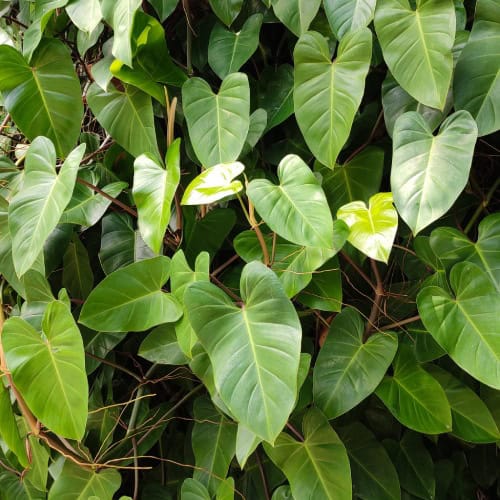
Philodendron Brasil is a splashy take on the classic heartleaf philodendron, with leaves streaked in lime green and yellow. This tropical vining plant is right at home indoors, trailing or climbing up to 4 feet or more.
It’s not fussy, although bright indirect light is best, but it’ll adapt to most conditions. Just give it well-draining soil and don’t overwater, and you’ll get those glossy, variegated leaves looking their best.
5) Pothos
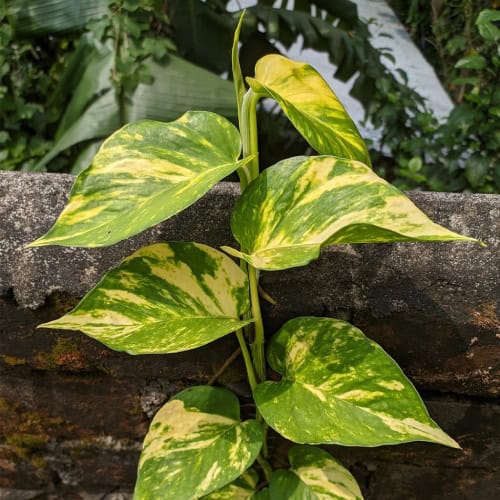
Pothos (Epipremnum aureum) comes from the Solomon Islands and has basically become the go-to houseplant everywhere. It’s a forgiving grower, happy in medium to bright indirect light, but honestly, it’ll put up with a lot.
This climbing vine uses aerial roots to latch onto surfaces and can get impressively long indoors. You can let it trail or train it to climb. Either way, the heart-shaped, variegated leaves really brighten up a room.
6) Hoya Carnosa
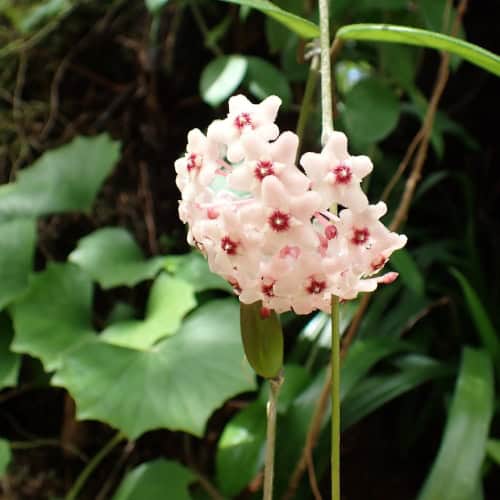
Hoya carnosa, or wax plant, comes from Eastern Asia and Australia. The thick, shiny leaves feel almost plastic, and it puts out clusters of sweet-smelling pink flowers with burgundy centers.
Stems can reach up to 20 feet, so it’s great for hanging baskets or winding up a trellis. If you forget to water sometimes, no worries, as this semi-succulent is pretty forgiving.
7) Clematis
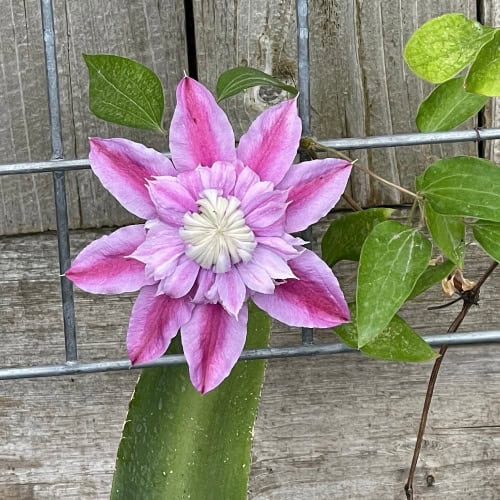
Clematis is part of the buttercup family and offers over 300 species with all sorts of flower shapes and colors. Blooms come in pink, purple, or white, and show up at different times depending on the variety.
These vines are pros at transforming fences, trellises, and arbors. Some get over 20 feet tall, so they’re a solid pick for big spaces.
Clematis varieties are grouped by when they bloom and how to prune them. There are early spring types, rebloomers, and ones that flower later in summer.
8) Trumpet Vine
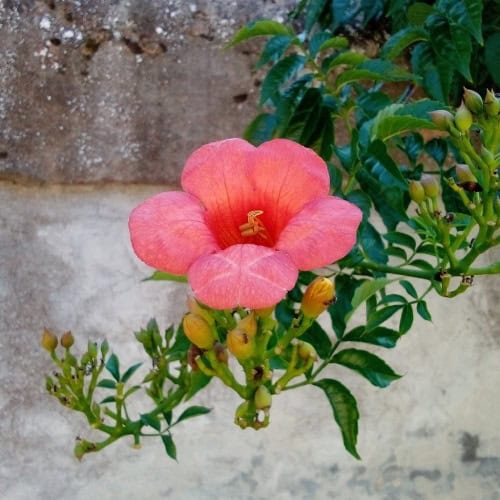
Trumpet vine is a speedy climber, putting out clusters of bold, trumpet-shaped flowers all summer long. It’s easy to train up fences, trellises, or arbors.
This one can add several feet of new growth each year once it settles in. It’s best to plant it at least 6 to 12 feet from buildings, as those roots are strong and can get a little pushy.
Trumpet vine loves full sun and will bring in hummingbirds and pollinators.
9) Honeysuckle
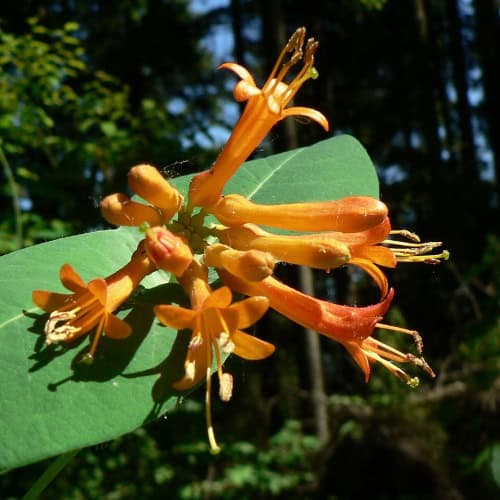
Honeysuckle vines put out tubular flowers in white, yellow, orange, pink, or red, usually starting in early summer. Many types have a sweet scent that can fill your yard, and they’re magnets for hummingbirds and bees.
They grow fast and work well on trellises, arbors, or fences. If you care about invasiveness, go for trumpet honeysuckle or other non-invasive options.
10) Passionflower
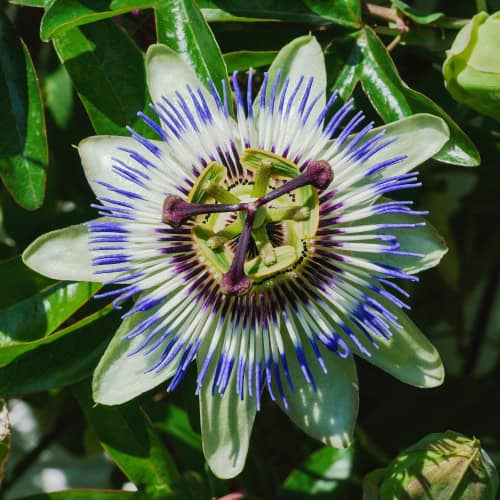
Passionflower vines are enthusiastic climbers, quickly blanketing fences and trellises. Their blooms are wild, with lots of petals and colors from purple and pink to white and red.
These can get 10 to 30 feet long once they’re established. There are 400+ species, so odds are there’s one for your region.
Some types even produce edible fruit along with those eye-catching flowers.
11) Jasmine
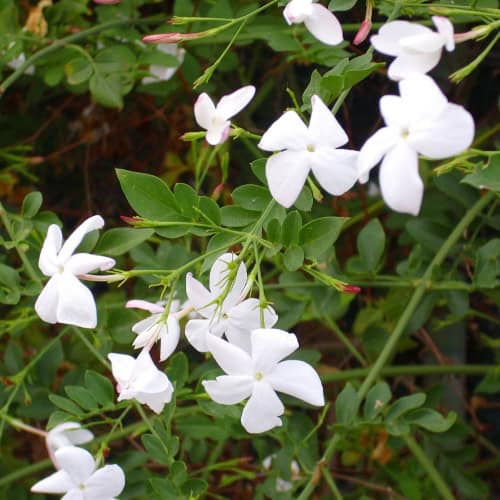
Jasmine covers a big group in the Jasminum genus, with over 200 species; some evergreen, some not. You can let it climb or train it as a shrub, depending what you need.
It produces fragrant, star-shaped flowers in white or yellow that bloom through the warmer months. Jasmine does best in USDA zones 7–10, with full to partial sun and well-drained soil.
12) Wisteria
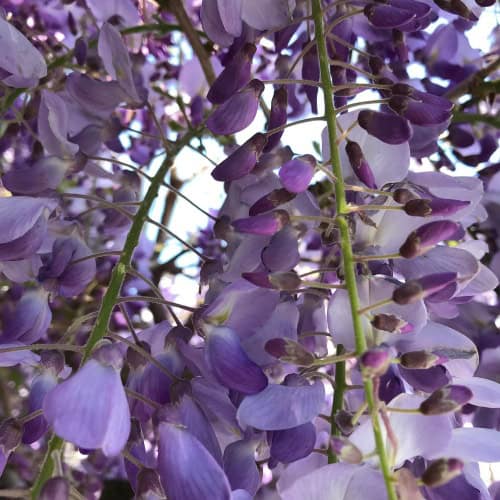
Wisteria is famous for its dramatic cascades of fragrant flowers in colors of white, pink, lavender, blue, purple. It blooms late spring or early summer and looks incredible on arbors or pergolas.
Pick non-invasive types like American Wisteria if you’re worried about it taking over. It’s a strong grower and needs sturdy support. Regular training and pruning help keep it in check and blooming well.
13) Bougainvillea
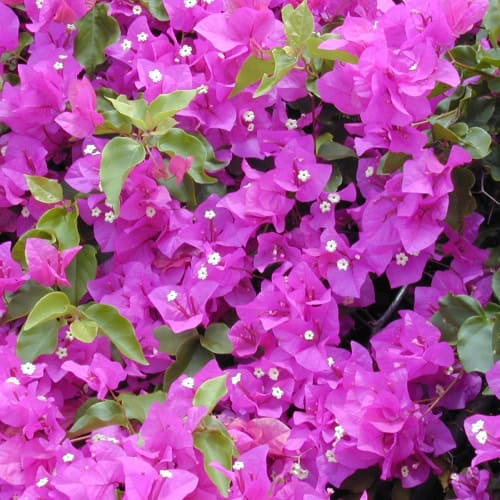
Bougainvillea is a thorny vine from South America that can reach up to 40 feet. It’s all about the vibrant, colorful bracts that surround its tiny flowers; great for adding height and a splash of color.
Grow it on walls, arbors, or trellises in full sun. In zones 9–11, it’s a perennial and doesn’t need much fuss once it’s settled in. Dwarf types work nicely in containers, staying in the 3–6 foot range.
14) Climbing Hydrangea
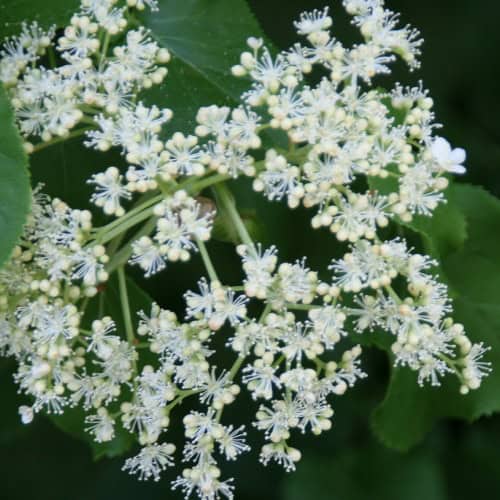
Climbing hydrangea is a deciduous vine that latches onto surfaces with aerial roots. It puts out clusters of white lacecap flowers in summer and has heart-shaped green leaves.
This one thrives in USDA zones 5–9 and can handle full sun to deep shade. It starts off slow but really takes off after a couple years.
Try it against walls, fences, or even let it climb a tree. It likes rich, moist soil best.
15) Sweet Pea
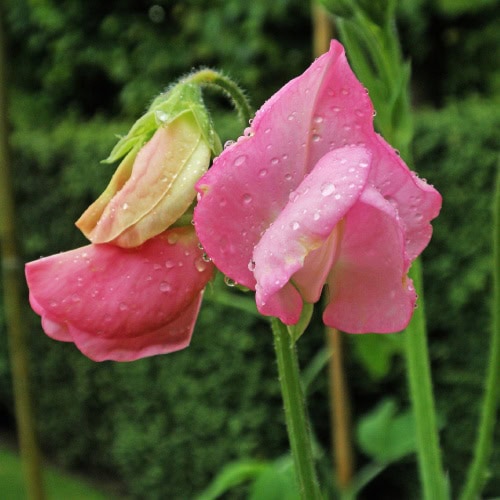
Sweet pea (Lathyrus odoratus) is a fragrant annual climber that can hit 6–10 feet. It’s native to the Mediterranean and prefers full sun, moist but well-drained soil, and a neutral to alkaline pH.
Grow sweet peas on trellises, fences, or wires. The colorful blooms show up from spring to early summer and make for great cut flowers. If you want something smaller, dwarf varieties stay compact for containers or borders.
16) Black-eyed Susan Vine
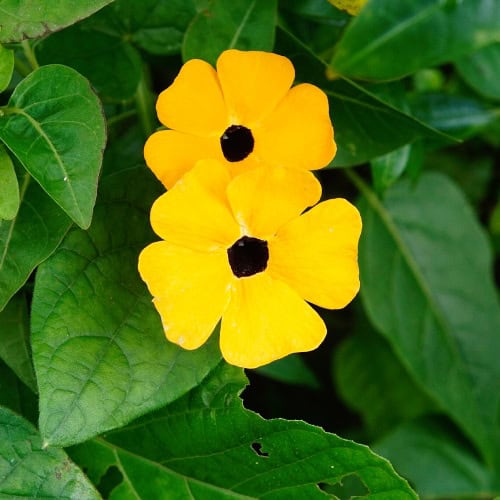
Black-eyed Susan vine is a tropical perennial (or annual in cooler places) with trumpet-shaped orange or yellow flowers and those signature dark centers. In warm zones, it’ll last a few years; elsewhere, just treat it as an annual.
It’s a speedy grower on trellises, fences, or other supports. Also looks great trailing from containers or baskets. Blooms keep coming from midsummer until frost, and bees and butterflies love it.
17) Morning Glory
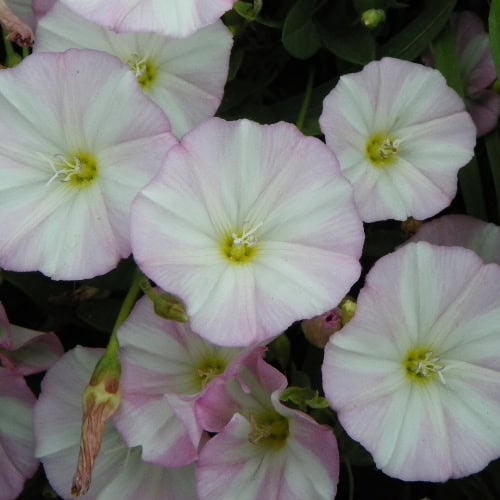
Morning glory is a fast climber, with heights of ten feet or more in one season not being unusual. There are over 1,000 types, including both annuals and perennials depending on where you live.
They put out trumpet-shaped flowers that open in the morning and close by afternoon. Super easy to grow from seed, and they’ll quickly cover fences, trellises, or arbors with bold colors.
18) Sweet Autumn Clematis
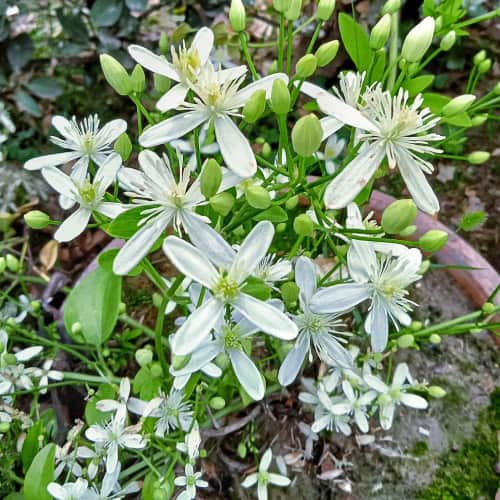
Sweet Autumn Clematis is a robust deciduous vine that can climb 20–25 feet with the right support. In late summer through fall, it’s covered in fragrant white flowers, usually from September until frost.
This vine likes full sun, six to eight hours a day is ideal, but actually tolerates partial shade better than most clematis. It grows fast in warm weather and climbs using twining leaf petioles.
19) Coral Honeysuckle
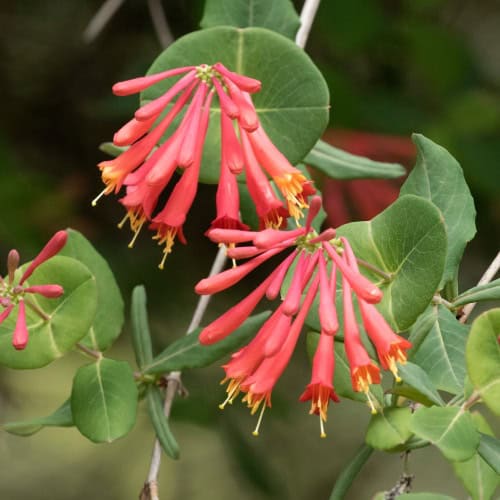
Coral honeysuckle is a native North American vine with striking trumpet-shaped flowers in bold reds, coral, orange, and even yellow. It’s not one of those invasive types, and honestly, it’s pretty adaptable, thriving anywhere from zones 4 to 11. Once the weather warms up, you’ll see it blooming on and off for months.
Train it up a trellis, let it wander along a fence, toss it over an arbor, or just keep it trimmed if you prefer a bushier look. Hummingbirds and butterflies can’t seem to resist the blooms, and when fall rolls around, those berries are a treat for songbirds.
20) Scarlet Runner Bean
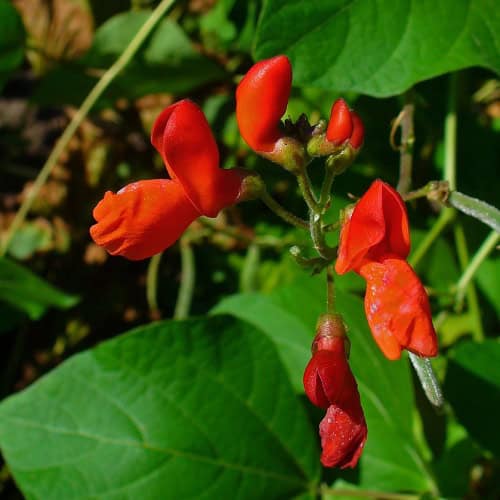
Scarlet runner bean is a wild, fast-growing climber – sometimes stretching up to 20 feet in just one season! Its bold red flowers, popping out from July to October, are magnets for hummingbirds and all sorts of pollinators.
It’s one of those plants that does double duty: looks fantastic and offers up edible pods. With its big green leaves, it’s a solid pick for living fences or adding some drama to vertical gardens, especially if you’ve got a sunny spot to spare.