
Best Pond Filters (Reviewed)
1) Laguna Clear Flo Pressurized Filter Review
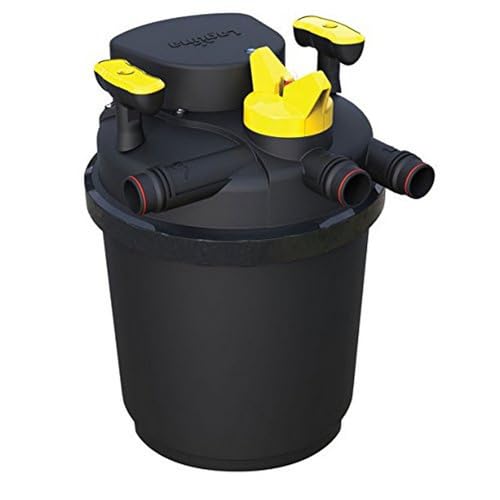
- Provides the ultimate combination of pump power and water filtration efficiency
- Clear-Flo Kits are available in 4 sizes to meet your specific water gardening needs
- Max-Flo Solids Handling Waterfall & Filter Pump features energy-efficient pumps, the energy savings often pay for the cost of the pump
Our top pick for pond filtration is the Laguna Clear Flow series, which features pressurized filters equipped with integrated UV clarifiers. This highly versatile system utilizes both mechanical and biological filtration, alongside a built-in UVC to eliminate algae. The biological stage relies on three foam inserts and specialized “Bio-Lava Rock”—porous media designed to provide a massive surface area for beneficial bacteria to colonize and thrive. While the foam layers effectively trap physical debris, the bio-rocks allow bacteria to efficiently break down organic waste in the water.
One of the most impressive features of this filter is its clever back-flush system, which greatly simplifies the cleaning process. When activated, the water flow reverses and internal jets create a whirlpool effect to loosen trapped waste within the chamber. This dirty water is then discharged through a flush valve, which can be directed toward your garden for easy disposal. Just be sure the back-flush cap is tightly sealed during normal operation to prevent any accidental leakage.
We recommend waiting about 5 to 6 weeks for your bacterial colonies to fully establish before performing your first back-flush. It is best to use this cleaning function before you notice a visible reduction in water flow; this keeps maintenance manageable and ensures your beneficial bacteria receive enough oxygen to stay healthy.
In addition to its filtration and cleaning capabilities, the range includes a 13w UVC lamp to help combat green water. This UV strength is sufficient for controlling algae in most pond sizes and also helps reduce the population of harmful free-swimming bacteria.
Because this is a pressurized system with a back-flush feature, you must pair it with a pump powerful enough to ensure efficient operation. For the entry-level 2000 Clear Flow model, a pump rated between 500 and 800 GPH is recommended. For the high-capacity Clear Flo 14000, you will need a pump delivering between 2500 and 3000 GPH for the best results.
In summary, the Laguna Clear Flow range is a dependable and cost-effective pressurized filter that offers excellent two-stage cleaning and superior bacterial growth via its unique lava rock media. While the back-flush system is a fantastic convenience, remember that your choice of pond pump is critical to getting the most out of this unit.
- Pressurized: Yes
- Pond sizes: Suitable for ponds between 500 and 5000 gallons (model dependent)
- Type of filtration: Biological and mechanical
- UVC Strength: 13w
- Outlet Size: Fits 1- 1/2 inch (ID) tubing
- Dimensions: 13.6 x 14.3 x 22.6 inches
- Warranty: 3 Years

2) Jebao CBF Pressurized Filter Review
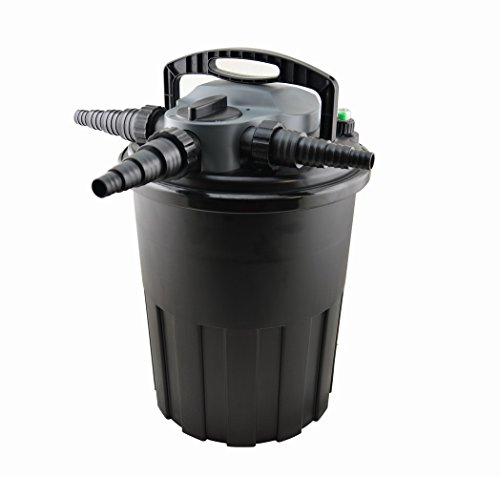
- HEAVY-DUTY 4,000-GALLON CAPACITY: Engineered to handle continuous filtration for large garden ponds and koi habitats up to 4,000 gallons...
- Maximum Operating Pressure: 7.25 psi with 17 feet of head for optimal water circulation
- POWERFUL 36W UV GERMICIDAL CLARIFIER: Features an integrated 36-watt UV-C lamp that destroys floating green water algae, waterborne...
Our next recommendation for US pond owners is Jebao’s budget-friendly CBF series of pressurized bio-filters, which serves as the updated successor to the previous CF-10 line. Jebao has built a solid reputation for offering highly affordable filtration equipment that still maintains respectable quality standards. This new CBF range addresses the shortcomings of the older design by incorporating upgraded features and sturdier materials while keeping the same low price point.
Similar to other filters on this list, the Jebao utilizes a two-stage system to provide both mechanical and biological filtration. Water is processed through a large, porous sponge media that surrounds the main chamber, trapping debris as the water circulates through it. At the base of the unit is a dedicated section for biological media; Jebao includes a bag of bio-rings for this purpose. You will need to add these manually to the bottom of the filter (about a third of the bag is sufficient), where they will support the beneficial bacteria needed to break down harmful waste.
A significant improvement over the older, more cramped models is the spacing of the intake, outlet, and discharge valves, which makes the installation process much smoother. The back-flush system has also been enhanced for more effective cleaning, now featuring a durable “pump-style” handle instead of a dial—a design we find much easier to use during maintenance.
Because this is a pressurized filter, it can be easily buried or hidden, and it comes standard with a UVC light to eliminate green water. The 1,000-gallon model features a 13w bulb, while the largest 4,000-gallon version uses a 36w bulb, making it capable of handling more heavily stocked fish ponds. While the durability is a clear step up from the lightweight CF-10 filters, it still lacks the premium feel of more expensive brands. This is noticeable in the somewhat flexible handle, a stiff knob for diverting water to the waste hose, and the use of only a single layer of foam media.
In summary, the Jebao CBF series is a remarkably cost-effective pond filter that provides a solid filtration system and strong UV clarification for budget-conscious owners. It is best suited for smaller ponds, light fish populations, or anyone looking for the best possible balance between price and performance.
- Pressurized: Yes
- Pond sizes: Suitable for ponds between 1000 and 4000 gallons (2 models)
- Type of filtration: Biological and mechanical
- UVC Strength: 13 Watts (1000 model), 36 Watts (4000 model)
- Outlet Size: Fits 1″, 3/4″, 1/2” tubing
- Dimensions: 10 x 10 x 16 inches
- Warranty: 2 Years
3) Oase BioSmart Filter Review
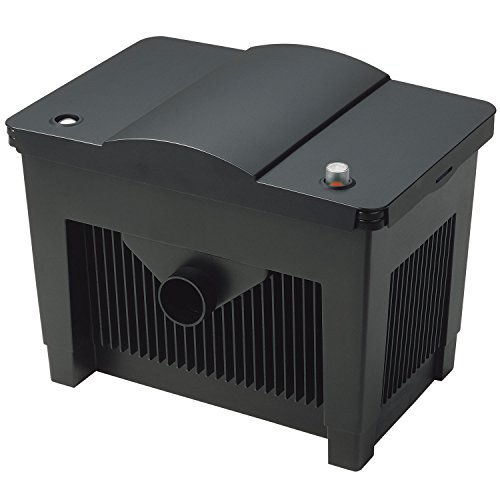
- Biosmart filters feature distinct zones that promote the settlement of the beneficial bacteria
- Built-In cleaning mechanism prevents the need remove or manually unclog the filter foams of the BioSmart filter
- Cleaning indicator, temperature gauge and sludge drain are just some of the features that make BioSmart the most user-friendly
The Oase BioSmart series is an excellent option for those seeking a non-pressurized pond filter. These units utilize a streamlined “flow-through” configuration, which ensures that water flow remains more consistent and is not restricted as much as it often is with pressurized alternatives.
The system employs a standard two-stage filtration process using high-performance foam media that serves both mechanical and biological purposes. It includes four distinct layers of foam in varying sizes, specifically engineered to support large colonies of beneficial bacteria while trapping a wide array of debris, from fine silt to larger particles.
Maintenance is remarkably simple thanks to an integrated cleaning mechanism that allows you to service the foam without having to physically remove it from the filter box. Additionally, the unit features a handy cleaning indicator light that alerts you when the media is becoming obstructed, which is a very useful feature for staying on top of upkeep.
Beyond the indicator light, the filter is equipped with a temperature gauge for monitoring water conditions and a convenient sludge drain for clearing out waste that settles beneath the media. These features combine to make the Oase BioSmart a highly user-friendly choice, perfect for beginners or anyone looking to minimize the effort required for filter care.
Regarding UV clarification, the filter includes a 9w UV light positioned at the inlet. Water coming from your pump is treated to remove algae before it even reaches the filtration layers. This is a highly efficient design, as it ensures that dead algae is captured immediately rather than being recirculated back into the pond.
While setup is straightforward, keep in mind that the unit must be positioned at ground level since it is a non-pressurized gravity filter. You will also need access to a power outlet to run the UV light. Our only minor criticism is that the outlet connection feels a bit delicate and can occasionally come loose. If you are using a high-powered pump, you might want to install elbow fittings to secure the outlet more firmly and prevent leaks.
In summary, this is a highly accessible non-pressurized filter that delivers top-notch mechanical and biological cleaning. It is well-suited for both expansive ponds and smaller, fish-heavy environments, standing out as one of the easiest systems to maintain that we have ever reviewed.
- Pressurized: No
- Pond sizes: Suitable for ponds of 5,000 gallons or 10,000 gallons
- Type of filtration: Biological and mechanical
- UVC Strength: 9w
- Outlet Size: Fits 3/4″, 1″, 1.25″ and 1.5″ tubing
- Dimensions: 23 x 16.1 x 19.1 inches
- Warranty: 2 Years
Does my Pond Need a Filtration System?

A pond filter has the very important role of housing beneficial pond bacteria which are necessary to the breakdown of harsh substances, as well as filtering out free-swimming debris from pond water. Ponds without sufficient beneficial bacteria populations may have dangerously high ammonia and nitrite levels, caused mainly from decomposing organic matter on the pond floor and fish waste.
The bacteria populations that build up in your pond filter will slowly break down these substances during the filtration process, greatly reducing the levels in your pond. Ammonia is broken down into nitrites, and this in turn into nitrates, which plants and algae will readily absorb – a process called the nitrogen cycle.
As well as this, pond filters also help remove free swimming organic matter, debris, and small particles which can contribute to muddy water. These things become trapped between the different levels of filter media and will be removed when cleaned. Anything that passes from the water through your pond pump will eventually arrive at your filter, and it’s your filters primary job to catch the unwanted debris and stop it re-entering your pond system.
Filters are necessary for pond owners whose ponds are easily filled with debris. Ponds which are close to trees, bushes, or foliage, are all prone to build up of floating debris which eventually sinks and begins to decompose as bottom sludge. They’re also essential for ponds with koi or goldfish, as the beneficial bacteria inside your filter box will be the primary process for breaking down harmful substances from the decomposition of organic waste. Without a means of water filtration, ammonia and nitrate levels would slowly increase over time and become dangerous to both pond fish and wildlife.
Should I Purchase a Filter With UV?
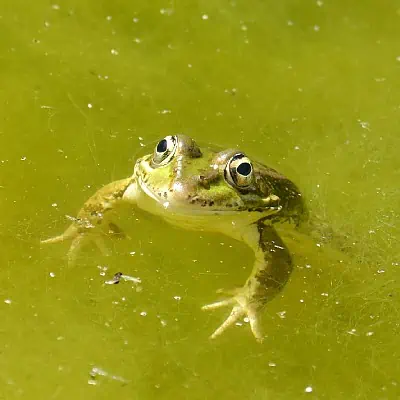
It has become more common for filters to come with added Ultra Violet Clarifiers in recent times to help combat both green water (algae) and harmful free-swimming bacteria. A pond filter with UVC will both help filter water and destroy algae during the filtration process. A pond filter with added UVC is a better choice in most cases to a regular pond filter, unless you already have a separate UVC unit.
With that said, even if you have a separate UVC unit, you can still purchase a pond filter with added UVC as this will only increase the rate at which both algae particles and harmful bacteria are removed, and should not adversely affect your pond’s ecosystem.
Note: A pond filter is designed to remove larger debris and particles from a pond’s water, as well as house beneficial bacteria, but it sometimes cannot remove very fine particles that may be the cause of dirty water. To catch smaller particles, a much finer filter media can be added to the filter to supplement the filtration process until water clarity improves. Check our article here for more information on removing fine particles and tannins which can cause dirty pond water.
Water Filtration – What is actually happening?
As the water passes from your pond pump to the filter, there are different layers of filtration taking place. The best quality pond filters will make the most of each type of filtration to maximize results, lower the amount of cleaning required, and enhance overall water quality.
The most basic of media includes a simple sponge material which doubles as a mechanical filter, housing bacteria for biological filtration and providing mechanical filtration itself. As well as common sponge media, ceramic rings, plastic rings, or bio balls are also great biological filter media. When cleaning a pond filter, you need to be careful not to over clean the media where the bacteria lives. Using fresh water to clean media housing bacteria can quickly kill your population, and cause problems with your pond’s balance. Check our guide here for help with cleaning bio-media and filtration systems without damaging the media.
Optimizing Water Filtration for Maximum Benefits
Just because a filter may come with everything you need to get started, doesn’t mean there aren’t still ways to help make filtration more efficient! Supplementing with beneficial bacteria can help reduce ammonia, and cleaning your mechanical media correctly will ensure maximum debris is removed. Even feeding your fish a better quality food can help with filtration by reducing the amount of water and harmful substances in the pond water.
Below are some useful articles which cover ways to improve filtration, water clarity, and water quality:
- Top Pond Filter Media Guide
- Cleaning Media & Optimizing Water Filtration
- Top Beneficial Bacteria to Supplement Filtration
- Guide to Activated Carbon in Ponds
- The Best Quality Food for Low Waste
Different Types of Pond Filter Systems
1) Box Filter (Non-pressurized, no UVC)
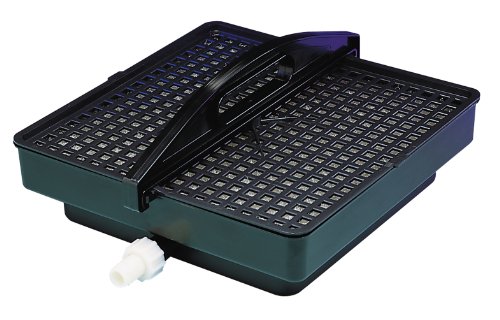
- POWERFUL FILTRATION FOR LARGER PONDS – The Pondmaster PM 1000 Garden Pond Filter is designed for use with pumps up to 1,000 GPH, helping...
- DISCREET, IN-POND DESIGN – The 12" x 12" filter box with lockiing handle, sits conveniently in the pond and connects to the intake side of...
- MULTI-STAGE FILTRATION – Carbon and polyester filter media work together to help capture debris and support mechanical, biological, and...
A basic box filter is the simplest form of pond filter available. This type of filter is usually small, containing just the pond filter media and input/output options. This type of filter will work well to keep your pond water healthy for fish keeping, but it will NOT prevent green water (algae) build up. Regular box filters are not pressurized and the pond filter outlet should always be kept above the water line. This is the most basic kind of filter available, and has mostly been replaced with pressurized filter options or non-pressurized box filters with UV clarifiers.
2) Box Filter with UVC (Non-pressurized)
No products found.
A very popular choice of pond filter, providing both pond filtration and water clarifying benefits. This pond filter is similar to the basic box filter above, but comes with a UV light bulb 
3) Pressurized Box Pond Filter (With/Without UVC)
- Provides the ultimate combination of pump power and water filtration efficiency
- Clear-Flo Kits are available in 4 sizes to meet your specific water gardening needs
- Max-Flo Solids Handling Waterfall & Filter Pump features energy-efficient pumps, the energy savings often pay for the cost of the pump
Similar to the normal box pond filters, but with a pressurized structure. This means the filter can be placed almost anywhere in your garden and easily hidden. The filter can be even placed below the water level, so you’re able to partially bury this kind of filter out of sight. Pressurized pond filters also can include an added UVC bulb to combat green water as well as providing basic pond filtration benefits.
A final benefit of a pressurised pond filter is due to its increased pressure. This allows a finer mechanical filter media to be obtained, which can further improve water clarity. Many newer models also come with a dedicated discharge function and semi-automatic cleaning system, which allows you to clean mechanical media without having to open the filter box.
A downside of pressurized filters is that they greatly reduce water flow inside the filter, so will need a pump with sufficient strength to provide good circulation. They’re also not recommended to be coupled with water features, as they will significantly increase the head height requirement of your pump. We always recommend a dedicated pump for a pressurized filtration system for best results.
If you intend to run your filter alongside a large water feature, such as fountain or waterfall, we recommend a non-pressurized filter so water lift height is not significantly reduced. Pressurized filters greatly reduce water flow inside the box, and this will, in turn, significantly increase the amount of head height required to power a water feature. In these instances, we would usually recommend running a separate pump to the water feature, and keeping your main filtration system on a dedicated circuit, as this provides easier maintenance, better head heights, and more efficient filtration,

I have been using the 25000lt AllPondSolutions PFC Pressurized filter with UVC for 2 years now on a 20000lt pond system. water quality and clarity has been fantastic throughout the time of the system running.
Hi Jon,
Thanks for the feedback! We’re happy to hear that’s working so well for you!
If I get the pressurized filter with UV and an aeration device, will it work fine together? Because when I was reading about the filters, it said it needs to be hooked up to a pump. But in your article I read that pumps are for oxygenation only but aeration is both oxygenation and water flow. So I am confused. My pond is about 3.5 feet depth and 19×24 in dimention. Thank you