
Shady areas in your garden don’t have to remain empty or uninspiring. Whether you are looking for front house garden ideas landscaping or need inspiration for long back garden ideas, a surprising number of tall plants outdoor love low-light conditions. These varieties bring height and structure to those tricky spots beneath trees or along the north side of your house.
Selecting the right tall shade plants for containers or garden beds lets you turn dim corners into lush, eye-catching displays. When considering ideas for gardens with limited sun, you’ll find that full shade landscaping can easily compete with any sunny border!
From tall flowering plants to dramatic tall ferns and evergreen shrubs, there are plenty of options that shoot up tall without needing much direct sunlight. These selections help fill those neglected middle and upper layers of your shade yard landscaping, adding depth and a more natural feel to your full shade garden.
This list covers twenty reliable shaded garden ideas and shady garden ideas, including perennials, shrubs, and flowers for shaded areas, to wake up your shadiest spaces.
1) Goat’s Beard (Aruncus dioicus)
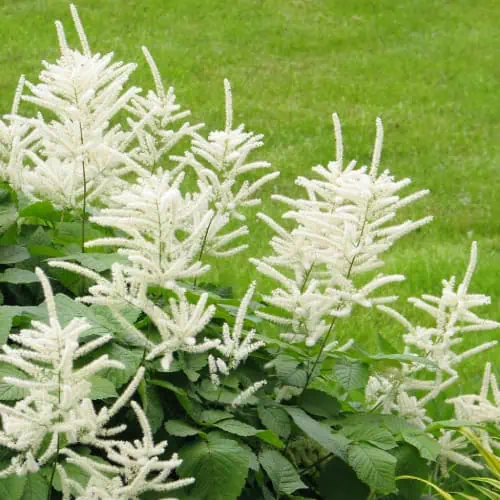
Goat’s Beard is a showy perennial reaching 4 to 6 feet tall, which is pretty hard to miss in a shade garden. It sends up feathery plumes of creamy white flowers in late spring and early summer, floating above dark, ferny foliage.
Give it moist, rich soil that doesn’t dry out, and it’ll reward you in partial to full shade, especially if you garden somewhere warm. Goat’s Beard spreads slowly by rhizomes but won’t take over.
2) Cimicifuga (Bugbane)
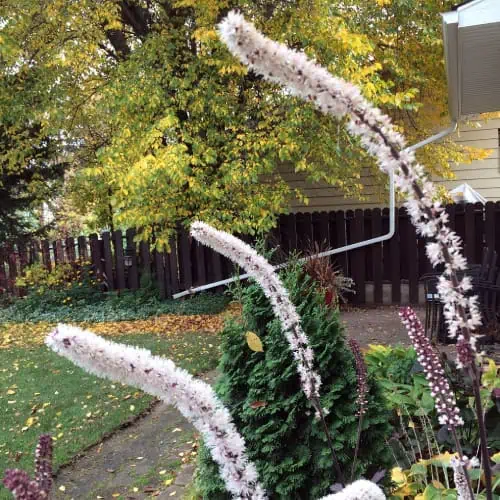
Cimicifuga, or bugbane (also called black cohosh), brings drama to the shade with its tall, stately flower spikes. This woodland perennial puts out fragrant white blooms in late summer, right when a lot of other shade plants are winding down.
Its dark foliage stands out in a sea of green, and it’s happiest in moist, rich soil with partial to full shade.
Cimicifuga plays well behind hostas or with ferns and astilbe. Plus, the deer tend to leave it alone, and pollinators seem to love it.
3) Japanese Painted Fern (Athyrium niponicum)
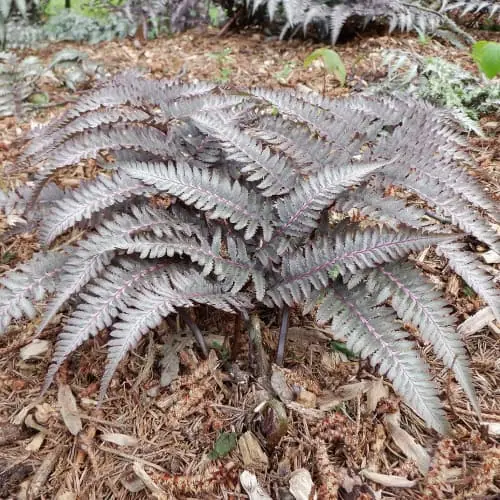
Japanese Painted Fern is all about elegant, silvery fronds with dark maroon midribs. While it usually tops out at 18 inches tall and spreads about 2 feet, its striking color makes it pop in the front of shady beds.
It likes moist, well-drained, organic soil. Give it partial to full shade and it’ll keep its good looks right up until winter.
4) Astilbe (False Spirea)
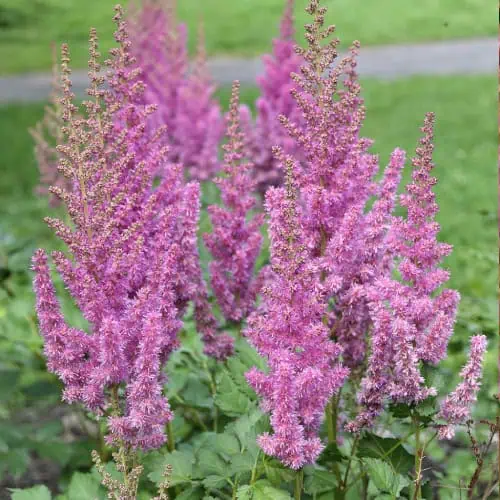
Astilbe is a classic for shaded spots, with feathery plumes and fern-like leaves. Depending on the variety, you’ll get blooms from spring into summer.
Heights vary from 12 inches to a solid 4 feet. The color palette is broad with whites, pinks, reds, even purples.
These shade-loving perennials like moist soil, draw in butterflies, and aren’t bothered by deer or rabbits.
5) Hellebore (Christmas Rose)
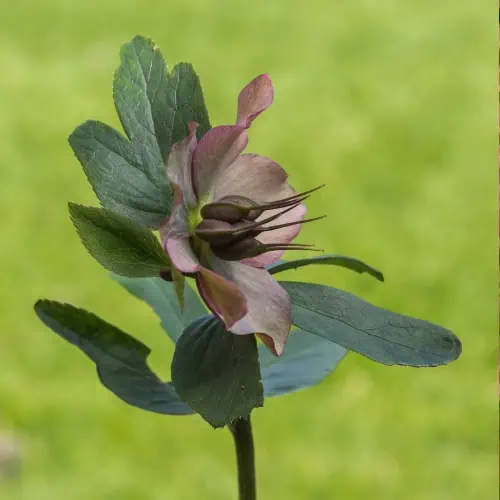
Hellebore, aka Christmas Rose, adds much-needed color to your shade garden right in the dead of winter. It’s evergreen, thrives in partial to full shade, and is perfect for brightening up the gloomier corners.
The plant puts out white, rose-like flowers on low, tidy growth, usually 8 to 12 inches tall. Its glossy leaves stick around all year for extra interest.
Heads up: all parts of hellebore are toxic to people and pets, so skip it if you’ve got curious kids or animals around.
6) Ligularia (Leopard Plant)
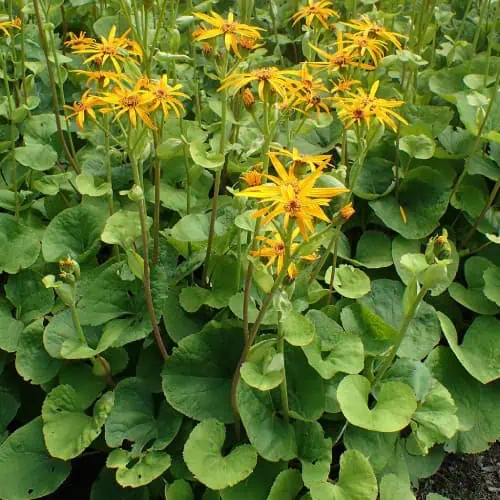
Ligularia is hard to beat for bold foliage and tall flower spikes in the shade. It’s a go-to for those spots where sunlight barely sneaks in.
You get huge leaves, sometimes over a foot across, often with neat spots or jagged edges. Come summer, tall stalks rise up with yellow or orange blooms that bring in pollinators.
7) Solomon’s Seal (Polygonatum odoratum)
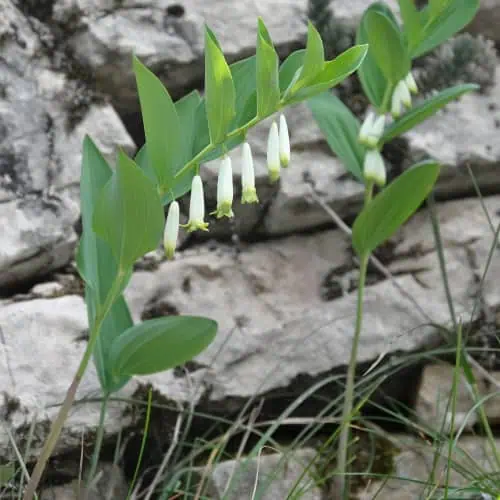
Solomon’s Seal is all about graceful, arching stems, usually hitting 18 to 24 inches tall. The way its leaves alternate along the stems gives it a layered, almost architectural look.
In late spring, you’ll spot tiny white, bell-shaped flowers dangling beneath the leaves, a subtle but lovely touch. This perennial loves partial to full shade and works well in woodland gardens or any low-light spot.
It spreads slowly by rhizomes, forming nice colonies over time.
8) Yellow Archangel (Lamium galeobdolon)
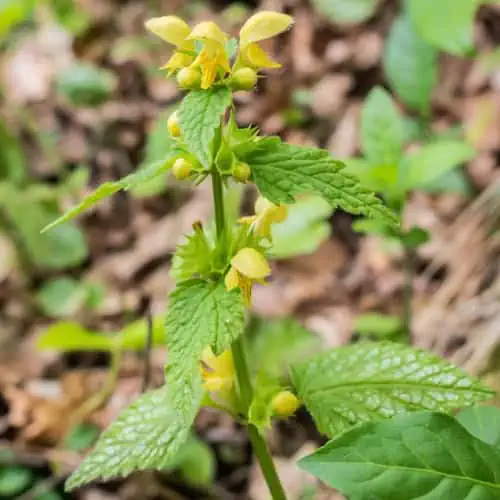
Yellow Archangel is a spreading perennial that usually tops out at 9 to 15 inches, great for carpeting shaded ground. It’s in the mint family, so you’ll notice those square stems and opposite leaves.
Look for whorls of bright yellow flowers in late spring to early summer. Its variegated leaves and spreading habit (by stolons) make it a solid groundcover in partial to full shade, especially where other plants struggle.
9) Foxglove (Digitalis purpurea)
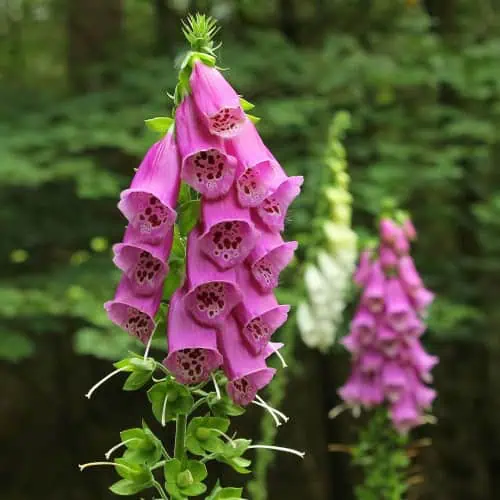
Foxglove is famous for its tall flower spikes (think 3 to 5 feet) covered in tubular, bell-shaped blooms. Flowers show up early to midsummer in purple, pink, white, or cream, often with speckles inside.
This biennial likes partial to full shade, especially with some afternoon cover from the sun. Plant it somewhere sheltered so the tall stems don’t get battered by wind.
Be aware: every part of foxglove is toxic if eaten, thanks to its digitalis content.
10) Columbine (Aquilegia)
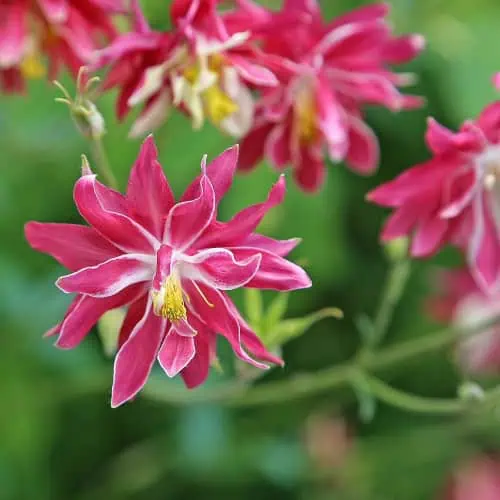
Columbine brings a delicate, airy vibe to the shade with its spurred flowers from spring into early summer. Plants reach 1 to 3 feet tall, so they’re perfect for adding a bit of height to borders.
They thrive in part to full shade and like well-drained soil. Even when not blooming, the lobed foliage is pretty handsome. Columbine flowers are a magnet for hummingbirds and other pollinators, bridging the gap between spring bulbs and summer perennials.
11) Hydrangea (Shade-tolerant varieties)
Hydrangeas can really bring the wow factor to shady parts of the garden. Bigleaf hydrangeas (Hydrangea macrophylla) are especially good in low light, with their huge flower heads in blues, purples, pinks, or whites.
Oakleaf hydrangeas also do well in dappled or partial shade. Try them under trees, along north walls, or tucked into shaded corners, they don’t need much direct sun to put on a show.
12) Mountain Laurel (Kalmia latifolia)
Mountain laurel is a broadleaf evergreen that’s native to Eastern North America and made for shade. It puts out clusters of pink or white bell-shaped flowers in late spring and early summer.
Partial shade and cool, moist, acidic soil suit it best. Expect it to reach anywhere from 5 to 15 feet tall, so it’s a solid choice for adding vertical layers to shady spots.
Mountain laurel is deer-resistant, attracts pollinators, and keeps its glossy green leaves all year.
13) Viburnum (Shade tolerant shrubs)
Viburnum shrubs are pretty adaptable, handling sun or partial shade with ease. Many species naturally thrive in woodland understories, so they’re right at home in the shade.
These tough shrubs bloom in spring with white or pinkish flowers, and lots will give you colorful berries come fall. While they’ll flower and fruit better with a bit of sun, most reach 6 to 12 feet tall (some even more!) making them handy for filling vertical gaps.
14) Rhododendron (Evergreen flowering shrub)
Rhododendrons are a staple for tall shade structure. They thrive in partial to full shade and typically grow 5 to 10 feet tall and wide, though there are some giants out there.
The big draw is their clusters of bell-shaped flowers that bloom from spring into early summer with reds, pinks, purples, yellows, whites, you name it. Their leathery, evergreen leaves give year-round texture and structure, even when they’re not flowering.
15) Tall Ferns like Ostrich Fern (Matteuccia struthiopteris)
Ostrich ferns bring a lush, almost prehistoric vibe to the shade, with arching fronds that can hit 3 to 5 feet tall. These are low-fuss perennials that love moist, shady spots and spread slowly by underground rhizomes.
They’re right at home near water or in woodland gardens that stay damp. Bright green fronds unfurl in spring and keep their good looks all season.
16) Virginia Bluebells (Mertensia virginica)
Virginia bluebells reach 1 to 2 feet tall, so not the tallest, but they’re a lovely spring addition for shade. Their trumpet-shaped flowers start pink and turn sky blue.
They like partial to full shade with moist, rich soil. Once established, they’ll self-seed and form colonies with very little effort on your part.
17) Tiarella (Foamflower)
Tiarella, or foamflower, offers up delicate white or pink spikes in spring, usually 12 to 18 inches tall. It’s native, shade-loving, and wants moist, humus-rich soil.
The plant forms low mounds of foliage (6 to 12 inches tall), spreading up to 2 feet wide. It’s happiest in woodland conditions and handles acidic soils under trees. Foamflower is deer-resistant, good for pollinators, and basically takes care of itself once established.
18) Pulmonaria (Lungwort)
Pulmonaria brings early spring color to your shade garden with clusters of pink, blue, or purple flowers. The blooms often shift shades as they age, making for a pretty lively show next to spring bulbs.
Once the flowers fade, those quirky, silver-speckled leaves really steal the spotlight. The foliage keeps things interesting all season, adding some much-needed texture to shadier corners.
This compact perennial usually tops out around 14 to 16 inches tall and spreads 18 to 20 inches wide. It likes moist, well-drained soil and honestly looks great tucked in with hostas, ferns, or heucheras in a woodland patch.
19) Jack-in-the-Pulpit (Arisaema triphyllum)
Jack-in-the-pulpit is a native woodland perennial that reaches 1 to 3 feet tall in shady, moist spots. The plant’s got a distinctive hooded flower curving over a central spike called the spadix.
This shade lover does best in rich, loamy soil beneath deciduous trees. It’s surprisingly long-lived, sticking around for decades and slowly spreading from an underground corm. After the blooms, you’ll spot clusters of bright red berries lighting up the understory.
20) Deadnettle (Lamium maculatum)
Deadnettle is a low-growing perennial ground cover that does especially well in shady garden spots. The name might make you think it’s related to those tall shade plants, but honestly, it rarely gets taller than 6 to 12 inches. So, it’s really more about covering the ground than adding any height.
Its leaves are pretty eye-catching, with silvery or white streaks running through them, and from spring into early summer, you’ll spot clusters of little tubular flowers, sometimes white, sometimes pink, sometimes purple. Deadnettle isn’t too fussy: partial to full shade works, as long as the soil drains well and has plenty of organic matter mixed in.