
Most gardens have those tricky spots where sunlight barely touches down; maybe under a big old tree or along a north-facing fence. But honestly, these low-light spaces don’t have to be dull or empty. There are loads of perennials, ferns, and flowering plants that actually prefer partial or full shade, bringing color and texture where sun-lovers would just flop.
If you’re stuck with a gloomy corner or a shady patch that never seems to thrive, these plants might just be the answer. Some bring lush leaves, others surprise you with blooms. Whether it’s dappled light under a tree or deep shade next to a wall, you’ve got options that can handle it and still look good all season.
1) Hosta

Hostas are go-to perennials for shaded areas. They’re easygoing and seem to love spots where other plants just give up.
There’s a Hosta for just about every space, from tiny miniatures to big, bold varieties. The leaves come in all kinds of shades, such as blue-green, gold, and those cool variegated ones with creamy edges.
Give them moist, well-drained soil and some shade, and they’re off to the races. Once they settle in, they barely need you.
2) Ferns
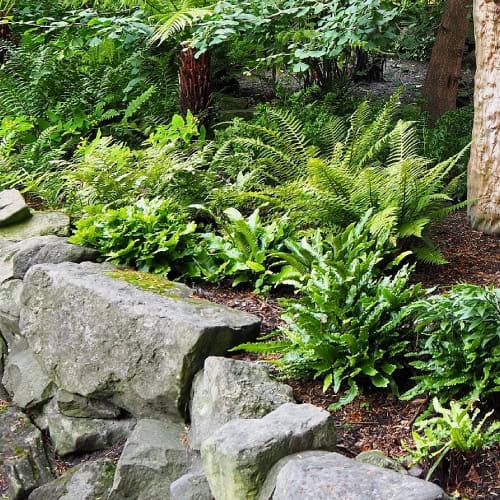
Ferns are classic shade plants; nothing says woodland quite like them! They like partial to full shade and do best in rich, crumbly soil with plenty of compost.
Most ferns can’t handle harsh afternoon sun, since it’ll crisp up their delicate fronds. You can plant them whenever the ground isn’t frozen, but spring or fall is usually easiest.
Pair them with hostas or coral bells for a nice mix of textures in your shadier beds.
3) Astilbe
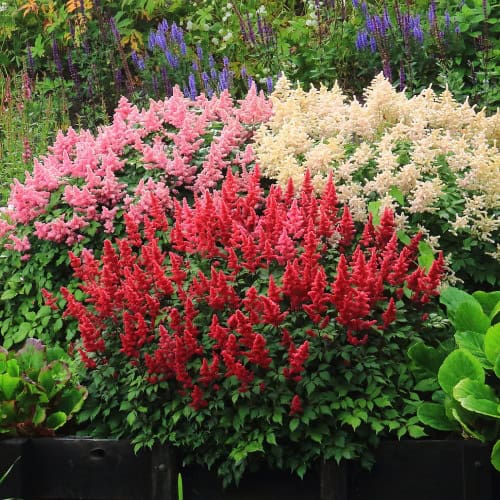
Astilbe sends up feathery plumes in pink, red, white, or purple that light up shady spots in summer. It’s happy in zones 4–8 and usually tops out between 1 and 4 feet tall, depending on the type.
Astilbe does fine in full shade but really shines with a bit of filtered light. Its ferny leaves keep things interesting even when it’s not blooming. As long as the soil stays moist, it’s pretty much set and forget.
4) Lungwort (Pulmonaria)

Lungwort is a shade loving perennial that pops up early in spring with clusters of tubular flowers, sometimes pink, sometimes blue, purple, or white, and they often change color as they age.
But the speckled leaves might be the real star, as those silver spots are hard to miss. It likes moist, well-drained soil and shade, so it’s a great fit for woodland-style gardens.
5) Heuchera (Coral Bells)

Heuchera, or coral bells, brings a splash of color to shady spots thanks to its wild range of foliage, from deep purple to lime green, caramel, and more. These perennials do well in partial shade with a few hours of sun, but they’re pretty adaptable if you keep them watered.
They’re low maintenance, deer usually pass them by, and they’ll keep looking good from spring through fall in zones 4–9.
6) Japanese Forest Grass (Hakonechloa macra)
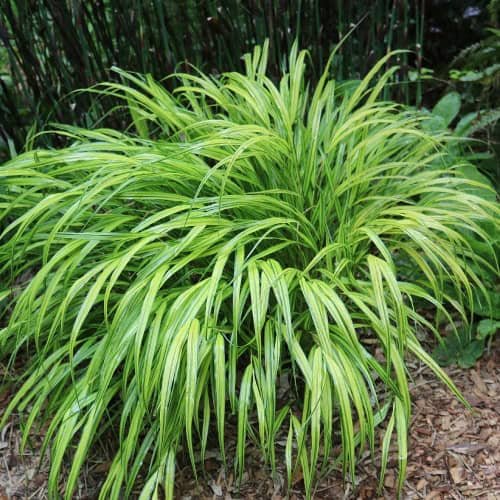
Japanese forest grass brings gentle movement to the shade garden with its arching, graceful leaves. This easy-care perennial likes partial shade and forms tidy clumps about a foot or so high.
Check out ‘Aureola’ for golden stripes or ‘All Gold’ if you want something really bright. It works as a groundcover, around trees, or anywhere you need a little softness in the shade.
It’s hardy in zones 5–9 and prefers moist soil, especially if the afternoon sun gets intense.
7) Bleeding Heart (Dicentra spectabilis)
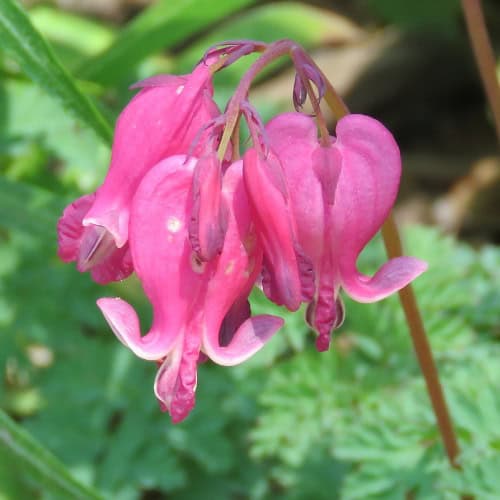
Bleeding heart is famous for its heart-shaped flowers that dangle from arching stems in early spring. It’s happy in partial to full shade and likes soil that stays a bit damp but drains well.
This plant is right at home in woodland gardens or tucked into shady borders. It’ll form clumps on its own if the soil’s loose enough.
The finely divided leaves add texture, and you’ll find blooms in pink, white, or red, usually in spring.
8) Solomon’s Seal (Polygonatum)

Solomon’s Seal brings a touch of elegance with its arching stems and small, white, bell-shaped flowers that hang below the leaves in spring.
It loves partial to full shade, making it perfect for woodland gardens or those tough north-facing spots. Its spreading habit gives you solid groundcover where other plants might give up.
Once it’s established, you can pretty much ignore it. It’ll stick around for years without fuss.
9) Foamflower (Tiarella cordifolia)
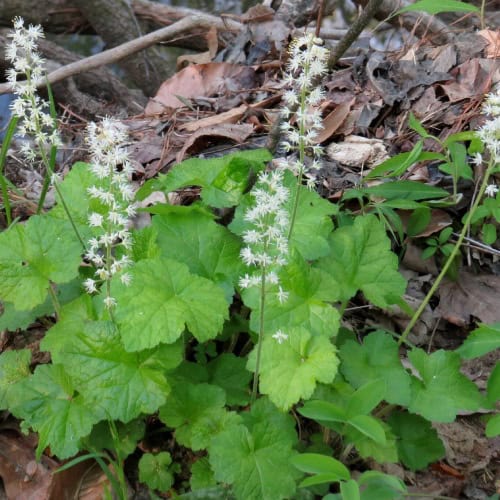
Foamflower is a low, spreading perennial that thrives in woodland shade. It tops out around 8 inches and sends up dainty white or pinkish blooms in spring.
Plant it where there’s steady shade and moist, humus-rich soil. It’s a good ground cover under trees or near native shrubs. Plus, it’s deer-resistant and prefers cooler, forest-like spots.
Too much sun or dry soil will scorch the foliage, so keep it tucked away from harsh conditions.
10) Siberian Bugloss (Brunnera macrophylla)

Brunnera macrophylla is a shade-lover that brings heart-shaped leaves and delicate blue, forget-me-not-like flowers in spring.
Give it moist, well-drained soil and it’ll form a tidy, low-maintenance groundcover. The foliage sticks around long after the flowers fade, so it keeps your garden looking lush into summer.
11) Toad Lily (Tricyrtis formosana)
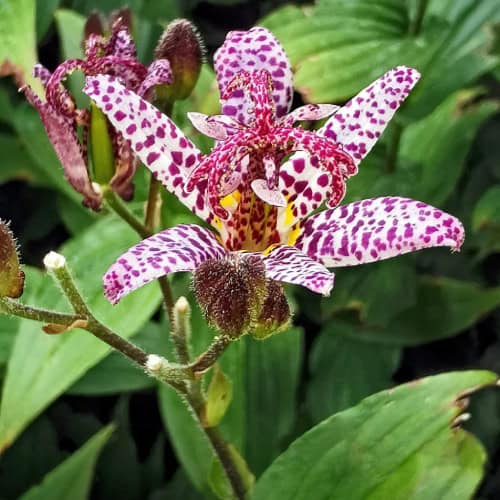
Toad lily is a bit of a hidden gem, as its orchid-like, spotted blooms show up in fall when most other plants are winding down. It grows 1 to 3 feet tall and has arching stems with lance-shaped leaves.
It likes moist, rich soil and steady watering for the best growth. The late-season flowers add something special along borders or woodland edges. Shade or partial shade is best, and it appreciates shelter from strong winds.
12) Hydrangea (shade-tolerant varieties)
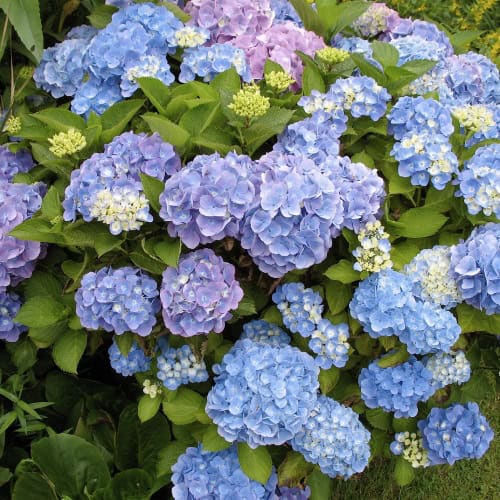
Hydrangeas can still put on a show even in the shade. Mophead and lacecap types do especially well out of direct sun, so they’re great for north-facing spots or under trees.
When grown in shade, hydrangeas develop sturdy stems to hold up those big flower heads. There’s lots to choose from, including the Endless Summer series that just keeps blooming. Just make sure the soil drains well and water them now and then.
13) Sweet Woodruff (Galium odoratum)

Sweet woodruff is a mat-forming perennial that’s right at home in shady spots, usually growing 8 to 12 inches tall. The leaves are fragrant and arranged in whorls along square stems.
In late spring, tiny white flowers pop up above the foliage. It spreads easily in moist, shady areas and is especially useful under trees where not much else wants to grow.
14) Virginia Bluebells (Mertensia virginica)
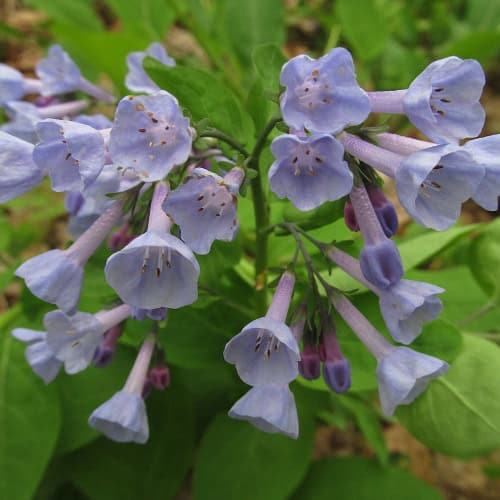
Virginia bluebells are native wildflowers that love partial to full shade. Their trumpet-shaped blooms start out pink and turn a rich blue in early spring.
They grow 1 to 2 feet tall and like moist, rich soil. Plant them under trees or in shady beds and they’ll naturalize over time by spreading rhizomes.
By midsummer, the foliage disappears as the plant goes dormant, so it’s smart to mix them with ferns or other perennials to keep things looking full.
15) Wild Ginger (Asarum canadense)
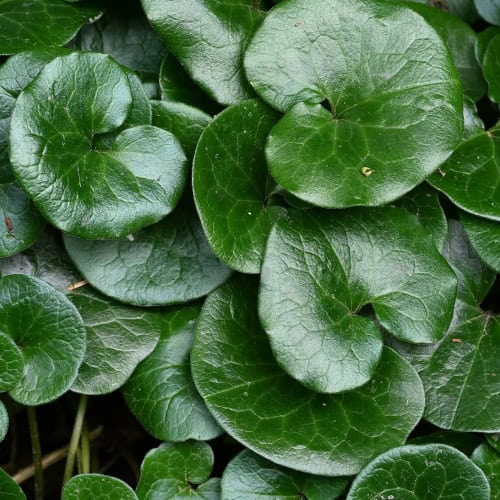
Wild ginger is a native groundcover that thrives in woodland shade across eastern North America. Its heart-shaped leaves spread slowly by rhizomes, making a dense mat in the shade.
In spring, you might spot small, purplish-brown flowers tucked near the soil, though they’re often hidden by the leaves. Wild ginger isn’t related to the ginger you cook with, but it does best in moist, well-drained, organic-rich soil.
16) Bugleweed (Ajuga reptans)

Ajuga is a speedy groundcover for shady spots; hardy, with bold foliage and purple flower spikes in spring. It’s both practical and easy on the eyes.
It’ll form dense mats in partial to full shade, keeping weeds at bay. Ajuga puts up with a range of soils and, once it’s in, doesn’t need much from you.
It’s a top pick under trees, along paths, or anywhere you want reliable coverage without a lot of light.
17) Dead Nettle (Lamium maculatum)
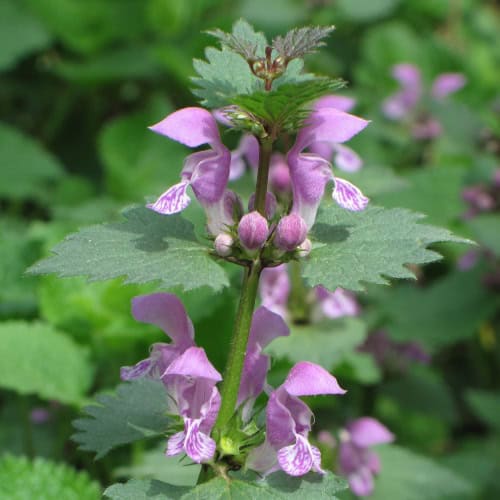
Lamium maculatum, or spotted dead nettle, is a standout groundcover for shade. It spreads to about 3 feet wide but stays low, under 9 inches, so it’s great for filling in bare spots under trees.
Its foliage is eye-catching, and the snapdragon-like flowers come in white, pink, or purple. It likes moist, acidic soil and shade, and settles in quickly without getting out of hand.
18) Spiderwort (Tradescantia obhiensis)
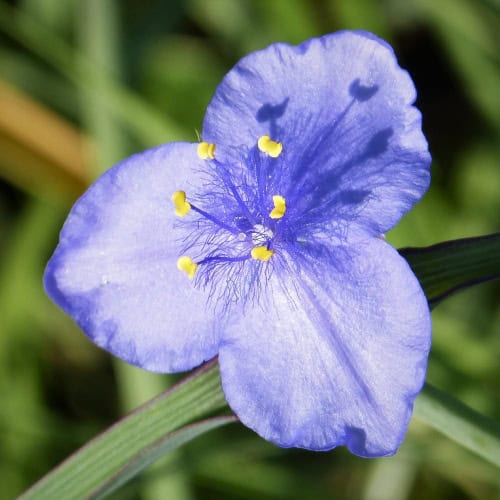
Spiderwort is a good bet for shade gardens and woodland borders, making it perfect for low-light areas. It’s low-maintenance, with colorful foliage and a trailing habit that works in containers or as groundcover.
Tradescantia can handle full shade, partial shade, or even sun, depending on the type. It doesn’t ask for much, just keep the soil moist (not soggy) and plant it in rich, well-drained ground for best results.
19) Foxtail Fern (Asparagus densiflorus)
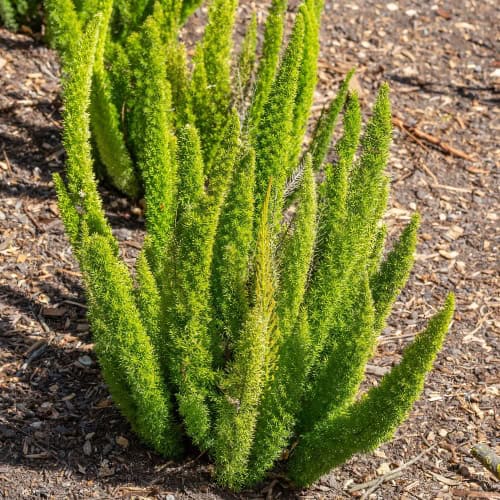
Foxtail fern does pretty well in light shade, so it works for those spots that just don’t get blasted by the sun all day. This evergreen perennial sends up upright, plume-like stems with soft, needle-ish foliage that really does look a bit like a foxtail!
Funny enough, it isn’t actually a true fern; it’s part of the asparagus family. People grow it in containers, or just let it sprawl as ground cover. Usually, it tops out around 2 feet tall and can spread 3 or 4 feet across, depending on where you put it.
20) Japanese Painted Fern (Athyrium niponicum)
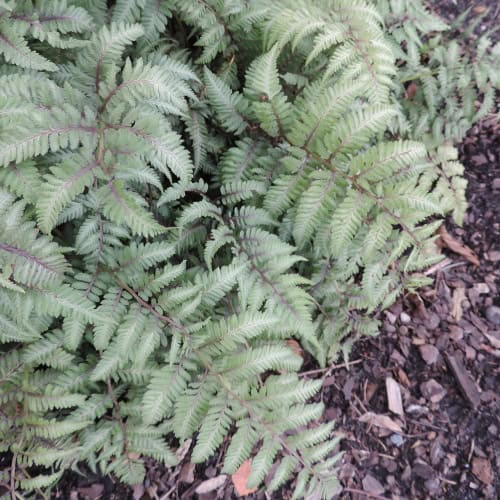
Japanese Painted Fern adds a jolt of color to any shady corner, thanks to its silvery blue-green fronds and those unexpected burgundy midribs. It usually tops out around 18 inches and spreads at a pretty relaxed pace via rhizomes.
Stick it in partial to full shade, and don’t let the soil dry out, as rich, moist, and a bit of humus really do the trick. The variegated leaves bring life to spots where most plants just give up, so it’s a favorite for woodland gardens or even tucked into containers.
This perennial is hardy in zones 3-8 and, honestly, deer usually pass it by.