
Ground cover plants are a practical fix for those stubborn bare spots in your landscape, and they help keep maintenance at bay. These low-growing plants spread across the soil, suppressing weeds, preventing erosion, and adding some much-needed visual interest, without all the fuss of traditional lawns.
Choosing the right ground cover really comes down to your specific growing conditions: sunlight, soil type, climate zone, all that jazz. Some thrive in deep shade, others need plenty of sun. And a bunch of them offer extra perks, including cool foliage, seasonal flowers, or even evergreen leaves that look good no matter what time of year it is.
Here’s a rundown of twenty solid ground cover options that actually work in real gardens. You’ll find picks for everything from damp corners to drought-tolerant varieties that are quick to establish and spread out reliably.
1) Creeping Thyme (Thymus serpyllum)
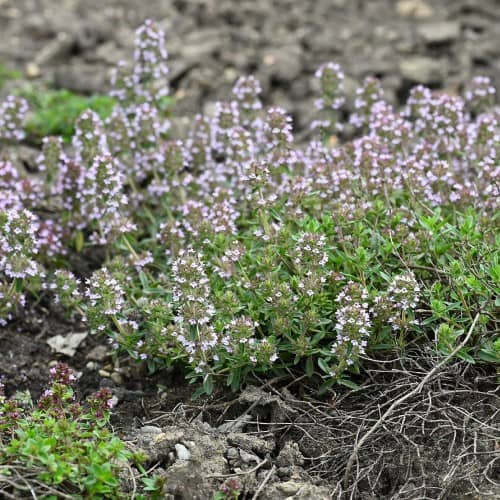
Creeping thyme is a dense, low-growing mat that just loves sunny garden spots. It’s a perennial from the mint family and puts out tiny blue-green leaves and little pink or purple blooms that pollinators can’t resist.
It works between pavers, in rock gardens, or even as a quirky lawn swap. Once it’s settled in, it handles drought like a champ and needs barely any maintenance. And, honestly, the fragrance when you step on it? Hard to beat for garden paths.
2) Bugleweed (Ajuga reptans)
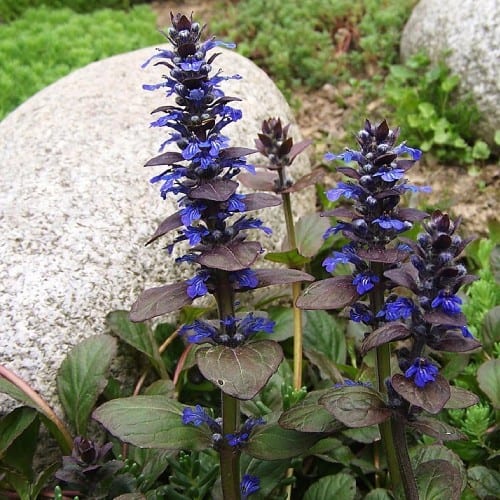
Bugleweed is a speedy, spreading perennial that nails the ground cover job. It usually hits 4 to 8 inches tall and forms thick mats of foliage.
You can pop ajuga in sun or shade, so it’s pretty flexible. It likes moist soil and sends up colorful flower spikes in spring, usually blue, purple, or white.
The leaves come in a bunch of shades: green, copper, purple, even variegated if you’re after year-round visual interest.
3) Japanese Spurge (Pachysandra Terminalis)
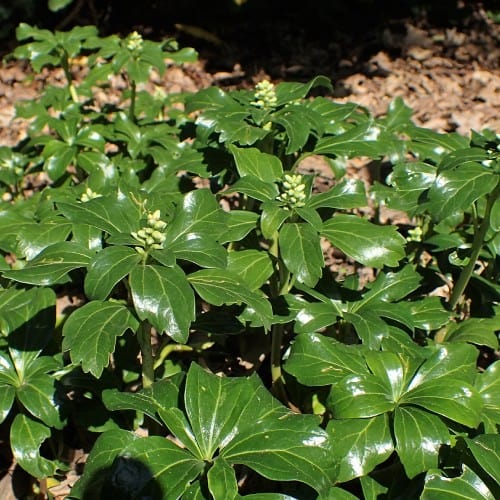
Pachysandra terminalis, or Japanese spurge, is an evergreen ground cover that’s a real workhorse in shady spots where most plants just give up. It gets about 8 to 12 inches tall and spreads by underground rhizomes, forming a thick carpet of dark green leaves.
It’s pretty hands-off once going. The oval leaves cluster at the ends of the stems, and in early spring, you’ll get some subtle white flower spikes.
4) Lesser Periwinkle (Vinca minor)
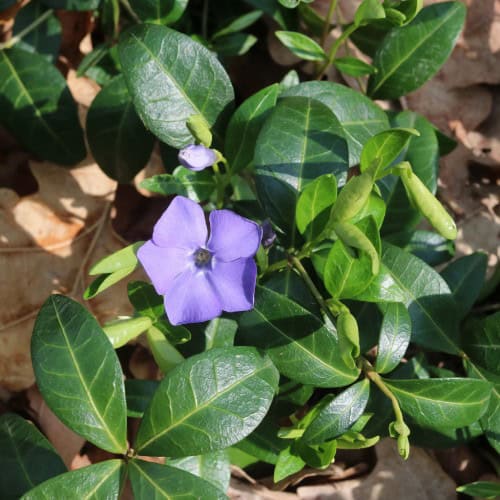
Vinca minor (periwinkle or creeping myrtle) makes a super reliable evergreen ground cover for all sorts of landscapes. This one’s low-maintenance and trails along the ground, rooting as it goes with those glossy leaves.
You can plant it in sun or shade, so it’s a go-to for tricky spots under trees or on slopes. The blue, purple, or white flowers are a nice bonus.
5) Sweet Woodruff (Galium odoratum)
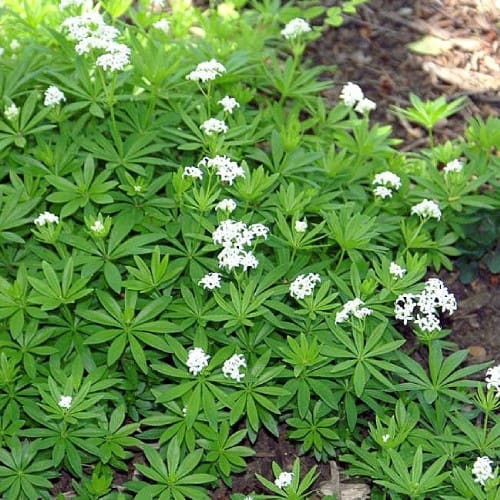
Sweet woodruff is a shade-lover that fills in quickly and keeps weeds away. It stays pretty low, around 6 to 12 inches, and forms a thick mat.
This perennial is super easygoing, happy in partial to full shade and moist, well-drained soil. In late spring, it pops with clusters of small white flowers.
The foliage has a sweet scent, especially when dried; no wonder it’s a favorite for woodland gardens and under trees!
6) Creeping Jenny (Lysimachia Nummularia)
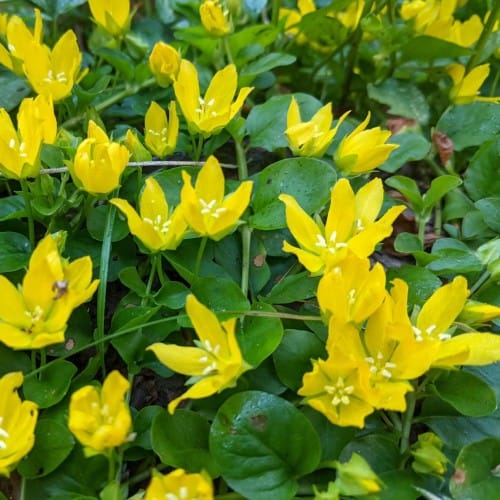
Creeping Jenny is a fast-spreading, super-low mat (just 2 to 4 inches tall), perfect for plugging gaps in your yard. It roots wherever the stems touch soil.
The round, coin-like leaves add a bit of texture, and you’ve got options like ‘Aurea’ for golden foliage or ‘Mini Yellow’ if you’re tight on space.
Likes moist, well-drained soil and will grow in sun or partial shade. It’s also great in containers, baskets, or near water features.
7) Hostas
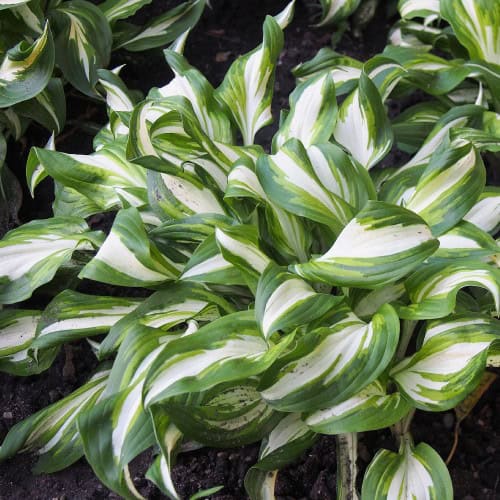
Hostas are a classic for shady areas where grass just won’t cooperate. Their lush leaves spread out and cover ground, especially under trees with tough roots and little light.
These low-maintenance perennials don’t ask for much once they’re settled. There are loads of varieties, from tiny, slow-growers to big, spreading types.
Hostas like moist, well-drained soil, but once their roots are deep, they’ll tolerate some drought. The foliage comes in all sorts of colors: blue, green, gold, white, you name it!
8) Corsican Mint (Mentha requienii)
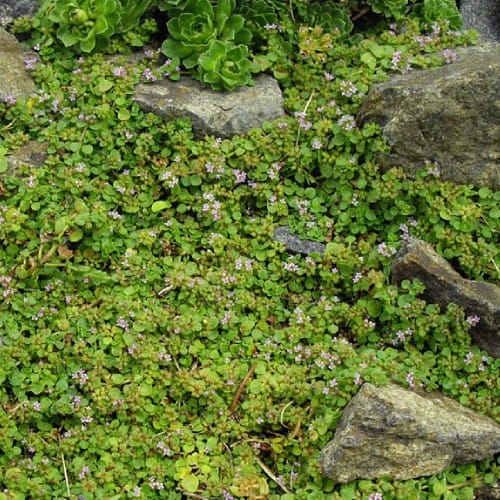
Corsican mint (Mentha requienii) is a tiny, dense, mossy mat, barely a quarter to an inch tall. These little rounded green leaves and the small lilac flowers in summer are pretty charming.
It’s perfect between stepping stones or along shaded paths, especially if you’ve got moist conditions. Walk on it, and you’ll get a nice minty aroma. It stands up to foot traffic and fills in where grass doesn’t want to grow.
Hardy in USDA zones 5 through 9 and will reseed itself in cooler spots.
9) Sedum (Stonecrop)
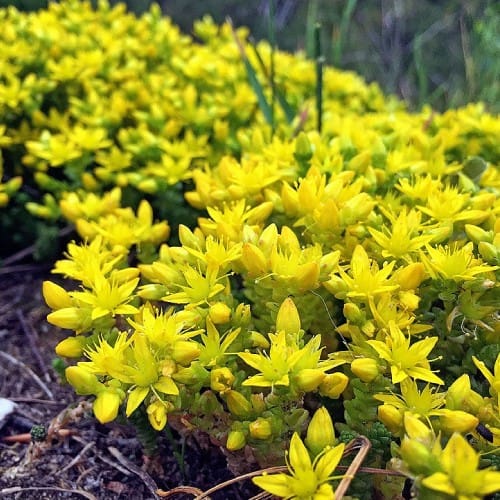
Sedum is a lifesaver for hot, dry spots where nothing else seems to make it. These low-growing succulents spread fast, reaching two to six inches tall and up to two feet wide.
You’ll find sedum does well in USDA zones 3 through 9, so it’s pretty versatile. It barely needs any attention and shrugs off drought, making it a smart choice if you’re trying to save water.
10) Lilyturf (Liriope Muscari)
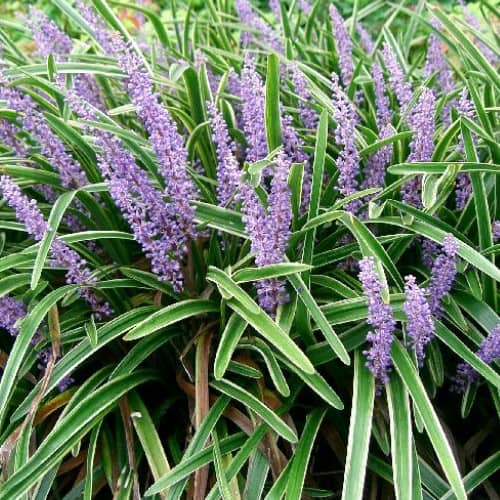
Liriope muscari, or lilyturf, is an evergreen perennial with dense clumps of dark green, grass-like leaves. It’s got that nice year-round coverage, plus spikes of purple flowers in late summer.
This shade-tolerant plant grows 12 to 18 inches tall and handles a range of light conditions. Use it along paths, as a border, or massed out for ground cover that doesn’t ask for much upkeep.
11) Barrenwort (Epimedium)
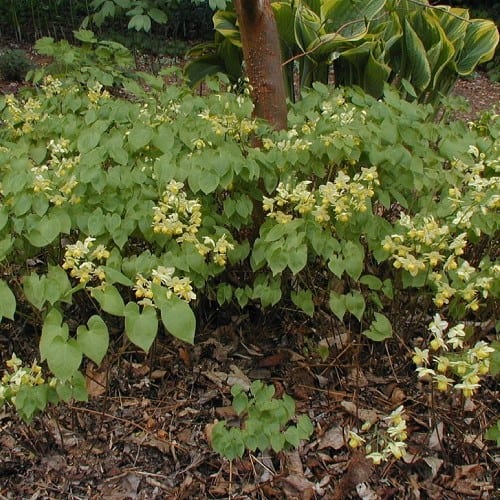
Barrenwort is a shade-loving perennial that forms neat mounds of heart-shaped leaves. It spreads slowly by rhizomes, perfect for spots under trees and shrubs.
Early spring brings delicate flowers that float above the foliage. Once it’s settled, barrenwort handles dry shade just fine.
It’s a good pick for planting at the base of trees, hydrangeas, or azaleas. It reaches about 8 to 20 inches tall and is great for hiding exposed roots.
12) Creeping Mazus (Mazus Reptans)
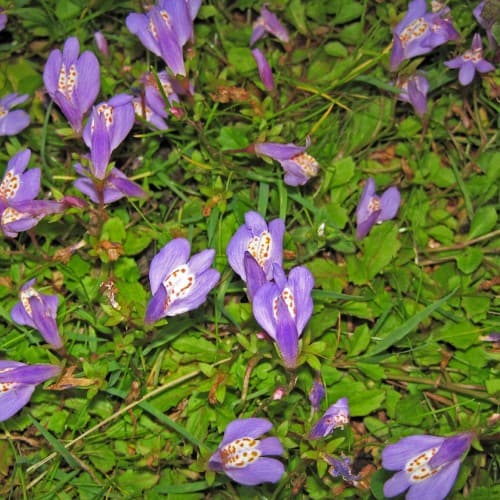
Mazus reptans, or creeping mazus, forms a dense, low carpet, just two inches tall. It creeps along, rooting as it goes, with narrow, bright green leaves and little clusters of purple-blue flowers in late spring and summer.
It’s a handy pick between pavers or stepping stones since it takes light foot traffic. Thrives in USDA zones 5 to 8 and does well in shady areas under trees.
13) Dwarf Mondo Grass (Ophiopogon japonicus ‘Nanus’)
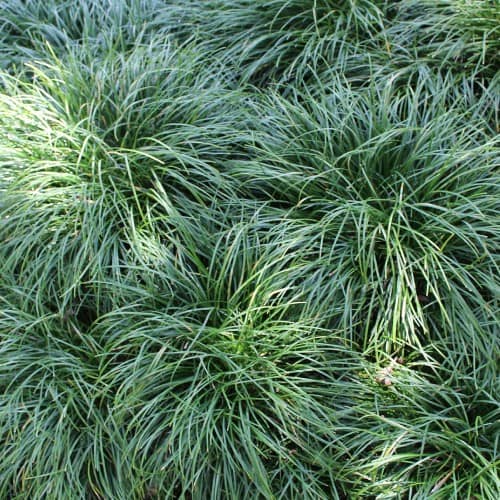
Dwarf mondo grass (Ophiopogon japonicus ‘Nanus’) is a compact evergreen ground cover that’s right at home in the shade. Despite the name, it’s not a true grass, it’s actually in the Liliaceae family.
You get dense, dark green clumps that make a lush carpet. It’s great for edging, borders, or tucking between rocks and pavers.
This one’s super low-maintenance and keeps your garden looking fresh all year. Can’t really ask for more from a ground cover.
14) Spotted Dead Nettle (Lamium Maculatum)
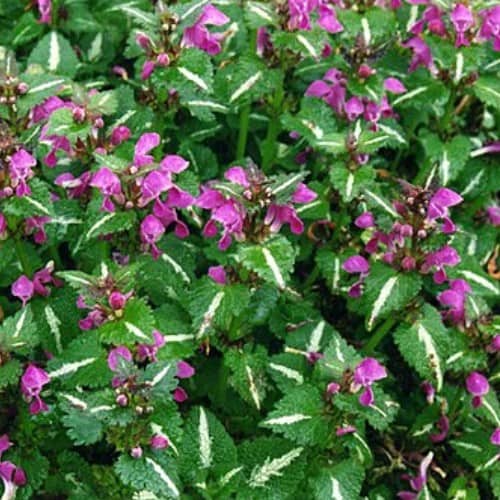
Lamium maculatum, or spotted dead nettle, is a perennial ground cover that loves shaded garden corners. It usually grows 5 to 8 inches tall and spreads out with stems that root as they go.
The variegated foliage is eye-catching, and the small, two-lipped flowers come in purple, pink, or white. Varieties like ‘White Nancy’ with silvery leaves and dark edges are especially nice.
15) Blue Star Creeper (Isotoma fluviatilis)
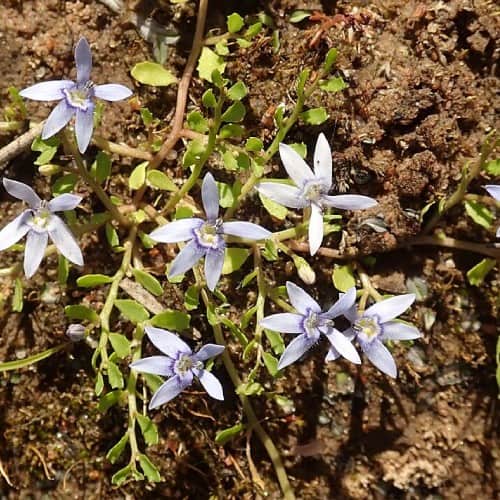
Blue Star Creeper (Isotoma fluviatilis) is a super low-growing evergreen perennial from Australia and New Zealand. It forms a dense mat of tiny, bright green leaves and is topped with delicate blue star-shaped flowers from spring through fall.
Use it to fill in between stepping stones, in garden borders, or even as a quirky lawn substitute. It handles some foot traffic and spreads fast, but won’t get out of hand.
16) Candytuft (Iberis Sempervirens)
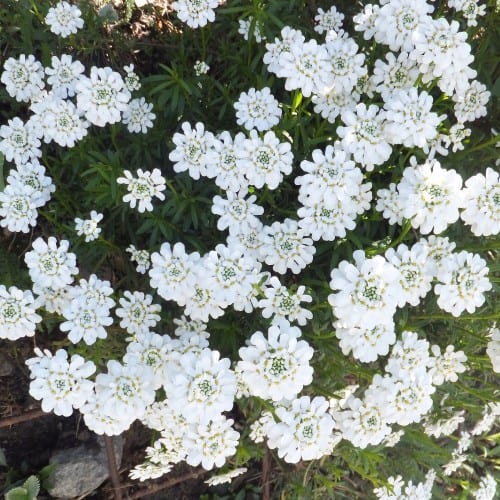
Candytuft is a low, evergreen ground cover that forms mats about 6 to 12 inches tall and up to 18 inches wide. In spring, it’s covered in clusters of small white flowers.
It works well along walkways, borders, or in rock gardens, making for an attractive edge. Candytuft likes full sun and well-drained soil, and it’ll tolerate poor or dry conditions once settled in. Avoid soggy or heavy clay soils, though, as root rot is a real risk.
17) Irish Moss (Sagina Subulata)
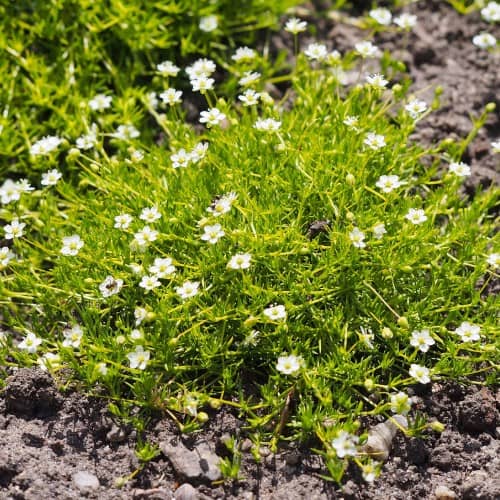
Irish moss gives you a dense, cushiony mat of emerald green that looks like real moss but is actually in the carnation family. It’s great between stepping stones, along paths, or as a mini lawn in small spaces.
This evergreen perennial can take a bit of foot traffic and puts out small white flowers in spring. It does best in USDA zones 4a through 8a, and likes cool, moist spots with sun or partial shade.
18) Frogfruit (Phyla nodiflora)
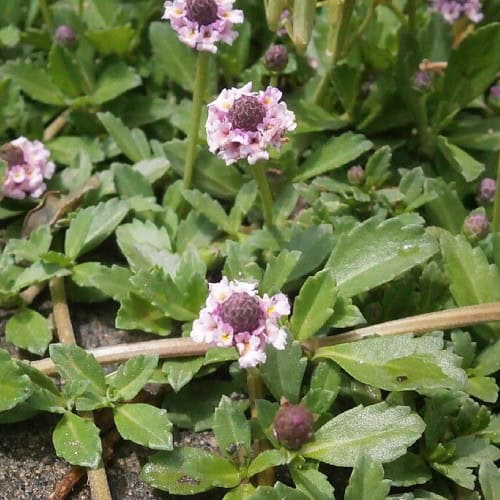
Frogfruit is a tough, low-growing native groundcover that thrives where many plants struggle. It typically stays 2 to 6 inches tall and spreads quickly by creeping stems that root as they go.
It does best in full sun to partial shade and adapts well to a wide range of conditions, from dry soil to periodic flooding. The small, soft green leaves may thin in winter in colder areas but return vigorously in spring. Tiny white-and-purple flowers appear from late spring through fall and are highly attractive to butterflies and other pollinators.
Frogfruit tolerates heat, drought, poor soils, and light foot traffic once established, making it a great choice for slopes, paths, and naturalized lawns. Deer generally avoid it.
19) Creeping Phlox (Phlox subulata)
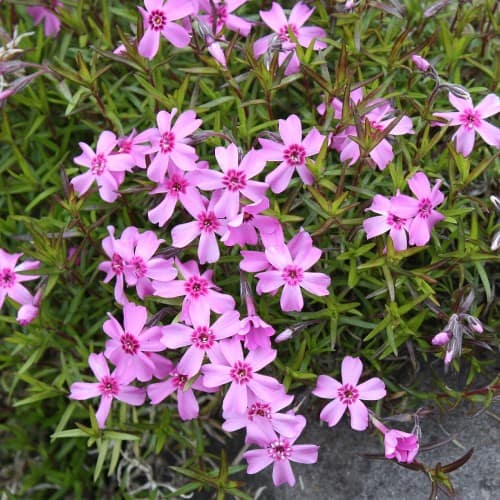
Creeping Phlox is a hardy, low‑maintenance perennial that makes an excellent ground cover. It stays low to the ground, typically growing 4 to 6 inches tall, and spreads steadily to form a dense, carpet‑like mat.
It performs best in full sun, though it can tolerate light shade. In early to mid‑spring, Creeping Phlox bursts into a stunning display of pink, purple, blue, or white flowers, creating a vibrant blanket of color. Its needle‑like evergreen foliage adds interest even after blooming.
Creeping Phlox is great for suppressing weeds, preventing erosion, and works especially well on slopes, borders, and rock gardens.
20) Bearberry (Arctostaphylos Uva-Ursi)
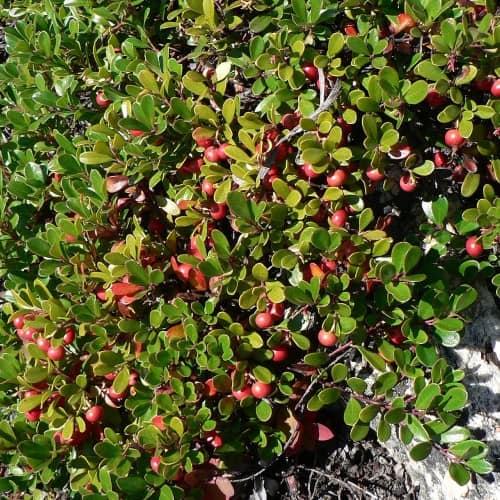
Bearberry is one of those plants that’ll quietly take over spots where almost nothing else wants to grow. It forms a low, evergreen mat, and honestly, it’s not in a hurry, as this shrub spreads slowly through surface rhizomes, usually topping out at 6 to 12 inches high but can stretch out 3 to 15 feet across if you let it.
The leaves are glossy and dark green most of the year, but when winter rolls around, they shift to this reddish purple that’s kind of striking. In spring, you’ll spot clusters of little pink-white, urn-shaped flowers, and then come the red berries. Bearberry doesn’t really care if your soil is sandy, rocky, or just plain bad – it’s perfectly happy in tough garden spots!