
Kohaku, Taisho Sanke, and Showa Sanshoku lead the high-end koi market, while the other varieties on this list earn their place through distinctive color, finish, or pattern. Known together as the Gosanke, these three Japanese koi varieties regularly dominate prestigious competitions like the All Japan Koi Show and rank among the most expensive types of koi fish.
Prized worldwide as living jewels, these Japanese ornamental fish, or nishikigoi, have captivated pond owners for generations. Among the many types of koi fish, only select lineages achieve world-record valuations.
Published price ranges give you a starting point across different koi varieties, not a verified 2026 average. While koi prices fluctuate by breeder and bloodline, the figures below are indicative hobbyist prices where a usable range is available; they do not describe a uniform size or grade.
Quick picks:
- Kohaku: The benchmark for a prized red-and-white show koi.
- Yamabuki Ogon: A metallic gold koi with a straightforward pattern to assess.
- Asagi: A traditional choice when you favor orderly scale patterning.
1) Kohaku
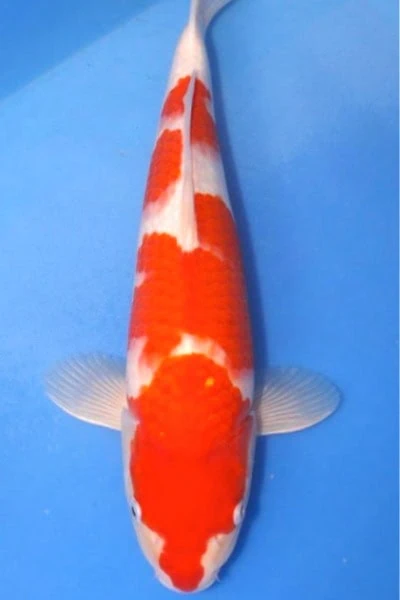
Kohaku commands the strongest high-end attention among these varieties. A classic Kōhaku koi features red markings, called hi, over a clean white body. A popular variation is the Tancho Kohaku, celebrated as a prized Tancho koi for its single circular red marking positioned squarely on the head.
An indicative hobbyist range is $50–$500, with exceptional show fish occupying a separate market. S Legend, a Kohaku bred by Sakai Fish Farm and sold for about $1.8 million in 2018, became the most expensive koi fish ever auctioned.
Bred by Kentaro Sakai in Hiroshima, Japan, this champion koi was acquired by Miss Yingying at a landmark koi auction. That historic sale solidified its reputation as the most expensive koi ever sold and the most expensive koi in the world.
You should treat the sale as an auction outlier, never as a Kohaku average. When comparing fish, look for clean white skin, well-defined red and a pattern that remains balanced from head to tail. The Kohaku koi guide explains those markings in greater detail.
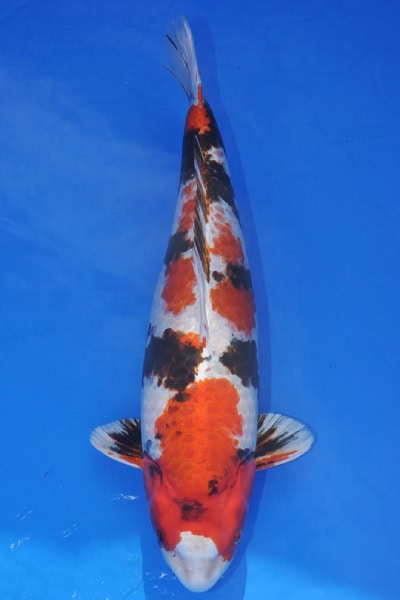
2) Taisho Sanke
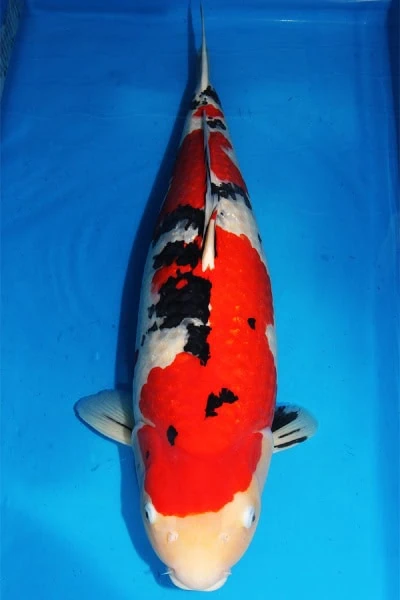
Taisho Sanke adds black markings, or sumi, to a Kohaku-style red-and-white pattern. When assessing a Taisho Sanke koi, your challenge is judging whether all three colors work together without the black crowding the red. Reported hobbyist prices span $50–$3,000, a broad range that reflects substantial differences between individual fish.
A well-placed cluster of sumi gives the pattern contrast; scattered marks can make the same fish look busy. You can use the Sanke koi guide to distinguish promising pattern development from a finished-looking young fish.
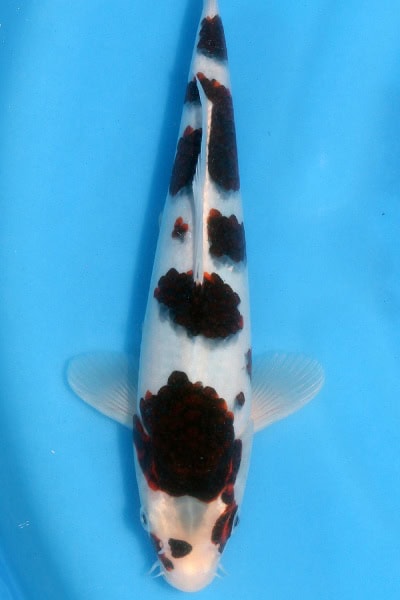
3) Showa Sanshoku
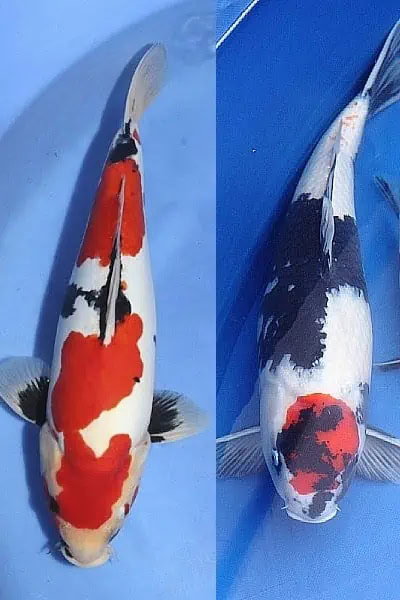
Showa Sanshoku brings bold black patterning across a red-and-white fish, creating a markedly different impression from Sanke. Its indicative hobbyist range is $50–$2,000. At the expensive end, you are judging the depth and placement of the sumi alongside the quality of the red and white.
Black may continue to develop as a Showa grows, so a young fish’s current pattern is only part of your assessment. Compare the whole body, including the head and fins, when you evaluate the balance. The Showa koi guide covers the variety’s markings.
4) Yamabuki Ogon
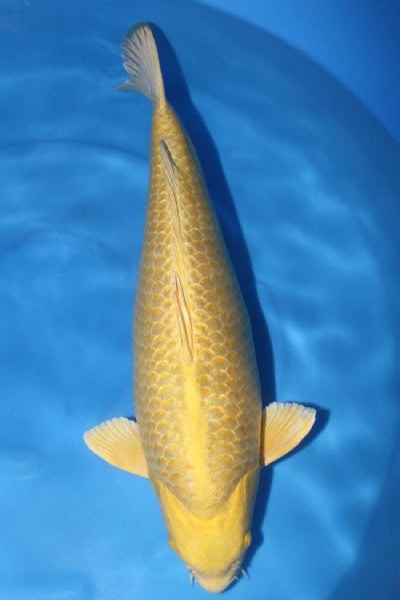
Yamabuki Ogon’s value rests on an even, metallic yellow-gold finish. Often called a Yamabuki koi, it shares the metallic category with lustrous varieties like the snowy Platinum Ogon.
As one of the most popular solid-color Ogon koi varieties, any uneven sheen or stray mark stands out quickly. An indicative hobbyist range is $100–$300; larger, higher-grade fish require individual pricing.
You should view a prospective fish under steady light and check whether the gold remains consistent over its back, sides and head. Body shape deserves equal attention: a strong metallic finish does little to disguise a narrow frame.
5) Goshiki
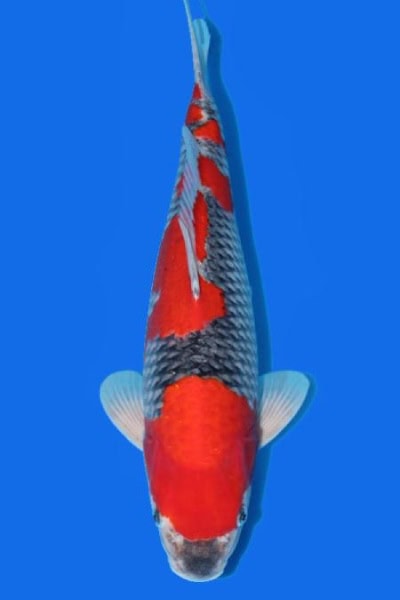
Goshiki pairs red markings with a ground that develops dark, netlike coloration. Reported hobbyist pricing of $50–$500 gives you a useful entry range, though the finish of each fish drives the comparison.
Look closely at the edges of the red pattern. As the darker ground develops, it changes how clearly those markings read. You are paying for a pleasing relationship between the red and the underlying color, as well as sound body shape.
6) Kujaku
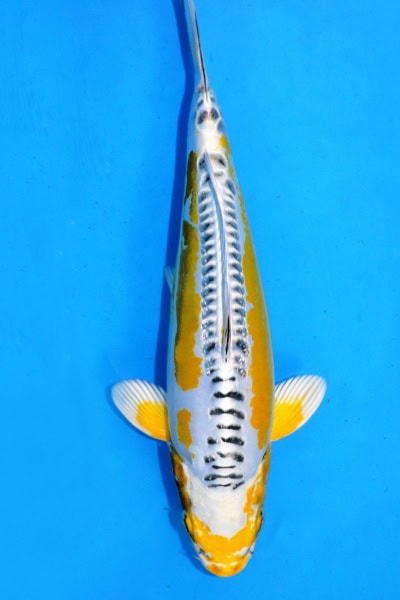
A refined Kujaku koi earns its place through metallic shine combined with dark-centered scales that form a net pattern. Originally created by crossing Goshiki with Matsuba koi, its pinecone reticulation creates dramatic depth. A comparable typical price range is unavailable here, so you should assess a quoted price against fish of the same size and grade.
Check the scale pattern from above. An orderly net and consistent metallic luster give you more to evaluate than bright color alone. A gap in the pattern is especially noticeable on an otherwise uniform fish.
7) Asagi
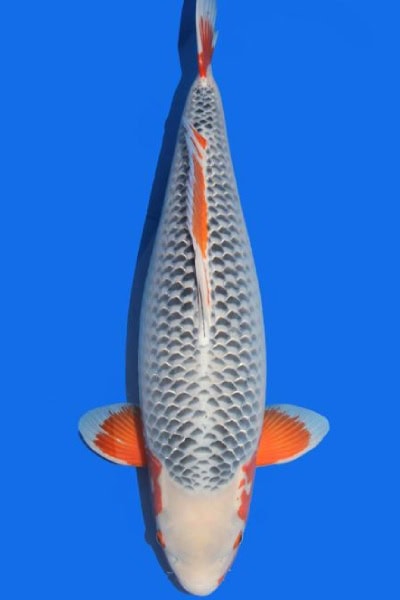
Asagi is prized for its blue-gray, netlike scale pattern and red along the sides. Its indicative hobbyist range is $50–$300, while unusually refined specimens sit outside that bracket.
Start your inspection at the head, then follow the rows of scales down the back. A clean head and regular pattern help the red accents look deliberate. The Asagi koi guide offers a closer look at how the variety’s color is arranged.
8) Shusui
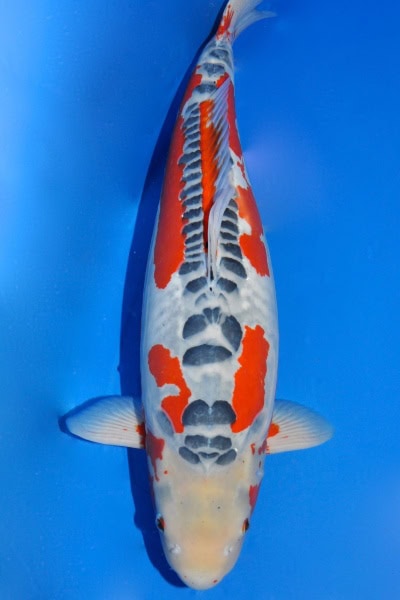
Shusui translates Asagi-like blue and red coloring onto a largely scaleless body as an early Doitsu koi variety. Much like Kumonryu koi and metallic Beni Kikokuryu, it features smooth skin punctuated by dorsal scales. A defensible average price range is unavailable, so size- and grade-matched listings are the useful comparison.
You can assess the dorsal scale line at a glance from above: interruptions draw attention, while a tidy line supports the fish’s clean appearance. Check the smooth areas of skin closely, too. The Shusui koi guide explains the variety’s characteristic scale arrangement.
9) Koromo
Koromo, also called Goromo, stands out through red Kohaku-like markings edged or overlaid with darker color. That detail creates a textured appearance whose quality varies considerably from fish to fish. There is no comparable price range here to present as an average.
Focus on how consistently the darker edging appears within the red pattern. You also want the underlying white skin to look clean. Koromo is also called Goromo; the Goromo koi guide covers its pattern types.
10) Hi Utsuri
Hi Utsuri pairs red or orange with substantial black markings that wrap around the body. Along with the striking black-and-white Shiro Utsuri, it is one of the most recognized Utsuri koi varieties. Reported examples around $600–$700 provide a price reference, not a representative average for the variety.
Look for strong separation between the two colors and a pattern that holds together from head to tail. Black-and-red fish vary widely in finish, so inspect the skin as carefully as the dramatic markings. The Utsurimono koi guide places Hi Utsuri within its wider variety group.
How Koi Costs Were Compared
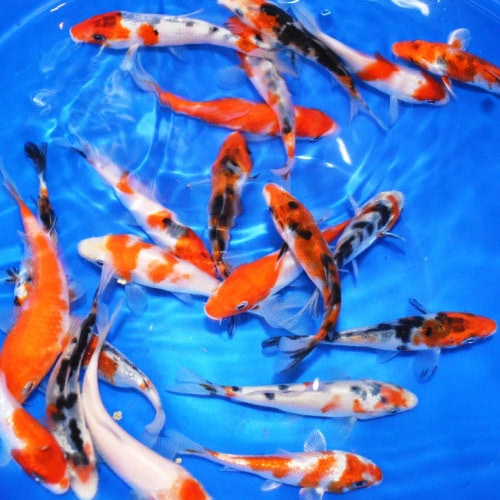
These prices are indicative hobbyist benchmarks, not a statistical ranking of 2026 U.S. sales. Evaluating common koi prices across different types of koi fish helps clarify where the true premiums lie.
You can use the table to compare each variety’s appearance and the pricing information available for it, then assess individual fish at a matched size and grade.
| Variety | Defining appearance | Reported price reference | Key quality cue |
|---|---|---|---|
| Kohaku | White with red | $50–$500 | Clean white skin |
| Taisho Sanke | White, red and black | $50–$3,000 | Balanced sumi |
| Showa Sanshoku | Bold black, red and white | $50–$2,000 | Strong color placement |
| Yamabuki Ogon | Metallic yellow-gold | $100–$300 | Even sheen |
| Goshiki | Red over a darkening ground | $50–$500 | Clear red edges |
| Kujaku | Metallic net pattern | No comparable range | Regular scale pattern |
| Asagi | Blue-gray net with red | $50–$300 | Orderly scales |
| Shusui | Smooth body with dorsal scales | No comparable range | Tidy dorsal line |
| Koromo | Dark-edged red on white | No comparable range | Consistent edging |
| Hi Utsuri | Black with red or orange | $600–$700 in reported examples | Clear color separation |
What Size and Grade Do the Average Costs Represent?
The reported ranges describe hobbyist-priced fish, but they do not share a stated size or uniform grade. You therefore cannot turn them into dependable averages for, say, a particular length of show-quality koi. For your own comparison, hold length, age, health and grade as constant as possible before judging which variety carries a premium.
A broader explanation of how much koi fish cost helps put an individual asking price in context. For Kujaku, Shusui and Koromo, quoting a number without comparable price information would give you false precision.
Why Are Auction Records Different From Typical Prices?
An auction record reflects bidding for one exceptional fish at one event. S Legend’s roughly $1.8 million sale shows Kohaku’s extraordinary ceiling among expensive koi fish; it tells you little about the price of a pond-quality Kohaku offered in the United States.
Some other spectacular koi sale figures circulate without clear transaction details. Keep those claims separate from documented sales, and keep both separate from the asking price you face for a specific fish.
What Makes an Individual Koi More Expensive?
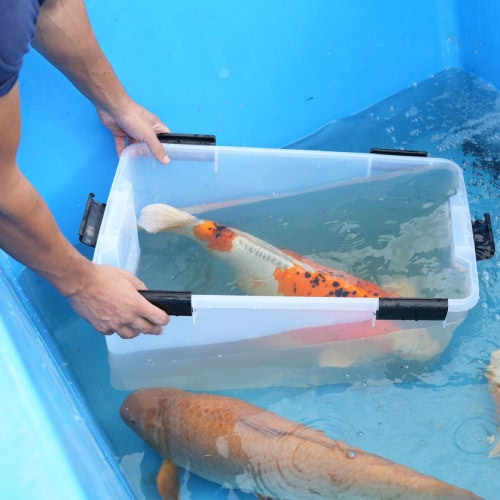
An individual Japanese koi becomes more expensive when its visible quality and future potential distinguish it from other fish of the same variety. That is why a carefully finished fish from a variety lower on this list can cost more than an ordinary Kohaku or Showa.
How Do Pattern, Skin Quality, and Body Shape Affect Price?
Pattern determines how your eye travels over the fish; skin quality determines how cleanly its colors show. Strong body shape supports both as the koi grows. Judge the fish from above in clear water, where you can see whether the shoulders, back and tail form a balanced outline.
Apply each variety’s standards to that inspection. Kohaku calls attention to its white ground, Yamabuki Ogon to even metallic shine, and Asagi to orderly scales. A striking pattern does not compensate for poor skin or weak conformation.
Scale texture also plays a significant role in market interest. A Ginrin koi commands special appeal because its reflective, diamond-like scales add glittering brilliance to classic patterns.
How Much Do Bloodline, Size, and Show History Matter?
Generations of selective koi breeding give you information about a lineage’s consistency, while size and show results provide evidence of what an individual fish has achieved. Their value still depends on the fish in front of you: inspect its present condition and ask what is documented about its age, parentage and awards.
Larger koi also place greater demands on your koi pond. Your assessment of a high-priced fish should include the space available for it, since how many koi a pond can support affects whether you can maintain its condition after the sale.