
Across these 20 DIY fire pit ideas, you have options ranging from compact budget-friendly fire pit projects to permanent gathering spaces.
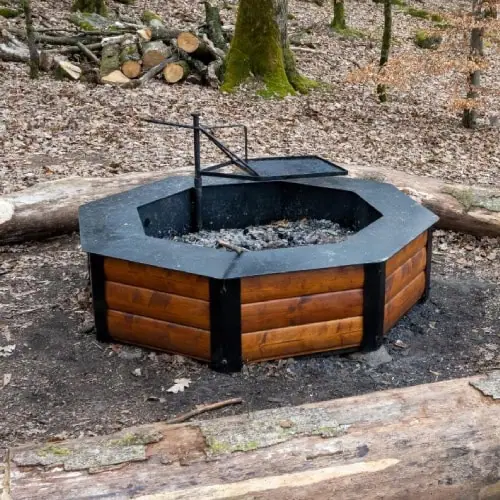
For your budget, separate the cost of containing the fire from the cost of dressing up the setting. Reclaimed materials save money only when you can verify their suitability; a purchased fire bowl with a handmade surround is a different project from building a working fire pit.
Before committing, check your local burning rules, permits, HOA restrictions, and current burn bans. Follow the insert manufacturer’s clearances from structures and vegetation, and arrange an 811 utility locate before digging, including checks for private lines. Plan drainage for recessed designs, keep extinguishing equipment nearby, and supervise every fire through complete extinguishment.
1) Firepit from a Car Rim
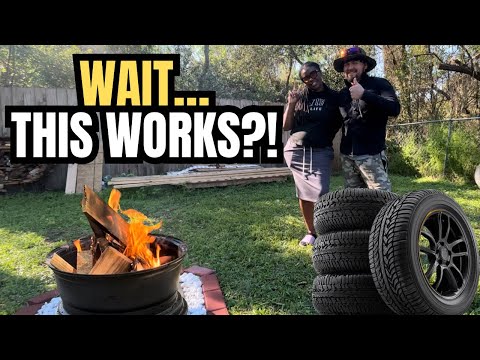
A car rim gives your project a compact industrial look, especially when you already have suitable salvage. Your savings depend on finding sound steel with a verified material and coating history.
Treat the rim as an outer decorative component around a compatible, purpose-made fire chamber. Aluminum wheels and unknown painted or plated rims belong outside this project.
2) Stone Mortar Fire Pit

With manufactured stone-look blocks, you get a traditional round fire pit and predictable shapes that simplify planning. This is an approachable weekend option when your site is level and your chosen kit includes compatible components.
Your creative choices come through in the block color and cap profile. Use a heat-rated liner or insert specified for the assembly, with the required separation from the outer masonry; ordinary landscape blocks need protection from direct flame.
3) In-Ground Fire Pit With a Steel Ring

Recessing a purpose-made steel fire ring gives you a low-profile feature that leaves your backyard sightlines open. You also have less visible outer wall to finish, which helps contain material costs.
Your soil and drainage determine whether this is a sensible weekend project. A gravel layer alone won’t drain a hole in heavy clay. Keep the rim visible to reduce trip risk, and choose a ring specifically approved for recessed installation.
4) Rustic Fieldstone Fire Pit

Fieldstone gives your fire pit the irregular edges and weathered texture that suit a country-style yard. You get an engaging design challenge from matching stone shapes, although the lifting and fitting demand patience.
Keep your fieldstone outside a suitable heat-rated fire chamber. Gathered stone has uncertain heat behavior, especially when damp. For a coordinated setting, carry similar colors into your surrounding stone landscaping while keeping loose decorative material outside the combustion area.
5) Smokeless Cinder Block Fire Pit

For less smoke during a well-established wood fire, you get the most predictable DIY route by designing around a purpose-built secondary-combustion insert. Its heated airflow helps burn gases that would otherwise leave as smoke.
Your craft project becomes the compatible surround and setting. Keep the insert’s intake openings and removal access clear. Expect smoke during lighting and extinguishing, and use dry, seasoned firewood below the manufacturer’s maximum fill level.
6) Modern Square Fire Pit Ring

Straight edges give your square fire pit a crisp relationship with rectangular patios and contemporary furniture. You gain a strong visual centerpiece without needing decorative stonework.
A manufactured square insert makes this a more approachable project for your first masonry surround. Allow the specified expansion space around the insert, since tight-fitting masonry risks damage as the metal heats and cools.
7) Natural Rock Fire Pit

Larger natural rocks give your fire pit a substantial border with fewer visible joints than small stacked stones. You have room to play with asymmetry while keeping a purpose-made fire bowl or insert at the center.
Your rock choices should suit exterior landscaping and remain outside the manufacturer’s required separation from the fire chamber. Avoid wet river rocks in heated areas. Budget for delivery or lifting help when individual pieces exceed what you can safely handle.
8) Dollar Tree Tabletop Fire Pit

Dollar Tree supplies give you an inexpensive way to personalize a tabletop display around an independently approved fire appliance. Your dollar-store purchases should remain decorative and outside every required clearance.
For a low-cost craft, pair your decorative base with an outdoor-rated LED flame. If you want real flame, use a complete listed outdoor tabletop appliance exactly as directed. Ordinary bowls, drinking glasses, and improvised alcohol containers are unsuitable substitutes for a tested burner assembly.
9) Stacked Half-spiral Fire Pit

An ascending half-spiral gives your masonry surround a sculptural profile, with one side rising above the rest. You get a more individual design through the arrangement of the outer wall.
Keep a complete, purpose-made fire chamber inside that decorative shape. The taller section adds weight and overturning risk, so your design needs an appropriate foundation and stable masonry details. Treat this as an experienced-builder option once the wall moves beyond a low, manufacturer-approved block arrangement.
10) Red Brick and Cement Raised Fire Pit

Red brick gives your raised fire pit a familiar look that pairs well with older homes and brick paths. You gain a permanent feature with plenty of opportunity to practice neat joints and consistent spacing.
Your outer brickwork needs a separate fire-rated interior. Firebrick is made for high temperatures, and refractory mortar is formulated for those heated joints. Ordinary cement mortar belongs only where the assembly permits it. Allow the specified curing and drying time before your first fire.
11) Smokeless Foam & Concrete Fire Pit

Foam forms give your concrete surround curves and recesses that would be awkward to shape with rigid boards. This is a specialized casting project for your experienced-builder shortlist.
Your foam serves only as removable formwork, with every trace removed from heated areas before use. A purpose-built smokeless insert supplies the combustion system, while an approved separation detail protects the ordinary concrete. Preserve the insert’s ventilation space and follow the concrete mix’s full curing requirements.
12) Washing Machine Drum Fire Pit

A washing machine drum gives your project a distinctive perforated-metal shell, especially with light showing through its openings. Your safest interpretation uses that shell decoratively around a compatible manufactured fire chamber or an LED display.
Appliance salvage calls for experienced inspection: you need verified metal, removed nonmetal parts, and a stable support arrangement. Perforations in an exposed wood-burning drum also release embers. Account for that hazard before treating an appliance part as outdoor fire equipment.
13) Fremont DIY Outdoor Fireplace

A Fremont outdoor fireplace gives your patio a tall architectural focal point and a more enclosed hearth. Your DIY contribution is substantial masonry assembly, making this a larger project than a freestanding backyard fire pit.
The kit format gives you coordinated components, but your foundation and local approvals still need attention. Plan for freight access and heavy lifting. Check the current manufacturer’s specifications for the hearth lining, chimney configuration, and required clearances before committing to the footprint.
14) Smokeless Firepit with Pavers

Pavers help your smokeless insert look integrated with the patio while giving you control over the exterior finish. This is a surround-building project, with the purchased insert doing the combustion work.
Your main design challenge is preserving airflow beneath and around that insert. Tight masonry enclosures interfere with systems that depend on unobstructed intake openings. Retain access for ash removal, and use only the paver and liner arrangement approved for your chosen appliance.
15) DIY LED Fire Pit

Battery-powered LED flames give you a fire-pit-style centerpiece without combustion, hot embers, or firewood storage. You get an approachable decorative craft for a small outdoor space.
Your bowl, imitation logs, and lighting offer plenty of room for customization. Choose outdoor-rated components, protect the battery compartment from standing water, and secure the display against tipping.
16) Tabletop Fire Pit With a Listed Outdoor Burner

A listed outdoor burner gives your tabletop project a defined fuel system and installation requirements. You still have creative control over a compatible noncombustible enclosure.
Choose a burner explicitly approved for installation in a custom assembly; a listing alone doesn’t approve every surrounding design. Follow its ventilation and fuel-storage requirements, and use only specified fire media.
Your tabletop also needs adequate heat resistance and stability. Any fixed gas connection belongs with a qualified installer.
17) DIY Fire Pit From a Barrel (No Weld)

A no-weld barrel design gives your backyard an industrial centerpiece while avoiding welded joints. Your project still requires metalworking judgment, particularly around sharp edges and load-bearing attachments.
Keep this on your experienced-builder list. A purpose-made barrel-style enclosure with a compatible heat-rated insert offers a clearer starting point than salvaged drums. Never cut or heat a used barrel with unknown contents, and exclude lined or unknown coated metal from the heated assembly.
18) DIY Sunken Fire Pit

Lowering your entire seating area creates a defined outdoor room around the fire. This larger landscape project gives you a different experience from recessing only the fire ring.
Your budget needs to account for excavation and a drainage outlet. Retaining walls and steps add structural considerations, while low areas collect runoff. If you incorporate boulders into your landscaping, arrange their placement before access becomes restricted. Keep the fire appliance’s ventilation and overhead clearances intact.
19) Truck Rim Fire Pit

A truck rim gives your decorative fire-pit enclosure a broader, heavier profile than a passenger-car rim. You gain a substantial industrial accent, along with more demanding handling requirements.
Use a compatible manufactured insert and have the rim’s material and surface treatment verified. Heavy steel needs a secure, level support surface. Leave all tire removal and wheel disassembly to qualified professionals, especially with multi-piece truck wheels, and avoid stacked arrangements without an engineered connection.
20) Circular Seating and Fire Pit Surround

Circular seating turns your existing fire appliance into an organized gathering area, with the DIY effort concentrated on the landscape. You get flexibility to phase the work, beginning with movable chairs and adding permanent features later.
Carry your patio materials into nearby paths for cohesive DIY garden landscaping. Before fixing benches in place, allow room for pulled-back chairs and an unobstructed exit. Keep combustible seating beyond the appliance’s required clearance, including wooden bench backs and cushions.