
You can make a practical hummingbird feeder from a shallow Mason jar or food-safe container, while recycled bottles work best with purpose-made feeding attachments. For your first project, favor wide openings and parts you can separate for washing. A pretty bottle loses its appeal when your cleaning brush cannot reach the bottom.
For your homemade nectar, use one part white granulated sugar to four parts water, with no dye, honey, or other sweeteners.
- ¼ cup white granulated sugar
- 1 cup potable water
You’ll get approximately 1¼ cups of nectar, enough for several small refills. Allow about 5 minutes of preparation and 0 minutes of cooking when using room-temperature water, approximately 68–77°F.
- Combine your measured sugar and water in a clean container.
- Stir until every sugar crystal dissolves.
- Fill your clean feeder and refrigerate any extra nectar for up to one week.
Replace nectar and scrub your feeder every two days in warm weather, daily during hot weather, and immediately whenever you notice cloudiness or mold. Rinse thoroughly after cleaning.
1) DIY Red Solo Cup Feeder

A DIY Red Solo Cup feeder is a simple, budget-friendly way to provide birds with a convenient place to feed. Its lightweight, familiar design makes it an approachable project, and the bright color can add a playful touch to your yard.
This compact feeder is easy to customize for the birds you hope to attract. A secure hanging point and accessible feeding openings help make it practical to use, while a design that’s easy to refill and clean supports regular upkeep.
Hung in a sheltered spot, the finished feeder can bring more bird activity to a porch, balcony, or garden. Pairing it with nearby plants that offer natural food and cover can make your outdoor space even more welcoming to wildlife.
2) Plastic Jar & Bag Feeder

A lightweight plastic jar gives you a low-cost reservoir, while a bag serves best as a temporary carrying pouch. For outdoor use, your feeder needs a secure holder that tolerates weather and keeps loose plastic away from birds.
Choose a shallow, reusable food container with a removable feeding lid. You gain a broad opening for cleaning without the weight or breakage risk of glass. Retire your container when you notice cracks, deep scratches, or distortion.
Keep the bag outside the feeding setup during use. Thin plastic makes an unreliable permanent hanger, especially after sun exposure, and a bag used as the nectar reservoir creates difficult-to-clean folds.
3) Glass Soda Bottle Feeder

Choosing a glass soda bottle gives your feeder a durable, washable reservoir with a familiar shape. Your DIY contribution is chiefly the supporting cradle; you still need a compatible hummingbird feeding attachment.
Clear glass helps you notice cloudy nectar, although the narrow neck calls for a bottle brush. A smaller bottle also keeps your filled feeder lighter and reduces the amount of nectar discarded during frequent changes.
Allow room for removal from the hanger during cleaning. If your garden includes plants that attract birds, position the bottle where surrounding foliage leaves the drinking port and flight approach open.
4) Soy Sauce Bottle Feeder
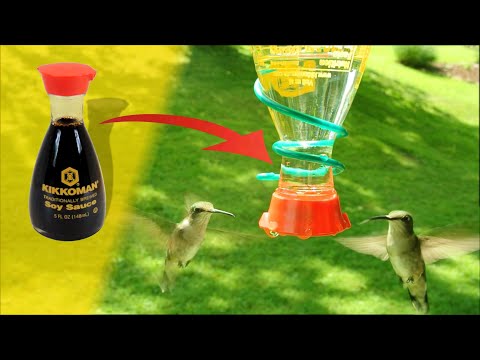
Repurposing a small soy sauce bottle gives you a compact feeder that holds a modest serving of nectar. Its manageable size suits a sheltered patio where you can inspect it closely.
Your main concern is the original dispenser. A kitchen pouring spout does not automatically provide safe nectar access or control dripping, so treat this as a bottle-and-holder project requiring a compatible feeding tip.
Choose your bottle for cleanability, including access beneath any removable collar. Thorough washing must remove salty residue and lingering odor before use. If a decorative bottle has inaccessible internal crevices, keep it for a nonfeeding garden craft.
5) 5 Gallon Humming Bird Feeder

Repurposing a 5-gallon chicken feeder as a hummingbird feeder offers a generous-capacity way to provide nectar for frequent visitors. Its large size can mean fewer refills, while the reused container gives the project a practical, resourceful appeal.
A hummingbird-friendly setup needs accessible feeding ports and a stable, secure support. Make sure the feeder is easy to inspect, refill, and clean, since fresh nectar and regular maintenance are important for visiting birds.
Placed in a sheltered spot where hummingbirds can approach freely, the finished feeder can become a lively feature in your yard. Keep it clean and monitor the nectar regularly, especially in warm weather.
6) Plastic Sauce Cup Wire Held Feeder
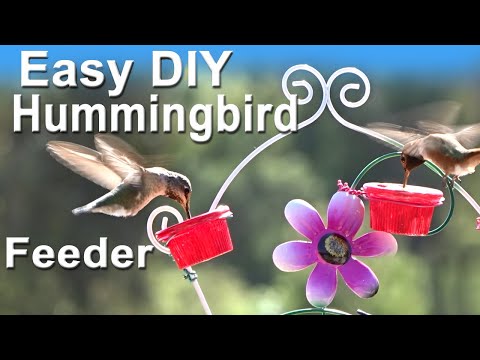
Because a sauce cup is shallow, you can keep a small amount of nectar close beneath its feeding lid. A reusable food-safe cup with a secure cover makes this a compact complete feeder; the wire supplies exterior support.
You get a lightweight project with little nectar waste, but thin disposable cups deserve caution. Replace your cup if its rim splits or its lid stops fitting firmly. Keep every cut wire end folded away from feeding and landing areas.
For a broader backyard arrangement, your feeder fits alongside landscaping with bird baths, provided the nectar station remains separate from splashing water and bathing debris.
7) Upcycled Wine Bottle Feeder

Using an empty wine bottle gives your garden a decorative hanging project, with the craft work concentrated in its exterior holder. You’ll still need a purpose-made hummingbird feeding attachment suited to the bottle opening.
The heavier glass calls for a cradle that supports the bottle’s body securely. Keep wire, including copper, entirely outside the nectar path. Removable exterior embellishments leave you access for inspection and cleaning.
Fill your bottle only with the amount your visitors consume between cleaning days. A large reservoir offers visual impact, but filling it completely increases its hanging weight and the nectar you discard when temperatures climb.
8) Plastic Water Bottle Feeder

Lightweight and easy to find, your empty water bottle suits a short-term feeder project with a compatible feeding base. A purpose-made base gives you a more predictable drinking point than an improvised straw opening.
Your main trade-off is durability. Thin bottles flex during handling, and squeezing an inverted reservoir forces nectar through its outlet. Inspect your setup for dripping before leaving it outside, and retire damaged plastic promptly.
If you’re also working to attract birds to a garden pond, keep your nectar feeder on a separate, accessible support. You’ll need clear access for frequent removal and washing.
9) Flower Pot Hummingbird Feeder

Turning a flower pot into an outer holder gives your feeder a garden-friendly finish while keeping nectar in a removable food-safe vessel. Treat the pot as decorative support, particularly when using porous terracotta or a pot with an unknown glaze.
You gain a broad base for a sheltered tabletop arrangement. Your inner feeder still needs a covered drinking surface, smooth ports, and easy removal without spilling nectar into the pot.
Nearby bee-friendly plants in pots add flowers to your patio, though they won’t guarantee bees avoid sugar water. Keep your feeder dry outside and correct any leaks promptly.
10) Cocktail Glass Humming Bird Feeder

An unused cocktail glass gives you a decorative pedestal for a small, covered nectar cup. Your safest practical version uses the glass as a holder, with the removable cup providing the actual feeding surface.
A broad, heavy base offers better stability than a slender stem on an exposed railing. Reserve this project for a sheltered location away from foot traffic, and check your glass for chips before each use.
Keep nectar enclosed beneath a suitable feeding lid so birds avoid contact with an open, sticky surface. Remove your setup during strong winds, and lift out the inner cup for cleaning whenever you replace the nectar.