
Most koi fish in backyard ponds grow to about 18 to 24 inches long, while koi from large-growing bloodlines can exceed 30 inches under excellent conditions. If you are choosing fish for a new pond, plan around their adult size. The small koi you bring home will need room to swim and a filtration system that can handle its waste years from now.
Koi fish growth is uneven. A young fish can gain length quickly, then grow much more slowly as it matures. Understanding overall koi fish size helps you plan the right environment. Its bloodline sets much of its potential, while your pond conditions determine how well it reaches that potential.
What Is the Typical Adult Koi Size?
When asking how big do koi fish get, an adult in a home pond often measures 18 to 24 inches from nose to tail. Typical koi fish size varies across different setups. You will see smaller adults and much larger individuals, so that range is a planning guide rather than a strict limit.
How Large Do Standard Pond Koi Get?
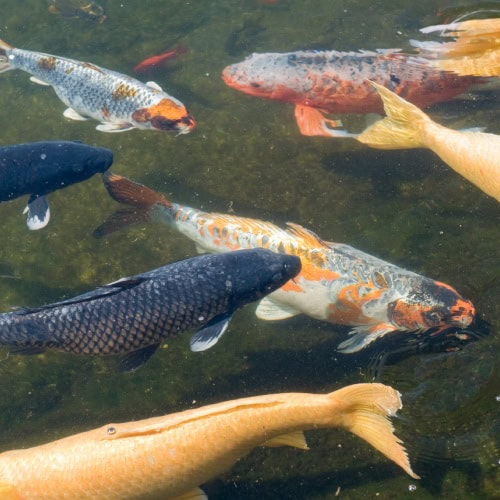
For standard pond koi, 18 to 24 inches is a useful adult-size expectation. Some settle closer to 12 to 18 inches, especially when their growth has been limited by poor conditions. A healthy small adult and a fish whose growth has been stunted can look alike at first glance, so consider body shape and care history alongside length.
Koi are ornamental carp, commonly classified as Cyprinus rubrofuscus. Color and pattern distinguish many koi varieties, but a variety name alone tells you little about the size an individual fish will reach.
Certain koi varieties, such as Chagoi or Karashigoi, tend to grow larger and faster than other types. Other koi varieties focus energy differently, maturing at more modest lengths.
How Do Domestic, Japanese-Bred, and Butterfly Koi Compare?
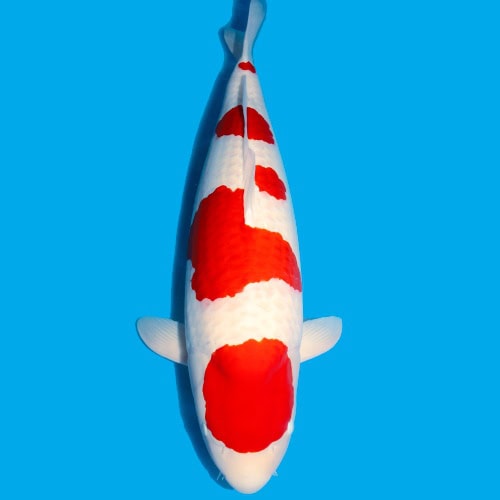
Domestic koi cover a wide range of bloodlines, while Japanese koi lines are prized for developing robust bodies. A Japanese-bred koi selected for a large frame has greater potential to grow beyond average sizes with ample space and care.
Hobbyists often choose Japanese-bred koi for their refined conformation and lineage. Still, origin alone cannot guarantee a giant fish without proper space.
Butterfly koi have longer, flowing fins, which make them look especially large in the water. Compare body length from nose to the base of the tail when evaluating koi fish size. Including the extended fins makes a butterfly koi seem longer than a standard-finned fish with the same body size.
What Counts as a Jumbo Koi?
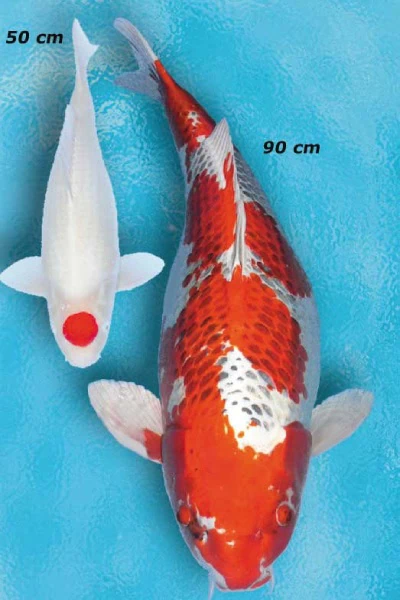
You can use 30 inches or more as a practical description of a jumbo koi, though sellers sometimes apply the term to fish over 24 inches. There is no single size cutoff that guarantees a fish will reach jumbo proportions.
A young koi sold with jumbo potential still needs the right genetics and years of suitable pond conditions. For your pond plan, its parents’ size and body shape are more informative than a label on its sale tank.
How Much Do Adult Koi Weigh?
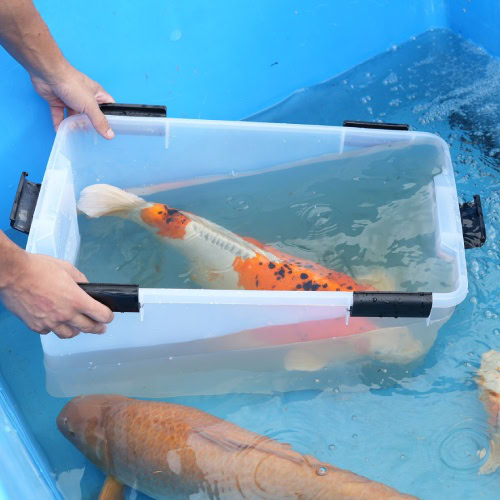
A koi’s weight rises sharply as its body becomes longer and deeper. Expected koi fish weight varies widely depending on body shape and genetics. As rough reference points, a 20-inch fish might weigh 3 to 5 pounds, a 24-inch fish 5 to 8 pounds, and a 30-inch fish 10 to 15 pounds. Fish of equal length can differ substantially in girth.
Look down at your koi to assess its condition. You want a full, smooth outline that widens behind the head and tapers toward the tail; a suddenly thin area behind the head deserves attention even if the fish is still long.
Evaluating overall koi fish size alongside body thickness gives an accurate picture of health. Checking your fish from above helps you spot issues before they become severe.
How Fast Do Koi Grow at Each Age?
Koi grow fastest while young, with gains slowing through their adult years. An average koi growth rate is not fixed. Seasonal temperatures, genetics, and diet all influence the koi growth rate from year to year.
What Size Are Juvenile Koi in Their First Year?
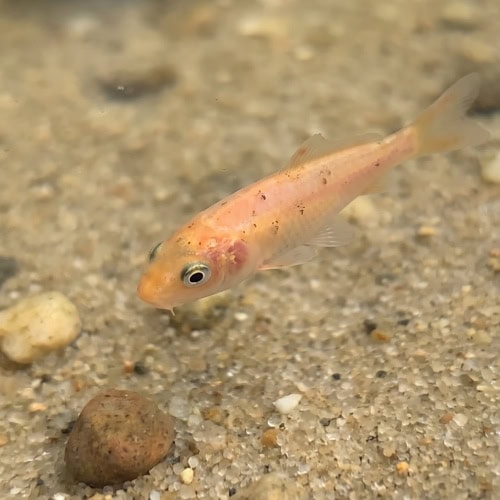
Under good conditions, juvenile koi may reach about 6 to 8 inches by the end of their first year. A fish raised through a long warm growing season can outpace one that spends much of the year in cold water. Measure from the nose to the end of the body and use the same method each time you check growth.
Fry also compete for food, so siblings need not be the same size. If one juvenile falls behind, watch whether larger fish crowd it out at feeding time before assuming its bloodline is the cause.
When Do Koi Approach Their Adult Length?
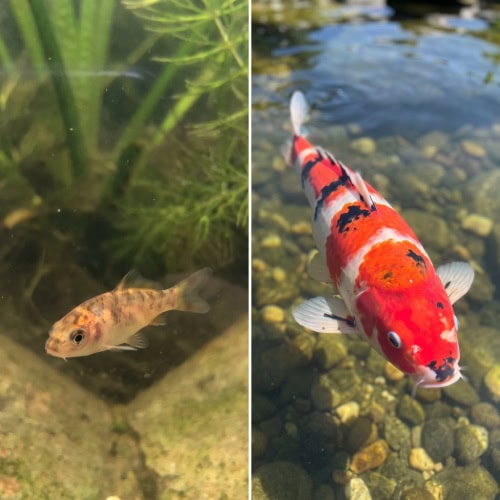
By around two years old, a well-grown koi may measure roughly 10 to 14 inches. Many reach 18 to 24 inches between ages three and five, though those figures describe a possible progression under good care, not a schedule your fish must meet.
Length gains become less dramatic as the body fills out. If you are judging whether a pond suits a young koi, plan around expected adult koi fish size rather than current measurements.
Monitoring koi fish growth over several seasons helps confirm that your pond environment supports steady development.
Do Koi Continue Growing as They Age?
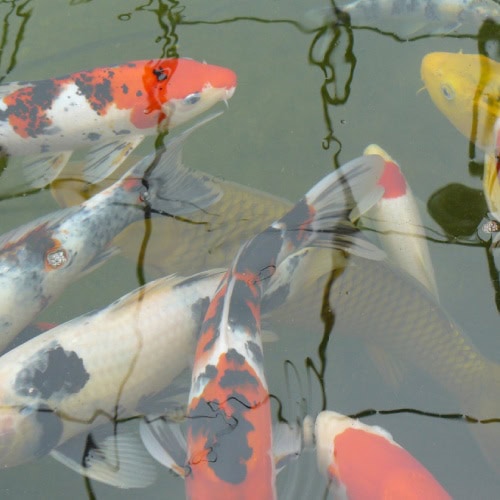
Koi can keep growing slowly after they approach adult length. An older fish might add little measurable length in a season while developing a broader frame, especially if it has room and steady access to food.
Expect seasonal pauses, too. In a cold outdoor pond, reduced feeding and metabolism slow growth. Tracking your fish over several years gives you a clearer picture than comparing one summer’s gain with another fish’s.
What Determines a Koi’s Final Size?
Final koi fish size reflects inherited potential and the environment in which the carp lives. To support healthy growth, focus on space, suitable food, and stable, well-filtered water.
How Much Do Genetics and Bloodlines Matter?
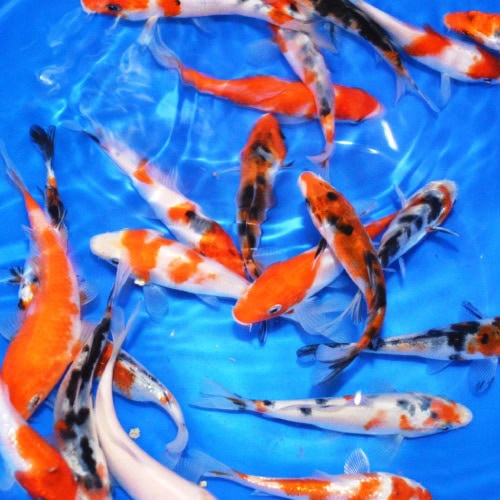
Genetics influence how large a koi’s frame can become and how readily it gains size. If you are choosing a young fish with large-adult potential, information about its parents is more useful than an unusually fast growth spurt in one season.
You cannot feed a small-framed fish into a jumbo koi. You can, though, give it the conditions to develop a healthy body within its own range.
How Do Pond Space and Stocking Levels Affect Growth?
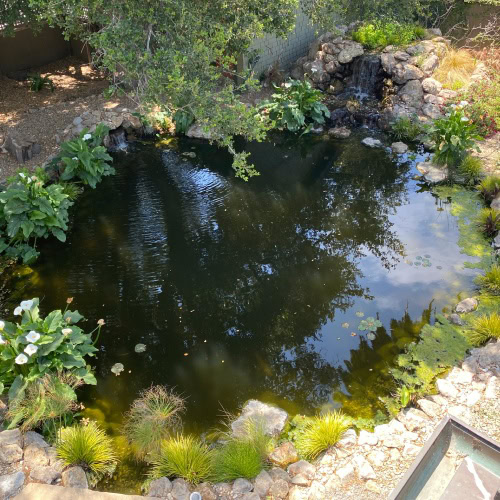
A crowded pond makes it harder to maintain water quality and gives growing fish more competition at feeding time. Your pond’s surface area, depth, filtration, and existing fish all affect how many koi it can accommodate. While keepers often suggest 250 to 500 gallons per koi, a single ratio cannot account for all pond differences.
Leave clear swimming room as your fish mature. When growth slows in a crowded pond, check water conditions and stocking levels; a small final size caused by cramped conditions is not a healthy space-saving strategy.
How Do Food, Water Quality, and Temperature Affect Growth?
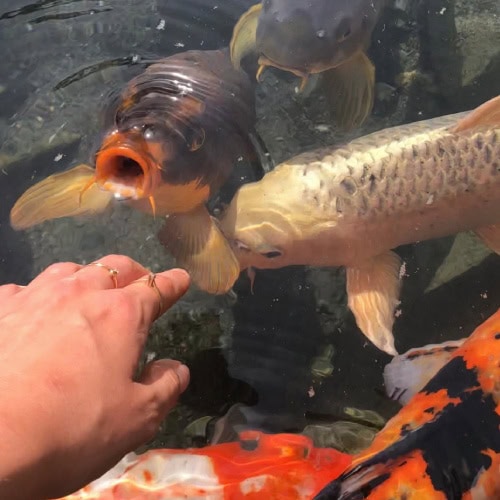
A balanced koi feeding routine supports steady development during warmer months. Offering quality koi food high in protein promotes healthy muscle building in warm water. However, uneaten koi food quickly pollutes the pond and harms water quality.
Pushing food for faster koi growth is counterproductive when filtration cannot keep pace. Steady koi growth requires balanced nutrition rather than overfeeding.
Mechanical filtration removes suspended waste; biological filtration supports the bacteria that process ammonia and nitrite. Good day-to-day koi care means testing your water regularly and maintaining filters. For healthy koi growth, you need stable conditions as much as nutritious koi food.
How Should You Plan for a Full-Grown Koi?
Plan your pond around potential adult koi fish size, including swimming space and mature waste load. A few small koi leave far more room today than those same fish will need in several years.
Will Koi Stay Small in a Small Pond?
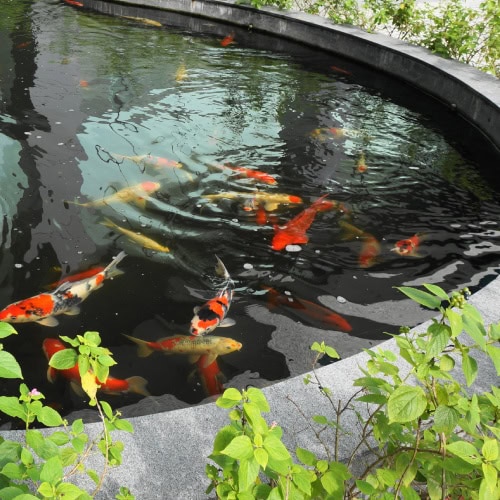
When asking how big do koi fish get in small spaces, remember that a small pond may artificially limit a fish’s growth. Stunted growth is not healthy, and crowding makes stable water quality much harder to maintain.
The same concern applies when you are keeping koi in tanks: a young fish fitting comfortably now says little about the space it will require as an adult. Make your housing decision using the fish’s expected mature size.
How Much Space Do Large Koi Need?
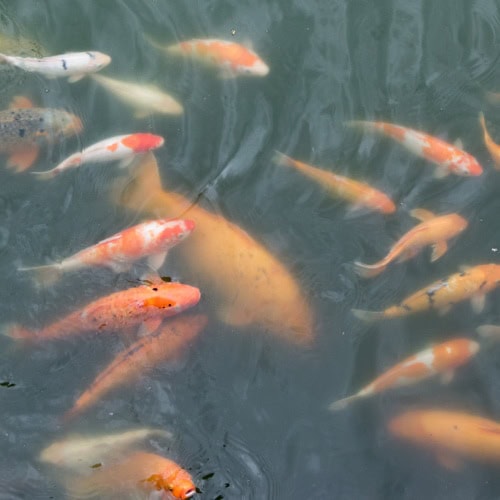
Large koi need room to turn and swim, sufficient depth, and filtration sized for the pond’s fish load. A depth of around 3 feet is a common planning starting point, but your local climate and pond design also affect the depth you need. Koi pond depth is only one part of the design.
Avoid treating any single gallon allowance as permission to add another fish. Check the space your adults will occupy, then consider whether your mechanical and biological filtration can keep water conditions stable as those fish grow.
How Rare Are Record-Size Koi?
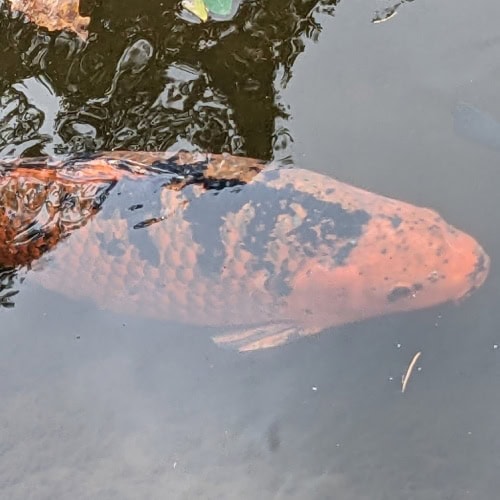
Giant koi fish are exceptional, so reported record-holders make poor targets for a backyard pond plan. The largest koi fish ever recorded, a famous female named Big Girl, reportedly grew to around 41 inches and 90 pounds. While often cited as the largest koi ever recorded, stories about the largest koi fish vary in how measurements were verified.
Give your fish room for healthy adult growth without designing around an extraordinary record. If you select a koi with a large-growing bloodline, allow more space than you would for an average adult and reassess stocking as its body fills out.