
September is your pond’s bridge between late-summer growth and winter dormancy. Warm parts of the United States may still have active fish and green plants, while northern ponds can cool quickly after a few cold nights.
Your pond’s water temperature, fish appetite, leaf fall, algae growth, and plant dieback should set the pace for September maintenance. Removing organic debris now helps preserve oxygen through winter and limits the nutrients that fuel algae when spring returns.
Use this checklist as a weather-led routine. A shallow water garden with goldfish needs a different timeline from a deep koi pond, so check conditions every few days as the season changes.
1) Install Pond Netting Before Heavy Leaf Drop
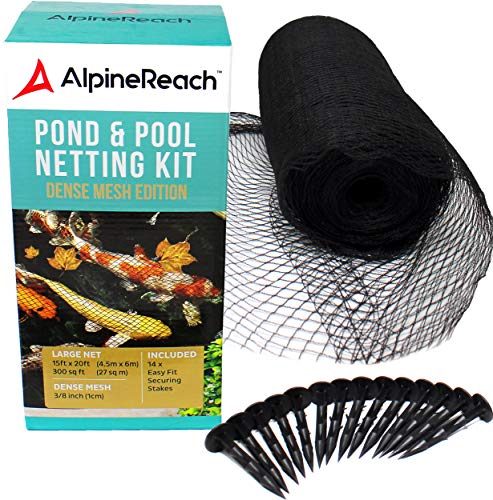
- Reliable Fish Protection – Brilliantly designed to keep your fish safe against Blue Heron birds, cats and other predators. The protective...
- 3/8 Inch Heavy Duty Woven Mesh – The net’s extra strength comes from a tightly woven mesh and works extremely well. The 15’ x...
- Keep Out Smallest Leaves & Debris – The dense mesh will keep your pond & pool staying beautiful and clean; capturing the smallest leaves...
Install pond netting before nearby trees begin shedding heavily. A net keeps leaf debris from sinking, breaking down into bottom sludge, and adding to the oxygen demand in cold water.
Choose a fine, durable mesh that spans the pond with enough clearance above the water for fish, frogs, and birds. Secure the edges with stakes, rocks, or clips, and keep the net taut enough that rainwater and leaves do not form a sagging pocket.
If your yard has maples, oaks, birches, or other heavy-dropping trees, put netting up early instead of waiting for the first big storm. A guide to choosing the best pond netting can help you match mesh size and support options to your pond.
2) Skim Leaves, Twigs, and Floating Debris Every Few Days
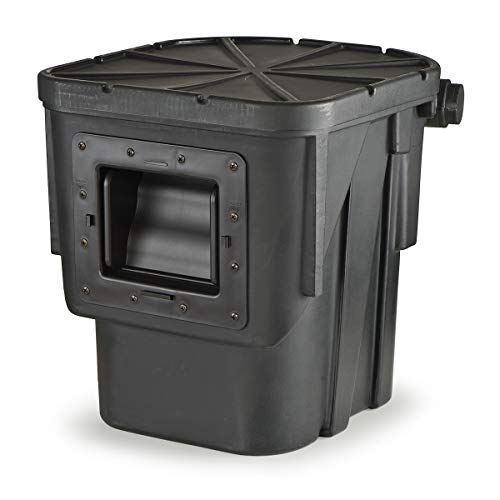
- Skimmers house and protect your pump and plumbing while clearing surface debris from the pond
- Atlantic’s Pond Skimmers feature more size and filtration options and greater strength and versatility
- All Skimmers excluding the PS3000 accept two pumps for increased flow, lower operating costs and multiple spillway options
Skim floating debris every few days while leaf fall builds. Leaves, seed pods, twigs, and windblown grass quickly collect around skimmers, plant shelves, and waterfall bays.
Use a long-handled pond skimmer net and work slowly around fish. Focus on sheltered corners first, since debris settles where surface circulation is weakest. Empty the net away from the pond so wind does not carry the material back into the water.
A pond with heavy tree cover may need attention after every windy day. Regular removal also reduces the load on your skimmer and makes keeping leaves out of a pond much easier through autumn.
3) Vacuum Bottom Sludge With a Pond Vacuum

- Max. Suction depth: 6 ft.
- High-power suction to a depth of 59 inch.Maximum suction depth of 78 inch.Suction hose length: 13 ft
- Power consumption: 1200-1400w
Vacuum accessible bottom sludge before cold weather slows decomposition. Soft muck contains decaying plant pieces, fish waste, and trapped debris that consume oxygen as they break down.
Move the vacuum head slowly over open areas, especially beneath waterlilies, beside rockwork, and near the base of waterfalls. Leave stable gravel and undisturbed planting pockets in place, since aggressive cleaning disrupts useful microbial life and stirs sediment into the water.
Work in sections on a stocked pond, allowing fish time to settle between passes. For deeper accumulations, a professional pond vacuum cleaner gives you more control than trying to drain the pond during a seasonal transition.
4) Use a Pond Thermometer to Track Water Temperature

- Temperature range: -50 to +200 ° C,Working environment: 0-40 ° C (dial)
- Error: ±1.0% (about 1-2 °C),Resolution: 0.1 ° C
- Dimensions: Φ150x40mm,Probe length: 100mm
A pond thermometer gives you the temperature information needed for feeding, bacteria treatments, and winter planning. Air temperature changes quickly, while water temperature responds more slowly and tells you what your fish are experiencing.
Check the temperature at roughly the same time each day, preferably in a shaded area away from a sun-warmed shelf. Record readings after cool nights, rain events, and the first sustained cold fronts.
Watch the trend as well as the daily number. This more detailed pond water temperature guide can help you connect those readings with fish behavior and seasonal care decisions.
5) Transition Koi and Goldfish to Cold-Water Food
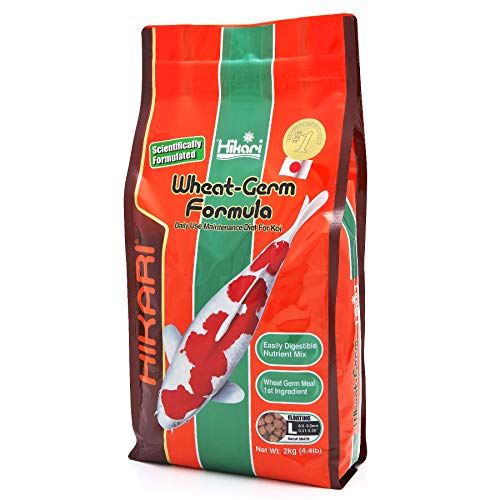
- Easily Digested Daily Diet
- Promotes Waste Reduction
- Excellent for Feeding Autumn & Spring
Transition koi and goldfish to cold-water food as the water cools and their appetite begins to ease. Cold-water formulas are designed for digestion during the cooler conditions common in early fall.
Start blending the new food into the current diet over several feedings. Offer only what your fish finish promptly, then remove leftovers before they soften and add waste to the pond.
In still-warm regions, your fish may remain hungry through much of September. Keep using water temperature and fish appetite as your cues, and follow the feeding directions on the food label. A detailed koi feeding guide can help you adjust portions as activity slows.
6) Test Ammonia, Nitrite, Nitrate, and pH With a Pond Test Kit
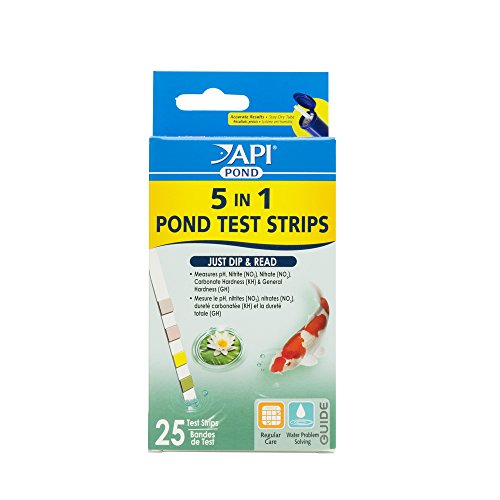
- Contains one (1) API POND 5 IN 1 POND TEST STRIPS Pond Water Test Strips 25-Count
- Helps monitor water quality and prevent invisible water problems that can be harmful to fish
- Measures pH Nitrite, Nitrate, Carbonate Hardness, and General Hardness in pond water

Test ammonia, nitrite, nitrate, and pH during September because decaying debris and changing temperatures can shift water quality. Healthy readings help you spot a developing problem before fish show stress.
Ammonia and nitrite should read zero in a mature, cycled pond. Track nitrate over time, since rising nitrate points to excess organic load, weak plant uptake, or overdue maintenance. Check pH at the same time of day when possible, as daily swings can be meaningful.
Test after heavy rain, a filter cleaning, or a sudden increase in leaf debris. A reliable pond water test kit makes it easier to keep a written record of your readings.
7) Rinse Filter Media Gently in Removed Pond Water

- Contains one (1) API POND CHLORINE & HEAVY METAL NEUTRALIZER Pond Water Neutralizer 32-Ounce Bottle
- Removes harmful-to-fish chemicals from tap water to make water safe
- Made with a super-strength, highly concentrated formula for effectiveness
Rinse biological filter media gently in a bucket of removed pond water. This clears loose debris while protecting the beneficial bacteria that process fish waste.
Swish foam, brushes, mats, or bio-media lightly until water flows through them freely. Keep some brown biofilm on the media, since that film contains the bacteria your filter relies on. Use pond water collected during a partial water change or while cleaning the filter chamber.
Tap water can contain chlorine or chloramine, which harms filter bacteria. Return the media promptly, restart the system, and watch the flow rate over the next day.
8) Clean Pump Intakes, Skimmers, and Air Stones

- Efficient Sump Pump: Aquastrong sump pump with 1HP powerful motor. Draining water up to 4500GPH Per Hour( 75 gallons per minute) at 5ft...
- Portable Design: Plug in to play while unplug to stop. Bottom suction design filters debris and removes water down to 1/5 inch from the...
- Easy Installation: 1-1/4'' NPT discharge comes with 1-1/2'' elbow adapter and snap coupling adapter of 3/4'', 1'' or 1-1/4'', which makes...
Clean pump intakes, skimmers, and air stones so water and oxygen continue moving as leaf debris increases. Clogged equipment reduces circulation long before it stops completely.
Unplug the equipment before opening housings or lifting a pump. Clear string algae, leaf fragments, and sludge from intake screens and skimmer baskets. Rinse air stones enough to remove surface buildup, then replace stones that produce only a weak, uneven stream of bubbles.
Pay attention to the sound of the pump and the strength of the waterfall or return flow. A pond skimmer works best when its basket is emptied before debris reaches the pump chamber.
9) Keep Aeration Running as Organic Matter Builds Up

- Replacement Aeration Disc is used in conjunction with an aerator or air pump to help provide proper aeration, improving water quality and...
- The disc can be anchored or concealed with small rocks or gravel, making it easy to set in your desired location
- The durable outer plastic housing prolongs the life of the disc and the disc accommodates 3/16-inch tubing
Keep aeration running through September as falling organic matter increases oxygen demand. Air stones help exchange gases at the surface and support fish while microbes break down leaves and bottom sludge.
Place aeration where it circulates water without churning the deepest area of the pond. For many ponds, a diffuser set on a shelf or raised platform creates useful movement while preserving a calmer, slightly warmer refuge below.
Maintain waterfalls and streams while temperatures remain above freezing and their flow stays reliable. Begin planning adjustments before hard freezes arrive, especially if your pond is shallow or carries a heavy fish load.
10) Remove Blanketweed, Duckweed, and Excess Algae
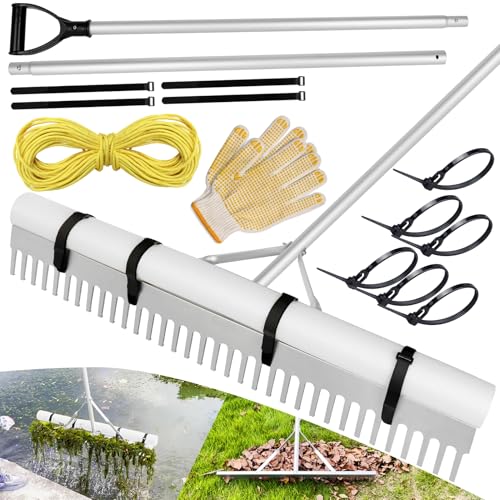
- Enhance Your Waterfront Experience:This essential tool comes equipped with an 11’ Adjustable Extension Pole,a 52’ Rope,and a...
- 36" Wide Rake Head:The sturdy 36" rake head is designed to efficiently clean weeds,algae,leaves,and other unwanted debris,leaving your...
- Maximum Reach:An 11’ Adjustable Extension Pole gives you the flexibility to reach deeper waters or extend across wider area;a hard weaing...
Remove blanketweed, duckweed, and excess algae before dying material sinks and adds nutrients to the pond. September growth can persist in warm, sunny areas even as nights begin cooling.
Pull blanketweed by hand or wind it around a stick, then lift it out in small batches. Skim duckweed from the surface while leaving a modest amount if you want shade and wildlife cover. Dispose of removed growth in compost or yard waste well away from the pond edge.
Avoid treating large algae blooms with a chemical algaecide during a seasonal cleanup. Removing too much dying algae at once can create a sharp oxygen demand, especially overnight.
11) Cut Back Dead Waterlily Leaves and Overgrown Marginals

- 【4 in 1 Aquascape Tools Kits】: Aquarium tank aquascape tools kits including 1*10.5" curved scissors, 1*10" straight tweezers...
- 【100% Anti-rust and Anti-corrosion】: Aquatic plant aquascape tool is made of high-quality stainless steel with the latest spray paint...
- 【Don't Harm Plants】: Stainless steel aquarium tools suit for small or thin water plants, help trim excess parts, It won't hurt the...
Cut back dead waterlily leaves and overgrown marginal plants before they collapse into the pond. Yellowing lily pads, spent flowers, and soft stems become bottom sludge quickly once cool weather accelerates dieback.
Trim waterlily leaves close to their stems and remove every piece from the water. For marginals such as iris, pickerelweed, and cattails, cut away brown foliage while leaving healthy crowns and stems suited to your winter conditions.
Use clean shears and avoid cutting into firm new growth. If you have tender tropical plants, decide now whether they will move indoors or be treated as seasonal plants.
12) Stop Fertilizing Aquatic Plants
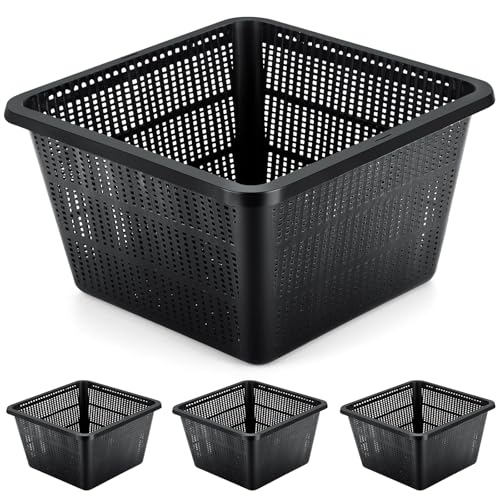
- Generous Size Aquatic Plant Basket: this aquatic plant basket measures 9 x 9 x 5.2 inches/ 22.8 x 22.8 x 13.2 cm, which provides ample space...
- 4 Pack Set for Extensive Planting Needs: our package includes 4 pack aquatic plant baskets, making it nice for satisfying various planting...
- Flat Bottom Design for Easy Placement: these aquatic plant pots have a flat bottom, enabling them to be comfortably placed on any flat...
Stop fertilizing aquatic plants as growth slows in September. Late-season fertilizer encourages soft new growth when plants are preparing for shorter days and cooler water.
Remove fertilizer tabs only if the product label instructs you to do so. Otherwise, stop adding new tabs and allow existing nutrients to work through the planting basket. Watch for natural yellowing and dormancy cues before making major changes to plant placement.
Hardy waterlilies and marginals benefit from a quieter transition into dormancy. You can revisit fertilizing when spring growth resumes and water temperatures rise.
13) Add Cold-Water Beneficial Bacteria According to the Label

- Effective Cold-Temperature Performance: Formulated to work in water temperatures below 50°F (10°C), making it ideal for fall and winter...
- Promotes Natural Waste Breakdown: Supports the biological process that helps manage excess nutrients and organic debris as temperatures...
- Professional Strength Formula: Highly concentrated with 1.5 billion CFU per ounce and eight pure strains of beneficial bacteria for...
Add cold-water beneficial bacteria when your water temperature reaches the range stated on the product label. These bacteria help process organic waste in conditions where warm-water formulations become less active.
Measure your pond volume before dosing, then follow the label for the product’s temperature range and application schedule. Apply near moving water or a filter return so the treatment disperses through the pond.
Continue removing leaves and sludge while using bacteria. Beneficial bacteria support your maintenance routine, while physical debris removal keeps the organic load from building faster than the pond can process it.
14) Plan Winter Equipment Settings for Your Climate and Pond Depth

- Safety at Its Core: TURBRO pond de-icer, boasting an IP68 water resistance rating, is equipped with built-in overheating and power-off...
- Upgraded Temperature Management: Experience precision in temperature regulation with our pond de-icer featuring SCR technology. Enjoy a...
- Extended Power Cord: Benefit from the flexibility of placement with TURBRO's pond de-icer, thanks to its generous 32.8ft power cord. Reach...
Plan winter equipment settings before freezing weather arrives. Your pond depth, local winter lows, fish load, and equipment layout determine whether you keep circulation running, reduce waterfall flow, or use aeration and a de-icer to maintain an opening.
Deep koi ponds in cold climates need a stable lower-water refuge. Raise air diffusers off the deepest bottom area, protect exposed plumbing, and decide where an ice-free gas-exchange opening will sit. Shallow ponds need closer attention because they lose heat quickly.
Check power cords, ground-fault protection, pump housings, and spare equipment now. Use our koi pond winter care guide to match your plan to local freeze conditions before winter arrives.