
A little pond foam where water lands, such as from water features, is common in an active pond. However, if the pond foam is thick, brownish, white, slow to pop, or collects along the edge, your pond is usually showing you that organic material is building up or that a contaminant has entered the water.
So, why is your pond water foaming? Well, persistent pond foam is a helpful diagnostic clue: it often points to excess dissolved organics, filtration strain, or, less commonly, a chemical safety issue.
Your water garden can look clear and still carry a high organic load from fish waste, leftover food, leaves, algae, or bottom muck. Start by observing how long the foam lasts, where it gathers, and how your fish are behaving before choosing a treatment.
When Is Foamy Pond Water Normal?
Not every patch of pond foam signals poor water quality. Short-lived bubbles caused by moving water or seasonal fish activity are common and should disappear once the agitation stops.
1) Brief Pond Foam Around Water Features
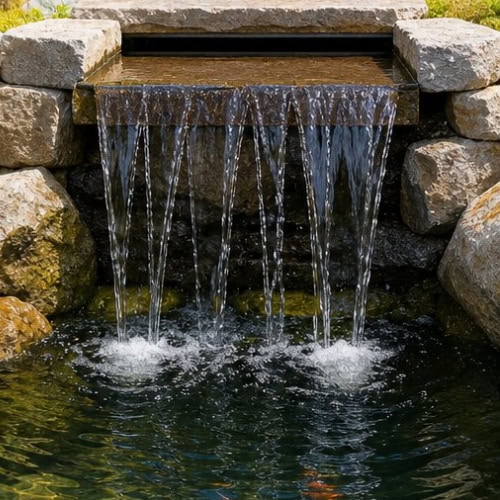
Waterfalls, fountains, aeration stones, and pond pumps mix air into water. That water agitation creates foam formation near the splash zone, especially after you clean a filter, top off the pond, or increase flow.
Normal bubbles are usually clear or white, stay close to the water feature, and pop within minutes. They do not form a stable mat across the pond surface.
2) Seasonal Pond Foam During Fish Spawning
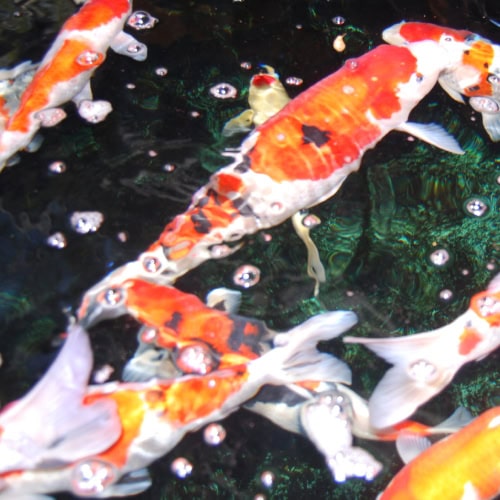
Koi, goldfish, and other pond fish may produce temporary foam during spawning season. Males release milt, a protein-rich reproductive fluid, while chasing females through plants and shallow areas.
You may notice increased splashing, fish clustering near marginal plants, and pale foam for a day or two. Remove any obvious debris, monitor fish for injury, and avoid major water changes unless testing shows a water-quality problem.
3) Signs That Foam Is Becoming Persistent
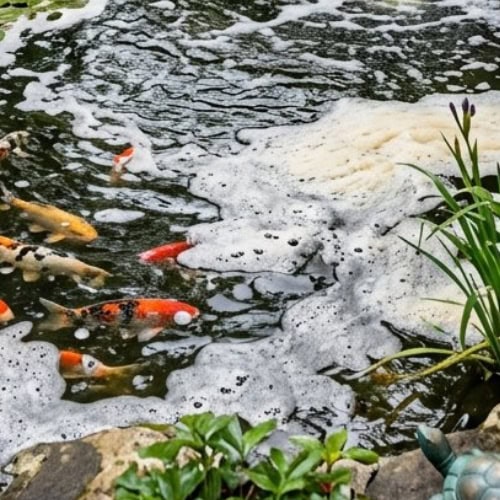
Persistent pond foam remains after the waterfall or fountain is off, gathers at pond edges, and often looks tan, yellow-brown, or dense white. It may return quickly after you skim it away.
Pay closer attention if foamy pond water appears alongside cloudy water, odor, reduced water clarity, or fish spending time near a waterfall. Those signs suggest the pond ecosystem is processing more waste than it can comfortably handle.
Organic Causes of Pond Foam
Organic waste enters every stocked pond, and a healthy filter processes much of it. Foam develops when fish food, waste, plant material, or algae accumulate faster than your pond can break them down.
1) Overfeeding And Uneaten Food
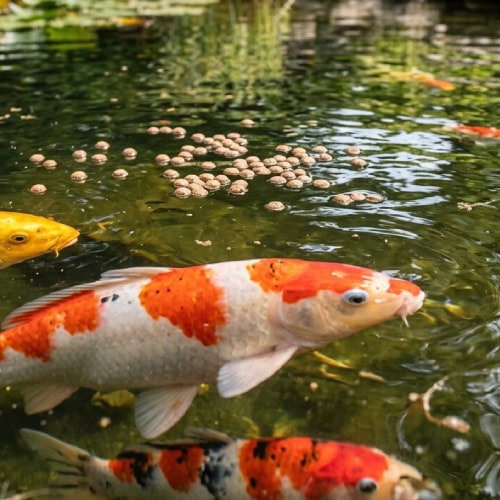
Excess fish food is a frequent source of foamy water. Uneaten fish food softens, decomposes, and adds protein-rich organic matter to the water and pond sludge.
Feed only what your koi, goldfish, or other pond fish consume within a few minutes. In cooler weather, reduce feeding as fish become less active, and remove food that drifts into corners or remains on the surface.
2) Fish Waste And Overstocking
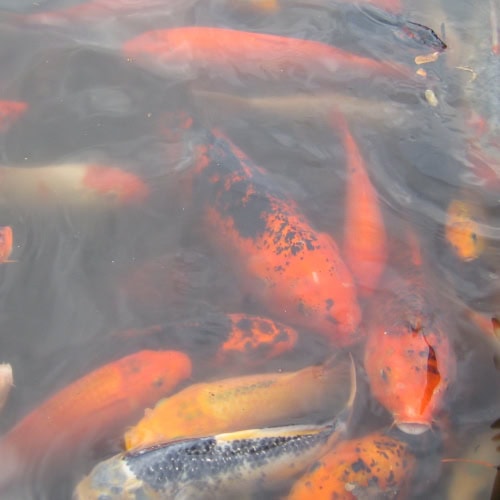
Fish waste raises the organic load every day. Overstocking can push a pond filter beyond its capacity, particularly in a koi pond where large fish produce substantial waste.
If pond foam persists despite careful feeding, review fish size and stocking levels, not only fish count. A few mature koi can create more waste than many small goldfish.
3) Leaves, Plants, And Bottom Sludge

Acabashi, CC BY-SA 4.0, via Wikimedia Commons
Leaves, decaying plants, trimmed plant material, and organic debris settle into pond muck. This organic sludge slowly releases dissolved organic materials as it decomposes.
Use a net to remove leaves before they sink. Check shelves, behind rocks, and the pond bottom, where dead plant material and pond sludge often escape routine skimming.
4) Algae Growth And Die-Off
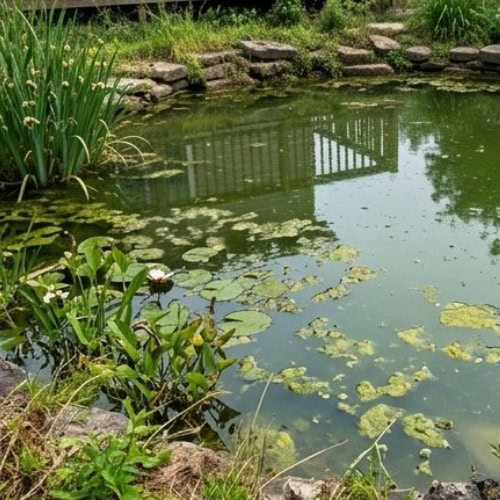
Algae blooms add biomass to the pond, then dead algae add a surge of decomposing organic matter. Algal blooms are often fueled by nutrient load, including nitrogen, phosphorus, and phosphates.
Avoid treating heavy algae growth without planning for the die-off. Remove as much algae as practical, maintain aeration, and monitor fish closely because decomposition can reduce dissolved oxygen.
How to Get Rid of Foamy Pond Water
The safest fix removes the material feeding the foam while protecting your pond’s beneficial bacteria. Physical cleanup, measured dilution, and steady oxygenation usually work better than a quick cosmetic treatment alone.
1) Test Ammonia, Nitrite, And Oxygen

- Contains one (1) API POND MASTER TEST KIT Pond Water Test Kit 500-Test, including 6 bottles of testing solution, 3 color cards and 4 test...
- Helps monitor water quality and prevent invisible water problems that can be harmful to fish
- Measures ornamental pond pH balance, Ammonia content, Nitrite levels and Phosphate content

Test ammonia and nitrite levels promptly. Measurable ammonia or nitrites indicate that biological filtration is not keeping up with waste, and both can harm fish.
Check dissolved oxygen if you have access to a meter, especially during hot weather, after an algae die-off, or when fish gather near moving water. ORP can offer additional insight into organic loading, though it is best used as a trend rather than a stand-alone diagnosis.
2) Look For Chemical Contamination

- Ideal for Koi Ponds & Water Garden Features: Activated carbon pond water clarifier is part of a comprehensive water quality management...
- Safely Removes Dissolved Organic Matter: Improves water clarity by removing stains and “tea-colored” discoloration from leaves and...
- Includes Mesh Bag: Each nine-pound package of pond activated carbon filter media includes one fine mesh bag for easy application. Some users...
Chemical foam often appears suddenly, may smell perfumed or soapy, and can spread rapidly. A rainbow sheen, unusually slippery water, runoff after cleaning nearby surfaces, or foam spilling over pond edges can point to detergents or other chemicals.
Do not add defoam or other treatments until you rule out contamination. Stop the suspected source, run activated carbon if appropriate, increase aeration, and begin cautious partial water changes with dechlorinated water.
3) Skim Debris And Vacuum Pond Muck
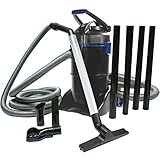
- Powerful & Continuous Operation: The powerful 1600W motor removes sludge, debris, and algae leaving your pond clean and clear. The dual...
- Reduce Timely Pond Maintenance: The ClearVac is easy to use and maneuver, making your pond maintenance faster and more convenient. With four...
- Suck Muck Without Draining: Easily remove sludge, pond muck, algae, small leaves, and debris up to 3/8 of an inch. Allows for easier routine...
Use a surface skimmer or fine net to remove floating leaves, foam, uneaten food, and dead algae. Skimming prevents debris from sinking and becoming more organic waste.
Vacuum pond muck from accessible areas, especially low spots and behind rocks. Work gradually if the pond holds fish, since aggressively stirring thick organic sludge can temporarily worsen water quality.
4) Use Partial Water Changes Carefully
- Ideal for Koi Ponds & Water Garden Features: Activated carbon pond water clarifier is part of a comprehensive water quality management...
- Safely Removes Dissolved Organic Matter: Improves water clarity by removing stains and “tea-colored” discoloration from leaves and...
- Includes Mesh Bag: Each nine-pound package of pond activated carbon filter media includes one fine mesh bag for easy application. Some users...
Partial water changes dilute dissolved organic compounds and can improve water quality. Replace roughly 10 to 20 percent at a time with dechlorinated water that is close to the pond’s temperature.
Avoid draining a large share of a stable pond merely to remove foam. Sudden shifts in temperature, pH, or mineral content can stress fish and disrupt the pond ecosystem.
5) Support Beneficial Bacteria And Aeration

- Maintains a strong biological balance providing clean, clear and healthy water conditions
- Contains 8 pure strains of concentrated beneficial bacteria, including PSB bacteria and enzymes
- PSB help quickly clear pond water by clumping fine debris and allowing it to settle
Beneficial bacteria colonize filter media and surfaces, converting fish waste through the biological filtration process. Protect them by rinsing filter media in removed pond water, not chlorinated tap water.
Keep aeration running, particularly at night and during warm spells. More oxygen supports fish and the bacteria that process waste, even though moving water may temporarily make existing foam more visible.
6) Use Defoamer Only As A Temporary Measure

- Defoamer handles unsightly foam fast, leaving water clean and clear by increasing surface tension
- Use when unsightly foaming is persistant
- OK for fish, plants, birds, and aquatic life
A fish-safe defoam or defoaming agent can collapse foam quickly when you need a clearer view of fish or want to reduce harmless waterfall froth. Follow the label dose exactly.
Defoamer does not remove DOCs, pond muck, or the source of the foam. Use it after you have started cleanup and filtration corrections, not as a substitute for them.
7) Use Only a High-Quality Fish Feed
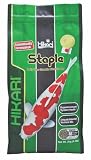
- Floating pellets allow easy monitoring of amount eaten
- Will not cloud water
- Supports immune system health
Feed your fish a high-quality food made with digestible ingredients and an appropriate level of protein. A good feed provides the nutrients fish need for growth, immune function, and overall condition, while producing less waste than foods packed with low-value fillers.
Avoid overfeeding, even when using the best-quality food. Offer only what your fish can consume within a few minutes, and remove anything left floating or settled on the pond floor. Uneaten food quickly breaks down into organic waste, contributing to cloudy water, foam, algae growth, and increased strain on filtration.
Choose a feed suited to your fish and the current water temperature, and adjust portions when fish become less active. Consistent use of a quality food, combined with sensible feeding habits, helps reduce waste at its source and supports cleaner, more stable pond water.
How to Prevent Foamy Pond Water
Recurring foam usually means your pond filtration system needs more capacity, better maintenance, or less waste to process. Your goal is to capture solids early and give biological filtration enough stable, oxygen-rich media to process dissolved waste.
1) Match Filtration To Fish Load
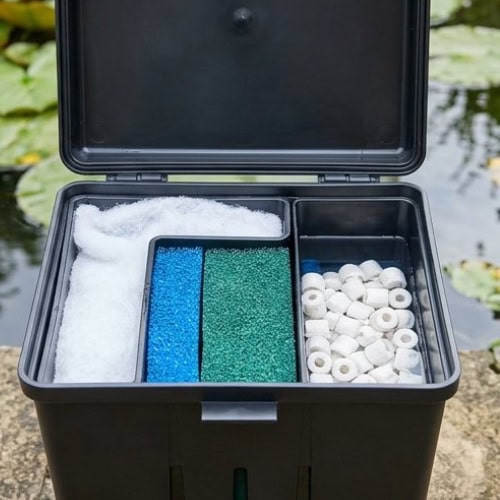
Choose a pond filter based on actual pond volume, fish size, feeding level, sunlight, and water flow. Manufacturer ratings often assume a lightly stocked water garden, not a heavily stocked koi pond.
If your pond has large koi, frequent feeding, or chronic algae growth, plan for more filtration capacity than the minimum rating. Inadequate filtration often shows up first as debris, rising DOCs, and persistent foam.
2) Maintain Mechanical And Biological Media
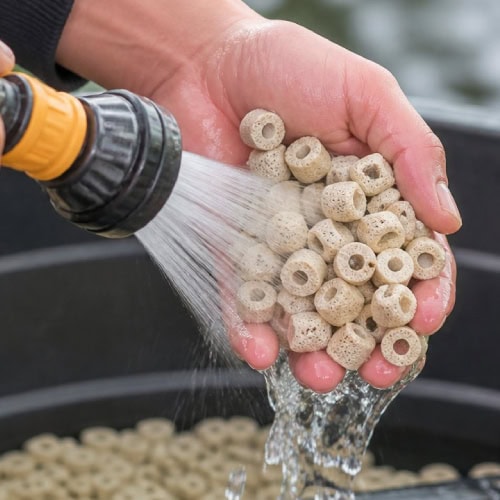
Mechanical filtration catches solids such as leaves, fish waste, and food particles before they decompose. Clean pads, brushes, and screens often enough to maintain flow, while avoiding excessive cleaning of biological media.
Biological filtration houses bacteria that process ammonia and nitrite. Keep that media wet, oxygenated, and free from chlorinated water, and never replace all bio-media at once.
3) Consider Protein Skimming For Chronic DOCs

- Effectively removes dissolved organics from saltwater
- For BioCubes and standard aquariums up to 32 gallons in size
- Features a self-priming pump making setup simple
Protein skimming removes foam-forming dissolved organics before they accumulate. A protein skimmer is especially useful on heavily stocked koi ponds or ponds where foam returns despite good feeding habits and conventional filtration.
It is not essential for every pond. For a moderate fish load, reliable mechanical filtration, biological filtration, a surface skimmer, and regular debris removal may be enough.
4) Build A Simple Seasonal Maintenance Routine
Use a routine that keeps organic materials from building up:
- Skim leaves and floating debris several times a week during leaf-drop season.
- Feed only what fish consume promptly, and reduce feeding as water cools.
- Inspect pond filter flow and clean mechanical media before it clogs.
- Trim decaying aquatic plants and remove dead algae before it settles.
- Vacuum pond sludge in stages during active maintenance periods.
- Test ammonia, nitrite, and water clarity whenever foam or fish behavior changes.
This steady pond maintenance keeps organic load closer to what your filtration can process, so occasional bubbles stay just that, occasional bubbles.