
A small pond has a way of magnifying every planting decision. Drop in the wrong combination and within a month you’re fishing out tangled stems, chasing algae blooms, and wondering why the water looks cloudy instead of calm.
The best pond plants for small ponds balance three jobs: shading the surface, feeding on excess nutrients, and staying compact enough not to swallow a limited volume of water. That means mixing floaters, submerged oxygenators, and marginal plants at the pond edge rather than picking whatever looks prettiest at the garden center.
This list ranks 14 best pond plants for small ponds with that balance in mind. Each one earns its spot by doing real work in a tight space, whether that’s cutting algae, sheltering fish, or softening the pond’s edge with color and texture. A quick note before you start planting: some floating species spread aggressively and are restricted in certain states, so check local regulations and never release pond plants into lakes, streams, or wetlands.
1) Miniature Waterlily (Nymphaea Pygmaea ‘Helvola’)
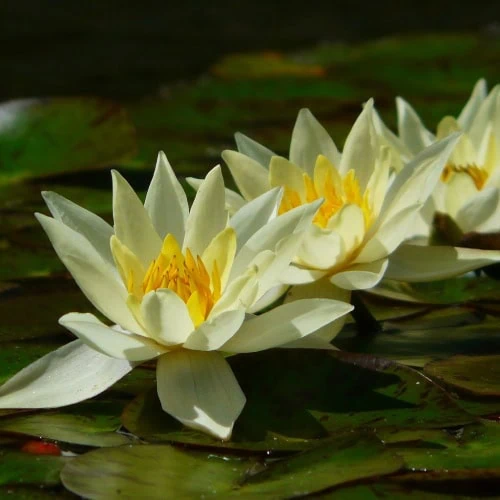
This is the waterlily built for tubs and patio ponds. Its pads rarely spread past 12 inches, and the pale yellow blooms sit right at the surface instead of towering above it.
Plant it in a container with heavy garden soil, then lower it to about 6 to 12 inches of water depth. As it matures, the mottled green and maroon leaves create just enough shade to slow algae growth without blocking the whole surface.
Practical tip: Divide the tuber every two to three years once it starts crowding its basket. In cold climates, move the container to a frost-free spot for winter.
It flowers repeatedly through summer, opening fresh blooms almost daily. For a pond under 100 gallons, it’s hard to beat for color-to-footprint ratio.
2) Hornwort (Ceratophyllum Demersum)
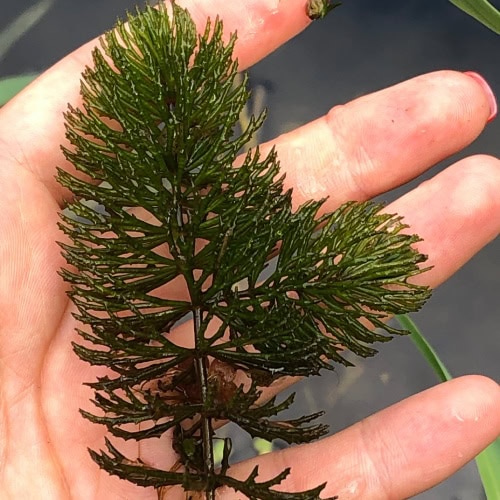
Hornwort is the workhorse oxygenator for small ponds. It has no roots, so it simply floats or drifts near the bottom, pulling nitrogen and phosphorus straight out of the water column.
That nutrient uptake is what makes it so effective against algae. Less food in the water means less green film on the surface.
Its feathery, needle-like foliage also gives fish and tadpoles somewhere to hide. In a small pond, a modest bunch goes a long way, so start with less than you think you need.
Watch for: Hornwort grows fast and can crowd a small container pond if left unchecked. Trim it back monthly during warm months to keep it in bounds.
3) Water Lettuce (Pistia Stratiotes)
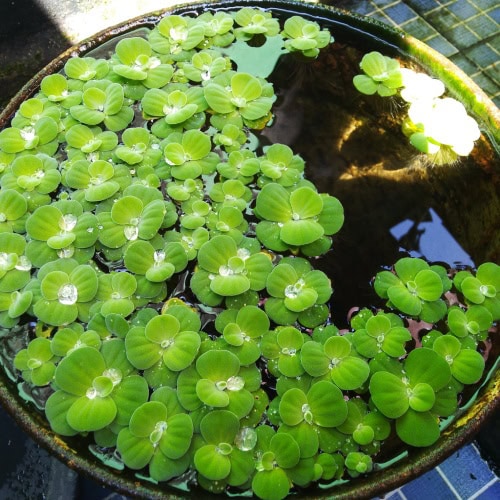
Water lettuce floats in rosettes of soft, ribbed leaves that genuinely resemble a loose head of lettuce bobbing on the surface. It spreads quickly and shades the water below, which helps keep algae in check on sunny patio ponds.
Fish appreciate the cover it provides during the hottest part of the day. Roots dangling underneath also pull nutrients directly from the water.
Important caution: Water lettuce is considered invasive or restricted in several southern states. Confirm it’s legal in your area before buying, and always keep it contained rather than letting it drift into drainage systems.
For a small pond, a few rosettes multiply into a full mat within weeks, so thin it out regularly to avoid completely covering the surface.
4) Dwarf Papyrus (Cyperus Papyrus ‘Nanus’)
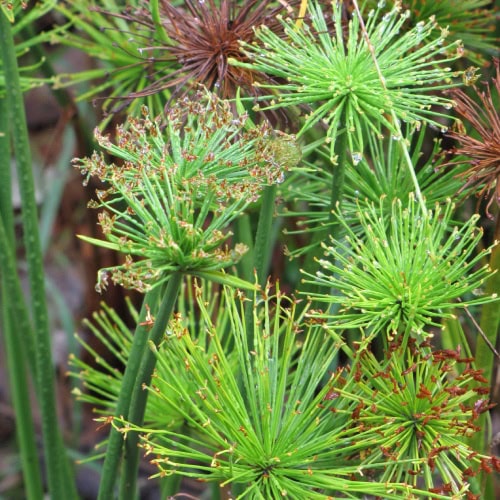
Dwarf papyrus brings vertical texture without the towering height of standard papyrus. It tops out around 2 to 3 feet, with feathery, umbrella-shaped tufts that sway nicely at the pond edge.
Set it in a marginal shelf with a couple inches of water over the pot. It tolerates full sun and handles the humid, splashy conditions near a small waterfall or fountain well.
Personal observation: This plant reads as “tropical” even in a modest container pond, giving height and movement that flatter low-growing companions like creeping Jenny.
It’s not reliably frost-hardy, so gardeners in cooler zones typically treat it as an annual or bring it indoors for winter.
5) Creeping Jenny (Lysimachia Nummularia ‘Aurea’)
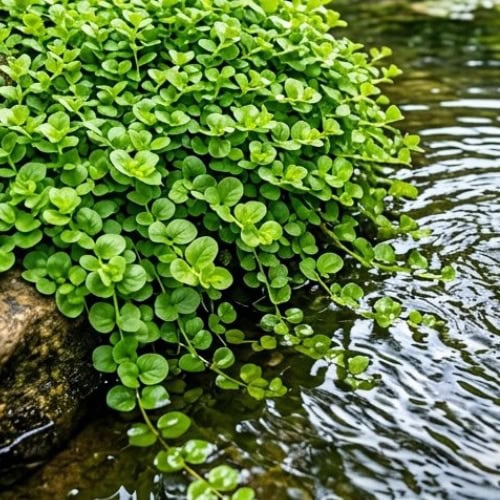
Creeping Jenny trails over the pond’s edge like a chartreuse waterfall, softening hard container rims or stone borders. Its round, golden-green leaves catch light beautifully against dark water.
It roots easily in boggy soil at the pond margin and tolerates having its feet wet most of the season. Growth is fast, so expect to trim it back to keep it from smothering neighboring plants.
Where it shines: Small pond edges, rock crevices, and container water gardens where you want movement without height.
It’s not a true aquatic, but few marginal plants do more to disguise a pond’s hard edges. Keep an eye on spread; it roots wherever a stem touches soil.
6) Willow Moss (Fontinalis Antipyretica)
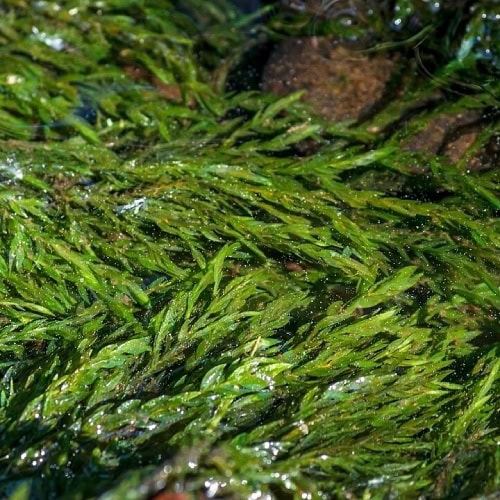
Willow moss is an underrated submerged plant for small ponds. It clings to rocks, logs, or a mesh basket, forming dark green mats that sway gently with water movement.
Like hornwort, it strips excess nutrients from the water, starving algae of what it needs to spread. It also tolerates cooler water better than many floating plants, which makes it useful in shaded or partly shaded ponds.
Practical use: Anchor a clump near a pump intake or waterfall base, where moving water helps it spread naturally over stone surfaces.
It grows slowly compared to hornwort, so it won’t take over a small pond. That makes it a steadier, lower-maintenance oxygenating option for patio ponds.
7) Mosaic Plant (Ludwigia Sedioides)
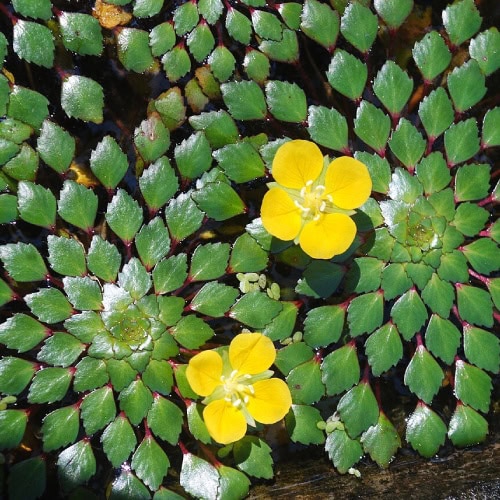
Mosaic plant earns its name honestly. Its diamond-shaped leaves lock together on the surface in a tight, tile-like pattern that looks almost engineered.
Small yellow flowers pop up above the foliage in warm weather, adding a subtle accent without overwhelming a small pond’s visual space. The rosettes stay compact, rarely sprawling the way water lettuce does.
Where it fits: Container ponds and half-barrel water gardens where you want a striking floating plant that behaves itself.
It needs warm water and strong sun to really perform, so it’s best treated as a warm-season annual in most of the country. Bring a few rosettes indoors to overwinter in a bright, shallow tray if you want to keep it going.
8) Dwarf Water Iris (Iris laevigata ‘Kanzan’)
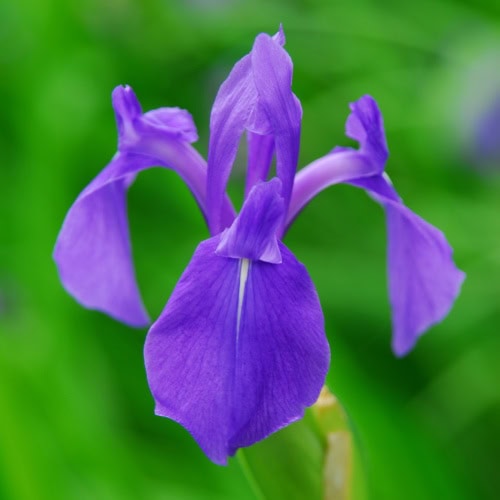
This compact iris stays under 18 inches, making it far more proportionate to a small pond than standard water iris varieties. Blue-purple blooms appear in late spring, held above narrow, upright foliage.
Plant it in a marginal basket at the pond’s edge with an inch or two of water covering the crown. It handles full sun to partial shade well.
Personal note: The upright form pairs nicely with rounder, trailing plants like creeping Jenny, giving a small pond some visual layering instead of a flat mat of foliage.
Divide clumps every few years as roots thicken in the basket. Dragonflies are frequent visitors once it’s established, a nice bonus for wildlife-minded pond owners.
9) Chameleon Plant (Houttuynia Cordata ‘Chameleon’)

Chameleon plant offers some of the most colorful foliage of any marginal option, splashed in red, cream, and green on each heart-shaped leaf. It thrives in boggy soil right at the pond edge.
Growth is vigorous, sometimes aggressively so, spreading by underground runners if not contained. In a small pond setting, keep it in its own pot rather than planting directly in the border soil.
Caution worth repeating: This plant can become a nuisance in garden beds beyond the pond, so many gardeners restrict it to a container permanently.
Despite the vigor, its color makes it worth the extra management. A single potted clump adds more visual punch than most flowering marginals twice its size.
10) Dwarf Cattail (Typha Minima)

Dwarf cattail gives you that classic pond silhouette, slender leaves and fuzzy brown seed heads, without the towering height of standard cattails that can hit 6 feet or more. This variety usually stays under 18 to 24 inches.
It’s a natural fit for small ponds where you want vertical structure at the back edge. Set it in a marginal basket with a few inches of water over the roots.
Wildlife note: Dragonflies and small birds use the stiff stems as landing spots, and the seed heads add winter interest after other marginals fade.
Divide congested clumps every couple of years. It spreads by rhizome, so a container keeps it from wandering into open water.
11) Water Forget-Me-Not (Myosotis scorpioides)
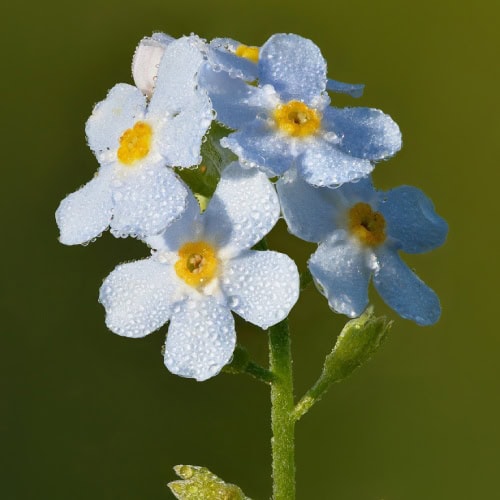
Water forget-me-not brings soft clusters of tiny blue flowers with yellow centers, blooming for weeks through late spring and summer. It stays low, usually under 12 inches, and spreads gently along the pond margin.
Plant it in shallow water or damp soil at the edge, where its trailing stems can drape slightly over the waterline. Bees and other pollinators visit the blooms regularly.
Personal favorite pairing: It looks especially good next to dwarf iris, since the fine blue flowers contrast nicely with the iris’s bold, upright leaves.
It’s not fussy about sun exposure, tolerating partial shade as well as full sun. Trim spent flower stems to encourage a second flush of bloom later in the season.
12) Watercress (Nasturtium officinale)
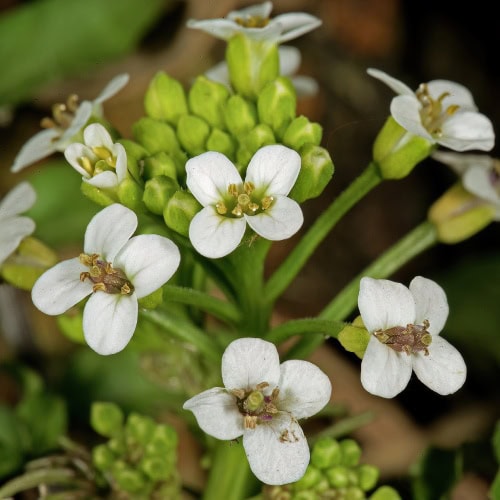
Watercress does double duty as a pond plant and an edible crop, with peppery leaves you can actually harvest for salads. It grows in shallow, moving water and roots easily along a pond’s marginal shelf.
Its dense, low growth helps shade the water’s surface near the edge, offering mild algae control while filtering some excess nutrients. Small white flowers appear in warmer months.
Practical tip: Only harvest watercress from a pond you know hasn’t been treated with chemicals or algaecides, since those residues linger in the leaves.
It prefers cooler water and can slow down in peak summer heat. Refresh the planting each season if growth thins out.
13) Fairy Moss (Azolla Filiculoides)
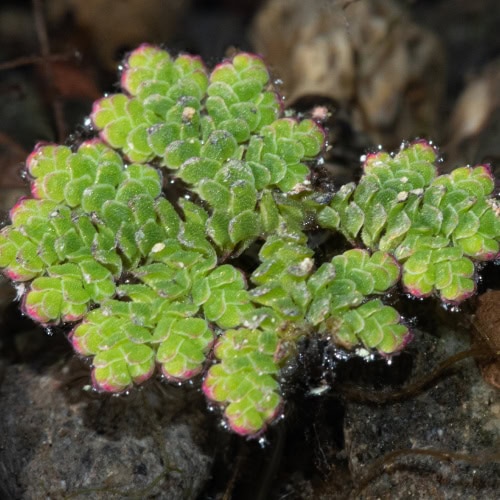
Fairy moss is a tiny floating fern, its two-lobed leaves forming a dense green carpet that can blush reddish-purple under strong sun. It’s one of the fastest-spreading floaters you’ll find for a small pond.
That speed is a double-edged trait. A thin layer shades the water nicely and slows algae, but it can cover an entire small pond surface within a couple of weeks if left unmanaged.
Caution: Fairy moss is restricted or banned in several states due to its invasive potential in natural waterways. Check local rules, and skim excess growth regularly rather than letting it spread unchecked.
Used carefully, it’s a useful short-term shade plant for containers and mini ponds.
14) Dwarf Sweet Flag (Acorus gramineus ‘Minimus’)

Dwarf sweet flag stays compact, usually under 6 inches, with grassy, arching foliage that forms a neat tuft at the pond’s edge. It’s one of the smallest marginal plants suited to container water gardens.
Its fine texture contrasts nicely with broader-leaved plants like dwarf iris or chameleon plant. Set it in a shallow marginal basket with an inch of water over the crown.
Personal insight: This is a good “filler” plant for the front edge of a small pond, where taller marginals would look out of scale.
It tolerates both sun and partial shade, and stays evergreen in mild climates. Divide clumps every few years as the tuft thickens.