
A lot of gardeners figure the shadier corners of their yard are just doomed to be dull or empty. Honestly? That’s a myth. Your shade yard landscaping can absolutely pop with life and color if you pick the right plants!
The trick is to go for blooming shade plants that don’t just survive, but actually enjoy low light. These flowers for shaded areas are built for less sun, and often show off with lush leaves and surprisingly bright blooms that liven up even the gloomiest garden spots.
Maybe you’ve got deep shade under old trees or a chilly north-facing bed; you can incorporate wild flowers that grow in shade or even yellow flowers that grow in shade for a splash of sunshine in the dark.
For those working with limited space, small shade flower bed ideas and perennial flower box ideas help maximize every inch of your property. You can even mix in annual flowers that grow in shade to keep the colors fresh.
1) Hosta
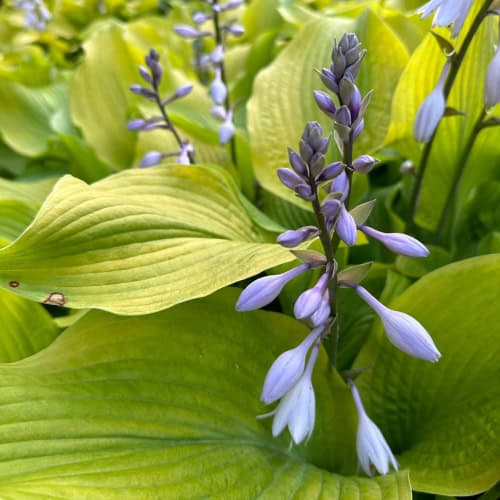
Although not known for their flower power (more so their foliage), in summer, they’ll actually send up bell-shaped bloom, usually lavender or white!
Hostas are reliable perennials that really shine in the shade, especially under trees or along those tricky borders. There’s a wild amount of variety, from tiny six-inch types like Blue Mouse Ears, to the big ones that’ll fill up a whole corner.
They’re not fussy at all, just give them decent soil and some water, and they’ll do fine in zones 3 through 9.
2) Astilbe
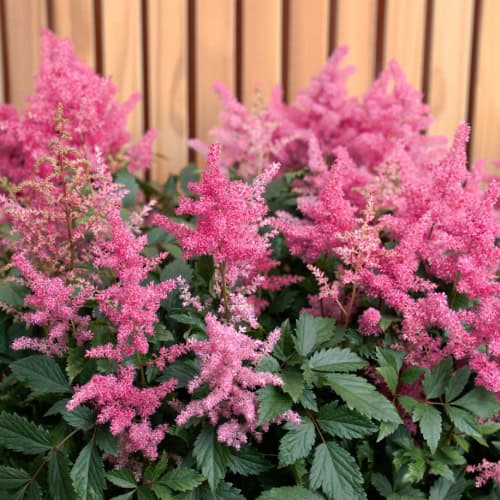
Astilbe is all about feathery texture and color. You get plumes in white, pink, red, or even deep burgundy, and they’re solid performers from early summer right into fall.
They usually reach about 18–24 inches tall, and the sturdy stems are great if you like to cut flowers for inside. Plus, they’re easy. If your soil’s a bit damp, they’ll be happy.
3) Bleeding Heart
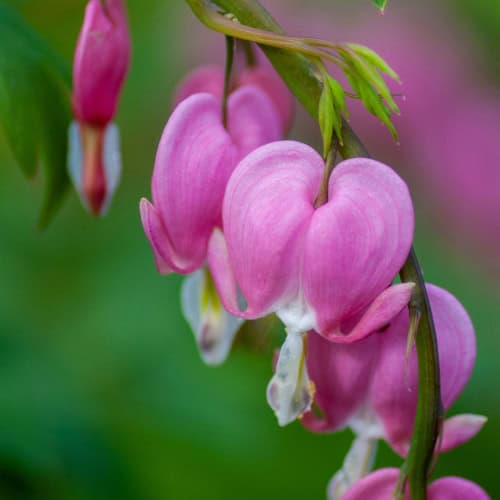
Bleeding hearts are those classics with heart-shaped flowers that dangle from gently arching stems. They’re happiest in partial to full shade with soil that stays moist and rich.
Expect blooms from spring into early summer, mostly in colors of pink, red, or white. Most types will disappear when it gets hot, so they’re perfect for woodland gardens or shaded borders where you want a little spring magic.
4) Impatiens
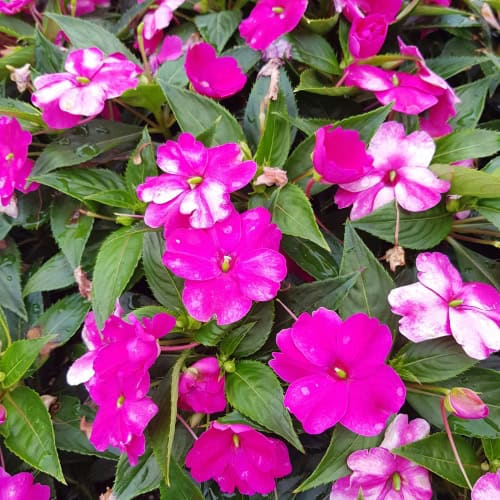
Impatiens are a shade garden staple if you’re after non-stop color. They’ll bloom from late spring until frost, and they don’t mind deep shade at all.
Colors? Tons! Pink, red, white, orange, violet, you name it. They aren’t demanding, just keep the soil moist and they’ll keep going. Try them in beds, containers, or baskets – they’re super versatile!
5) Fuchsia
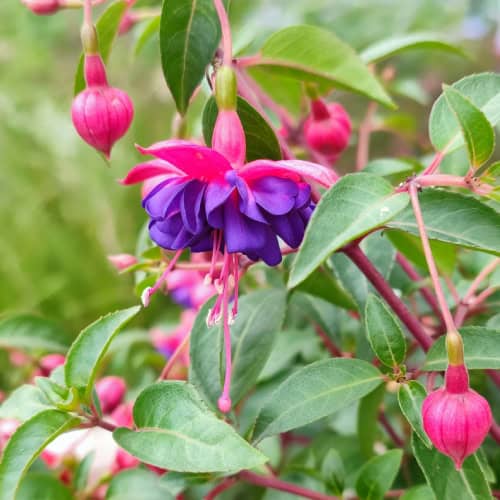
Fuchsias look fancy with their teardrop-shaped flowers, and they’re perfect for shady gardens. They really come alive in hanging baskets or pots where their blooms can dangle.
They handle low light better than most and like things on the cooler, damper side. From spring to fall, they’ll keep blooming, and hummingbirds love them. You’ll find colors from white to pink, red, and purple.
6) Lungwort (Pulmonaria)
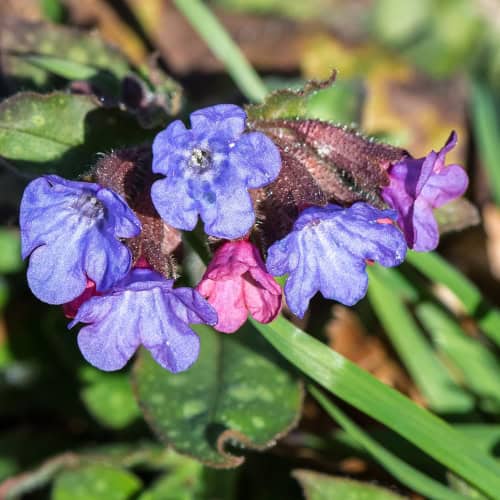
Lungwort is a bit of an unsung hero for partial to full shade. It’s pretty tough, blooms early in spring, and the flowers of pink, white, or blue get deeper in color as they age.
The spotted leaves are cool, too, and stick around after the flowers fade. It’s happiest in moist, cool spots and does well in zones 3–9.
7) Siberian bugloss
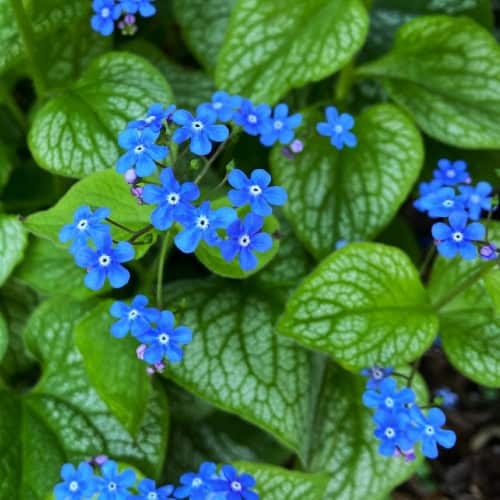
Brunnera macrophylla, or Siberian bugloss, is one of those low-maintenance plants that just quietly does its thing in shaded areas. The heart-shaped leaves are charming, and the tiny blue flowers look a bit like forget-me-nots in spring.
It likes dappled shade or some morning sun, and pairs nicely with hostas and astilbe.
8) Solomon’s Seal
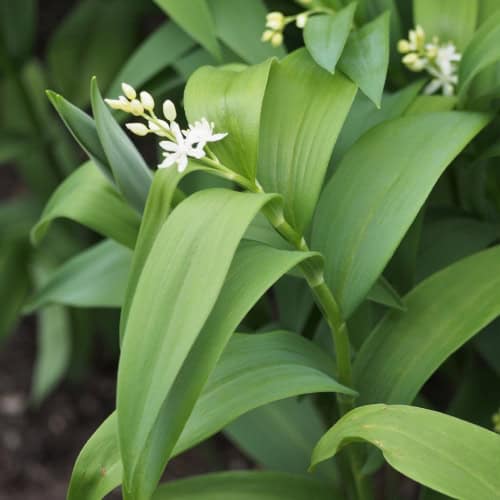
Solomon’s Seal brings a classic woodland look with its arching stems and little white flowers that hang beneath the leaves in spring.
It likes cool, moist shade and slightly acidic soil. In fall, the leaves turn golden, so you get a bit of a show later in the year, too. It spreads slowly, making it a good choice for natural-looking ground cover.
9) Hydrangea
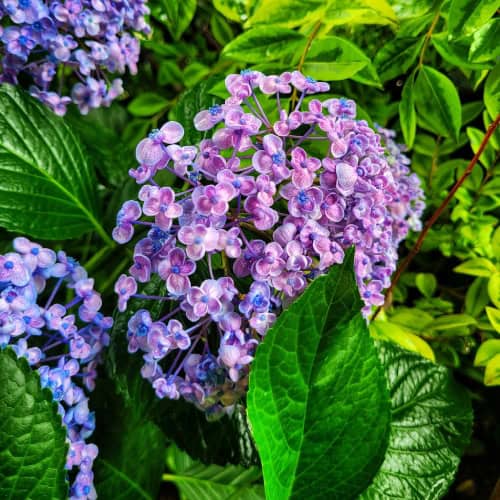
Hydrangeas are go-to shade-loving shrubs if you want big, bold flowers in the shade. Mophead and lacecap types especially do well with less sun.
They prefer some morning sun but really appreciate shade in the afternoon, especially if you’re in a hot area. Blooms come in pink, blue, red, or white, and they’ll light up those hard-to-fill corners.
10) Columbine
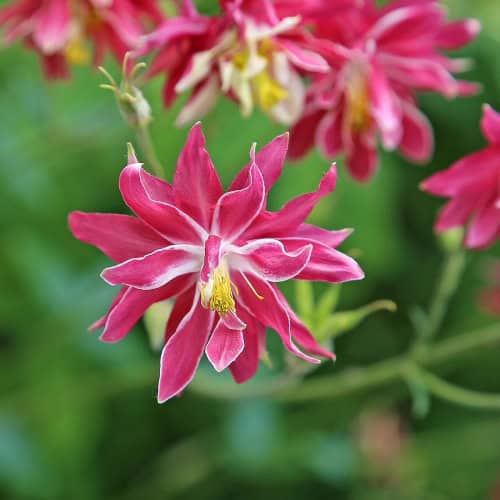
Columbine (Aquilegia) is a favorite for woodland gardens or shady beds. The ferny foliage is lovely, and the flowers are unique; spurred shapes in pink, red, blue, purple, yellow, or white.
They bloom from late spring into early summer, and hummingbirds seem to love them. They’re adaptable to different soils, too, as long as it’s not bone dry.
11) Heuchera (Coral Bells)
Heuchera, or coral bells, is all about the leaves. You get wild colors such as deep purple, orange, red, peach, and they hold up in the shade.
They form tidy mounds and send up delicate flower spikes in spring or early summer. They’re handy for woodland settings, under trees, or in pots; pretty much anywhere you want some color that isn’t just flowers.
12) Lily of the Valley
Lily of the valley has sweetly scented, white, bell-shaped flowers in spring. It’s a tough little plant for shady spots and makes a great ground cover under trees or shrubs.
It grows from rhizomes and spreads out over time, just plant the pips in early spring or fall. Once it’s settled in, it can handle dry shade and doesn’t need much fussing over.
13) Virginia Bluebells
Virginia Bluebells are native perennials that do best in the shade. The flowers start pink and fade to blue, which is pretty cool to watch.
They like moist, rich soil and will die back after blooming in early summer, so maybe pair them with something that fills in later.
17) Foamflower (Tiarella)
Foamflower is perfect if you need a low, spreading ground cover for shady spots. It only grows about 8 inches tall and sends out runners to fill in space.
You’ll get delicate white or pink flowers in spring, and the foliage stays nice through summer, sometimes even turning bronze in fall. No major upkeep needed, and it’s fine with acidic soil.
15) Epimedium
Epimedium is a low-growing perennial that’s honestly a lifesaver for tough, shady areas. It only gets about a foot tall and puts out delicate, orchid-like flowers with quirky spurs in spring.
It’ll handle everything from deep shade to dappled light, and the foliage is interesting; mottled and veined, so there’s something to look at even after the blooms are gone.
Epimedium is also deer- and rabbit-resistant, and once it’s in, it pretty much takes care of itself.
16) Toad Lily (Tricyrtis)
Toad Lily is one of those plants that surprises people. The flowers look almost tropical, spotted, orchid-like, and they show up late in the season when most other shade plants are winding down.
It likes partial to full shade and moist, well-drained soil. Grows up to 3 feet tall, and works in woodland gardens, borders, or anywhere that doesn’t get much sun.