
Winter doesn’t have to drain the life out of your garden. Plenty of hardy garden plants winter bloom during the coldest months, offering vibrant colors when most greenery is snoozing. If you’ve ever wondered what flowers bloom in winter, you’ll find that these winter hardy flowers can shrug off frost, snow, and freezing nights while adding visual interest to your outdoor spaces. By selecting frost resistant plants and frost tolerant flowers, you can maintain a lively landscape even in the harshest conditions.
From early-blooming shrubs to white winter bloom plants that poke through frozen soil, flowers that bloom in winter give you loads of options. Many winter blooming perennials and frost resistant flowers are surprisingly resilient, with some thriving in full sun while others prefer a bit of shade. Each plant brings its own unique flair; some are fragrant, others stay green all winter, and a few do both, ensuring your garden remains beautiful throughout the season.
1) Winter Jasmine (Jasminum nudiflorum)
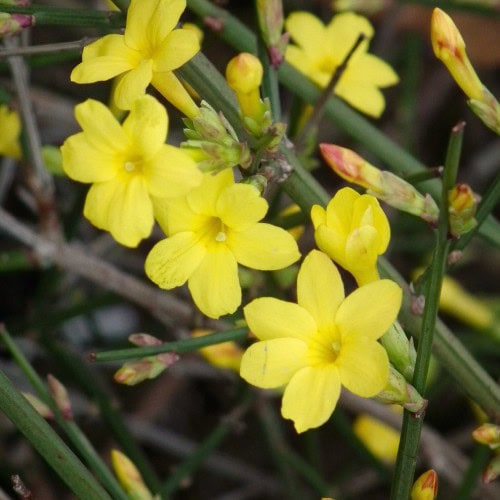
Winter jasmine shows off bright yellow flowers from late winter into early spring, just when you need a bit of cheer. Native to China, this shrub hangs tough in USDA zones 6 through 11.
You can start winter jasmine from nursery plants or seeds, though seeds take their sweet time (think a couple of years) before you see blooms. Once it’s settled in, winter jasmine is pretty low-maintenance and shrugs off the cold.
Its sunny flowers show up before the leaves, so it’s a solid pick for winter color.
2) Japanese camellia (Camellia japonica)
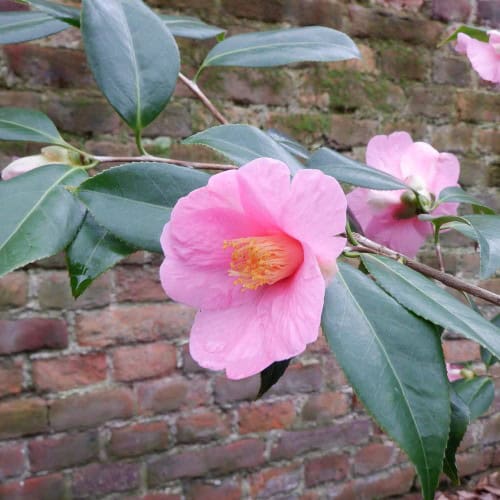
Camellia japonica turns bleak winter gardens into something special, blooming from late December through March. It likes a spot with morning sun and a bit of afternoon shade, plus well-drained soil – don’t skip that detail!
There are thousands of cultivars with flowers in white, pink, red, or even wild mixes. The glossy leaves stick around all year, and those winter blooms really brighten things up when almost nothing else does.
3) Hellebore (Christmas Rose)
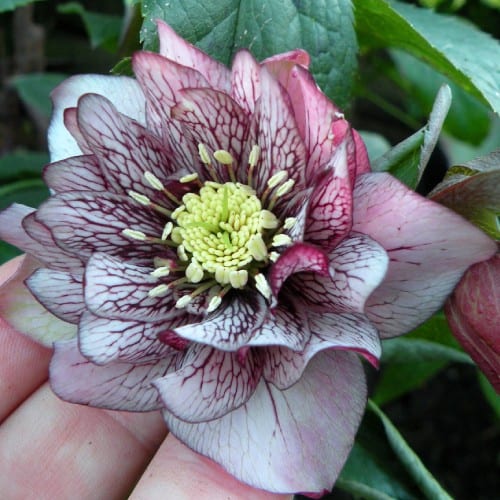
Hellebores are a reliable splash of color in the bleakest months. The Christmas rose (Helleborus niger) has pure white flowers from late fall to mid-winter, sometimes even as early as December in zones 3 through 8.
Lenten rose types (Helleborus orientalis) bloom a bit later, from late winter into early spring, and come in shades like ivory, rose, burgundy, and pale green. These shade-loving perennials keep their leaves all year and don’t interest deer much, so they’re easygoing additions to a winter garden.
4) Snowdrops (Galanthus)
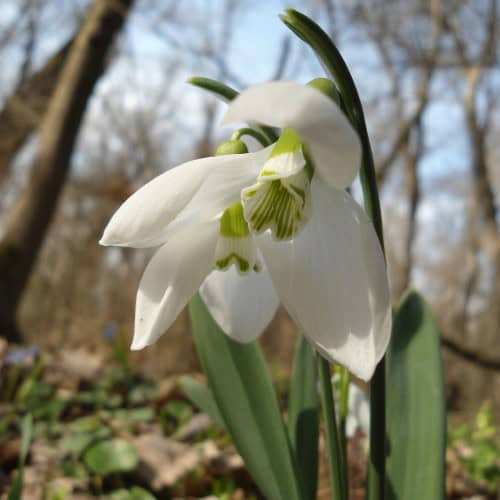
Snowdrops are usually the first to pop up in late winter, sometimes even pushing through snow. These delicate white flowers belong to the Amaryllidaceae family, with over 20 species from Europe and Western Asia.
They do well in USDA zones 3 through 8, especially in borders or shady spots. Classic varieties include Galanthus nivalis, Galanthus elwesii, and Galanthus ‘S. Arnott’, which has a lovely scent and grows a bit stronger than most.
5) Witch Hazel (Hamamelis virginiana)
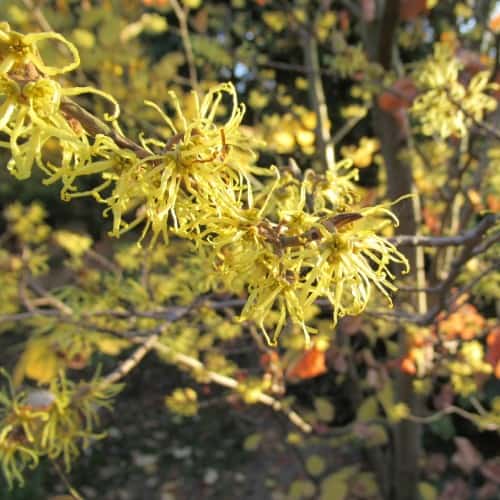
Witch hazel is kind of a show-off in winter, with its quirky, spider-like flowers that show up when everything else is asleep. Depending on the type, you’ll get fragrant, ribbon-like petals from late fall through early spring—even if it’s freezing out.
These shrubs like moist, well-drained, slightly acidic soil with some organic matter. There are a few species to pick from; the common witch hazel blooms October through December, while the vernal type holds off until February or March.
6) Cyclamen
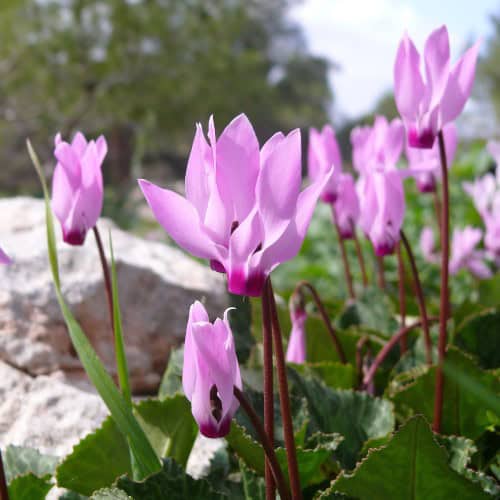
Cyclamen brings a jolt of color to winter gardens just when things look the dullest. Their upswept blooms (pink, red, white, purple) keep coming through the cold months.
The heart-shaped leaves often have silvery patterns, so they look good even when not blooming. Cyclamen works indoors or outside, and as long as it stays cool, it’ll keep flowering from fall through early spring.
7) Heather (Calluna vulgaris)
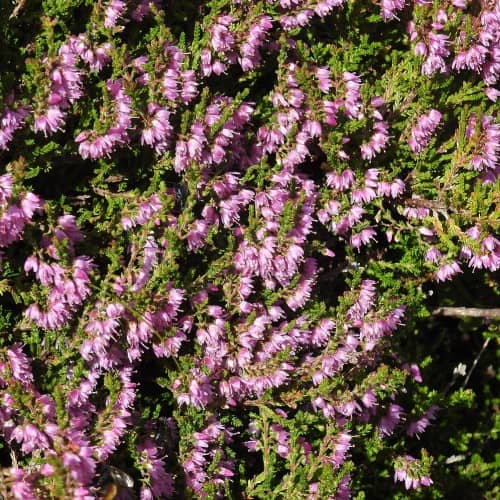
Although popular in summer, some varieties of heather, like ‘Winter Chocolate’, have foliage that shifts from salmon to golden orange as the season shifts.
‘Firefly’ is another fun one, going from yellow-orange to bright red in winter. Heather works as ground cover, in borders, or tucked in the background; it’s flexible, which is handy!
8) Sarcozonas (Sarcozona)
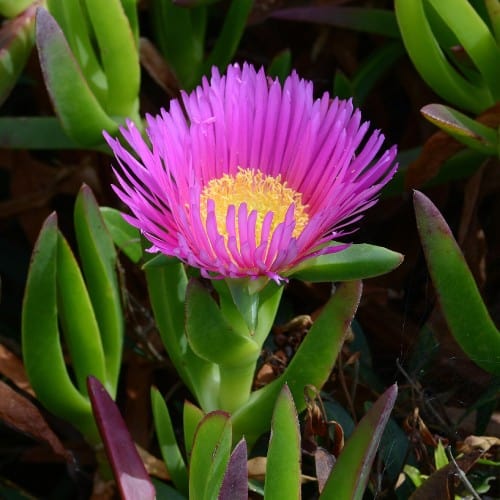
Sarcozona’s a bit under the radar, but this succulent from South Africa puts out small flowers in winter. The plants have chunky, fleshy leaves and bloom in white or pink when it gets chilly.
Give Sarcozona well-draining soil and don’t overwater. They handle the cold and look great in rock gardens or containers, surprising you with color when you least expect it.
9) Winter Aconite (Eranthis hyemalis)
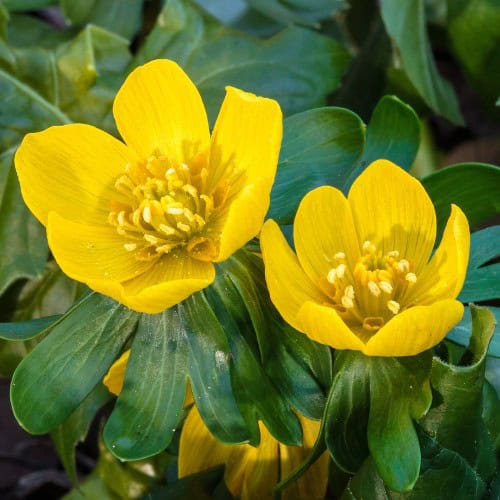
Winter aconite brings a pop of yellow to your garden in late winter, sometimes even before crocuses wake up. This tuberous perennial has cute cup-shaped blooms about an inch wide, each with a leafy collar underneath.
Plant these in fall so they can settle in before showtime. They like 5 to 6 hours of sun daily and can handle both full sun and a bit of shade.
10) Oregon grape (Mahonia aquifolium)
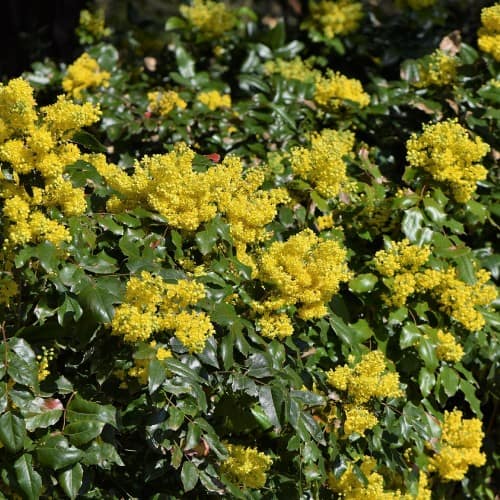
Mahonia aquifolium, or Oregon grape, produces bright yellow flowers right in the heart of winter. Its evergreen, holly-like leaves stay good-looking all year.
The foliage sometimes turns bronze or purple in cold snaps. After flowering, blue-black berries show up, drawing birds in. This shrub handles shade and, once it’s established, doesn’t mind a dry spell.
11) Winter Heath (Erica carnea)
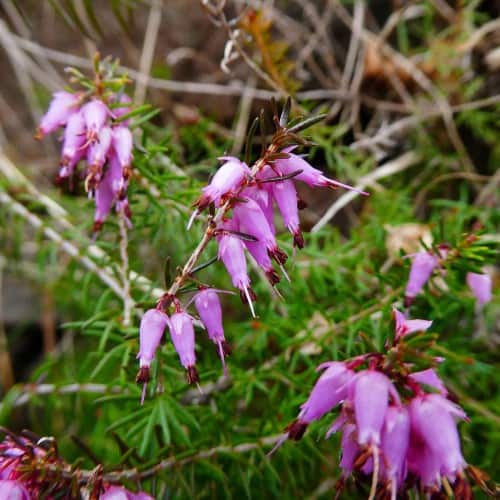
Winter heath is a dependable way to get color in the garden when most things are taking a break. This low, evergreen shrub has clusters of tiny, bell-shaped flowers from late winter to early spring.
It likes full sun (six to eight hours is best) and keeps its needle-like leaves green all year. Winter heath is tough in cold weather and does best in well-drained soil.
12) February daphne (Daphne mezereum)
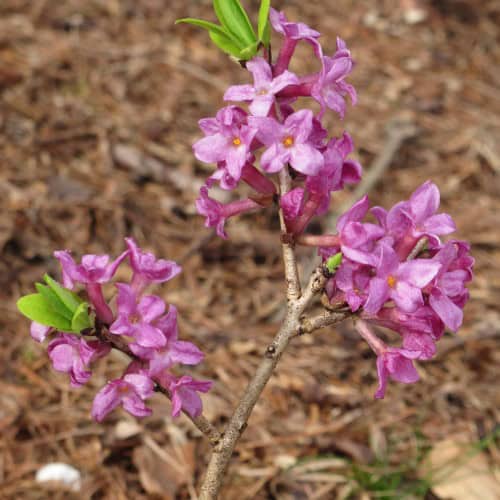
Daphne mezereum, or February daphne, produces sweet-smelling pink-purple flowers on bare stems in late winter. It usually grows 3 to 5 feet tall and wide, so it fits most gardens.
Blooms show up before the leaves, usually February or March. Plant it in partial shade with well-drained soil. Heads up: all parts are toxic if eaten, and the sap can irritate skin, so handle with care.
13) Pansy (Viola tricolor var. hortensis)
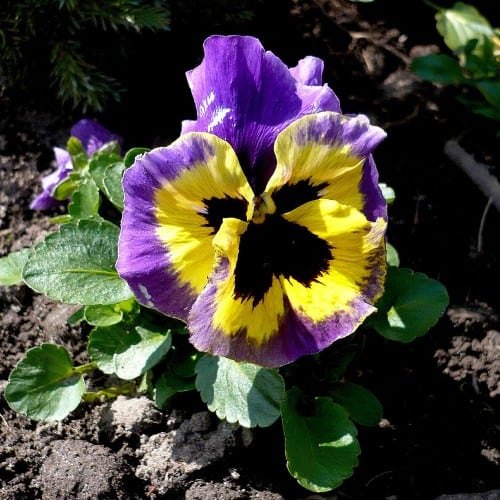
Pansies are the go-to for winter color when everything else seems to have given up. They love cool weather and can shrug off a light frost, making them perfect for displays from fall through spring.
Plant pansies in autumn for blooms that show up in late winter or early spring. They do best in partial shade with rich, well-drained soil, ideally with a slightly acidic pH around 6.0 to 6.2.
14) Kerria japonica
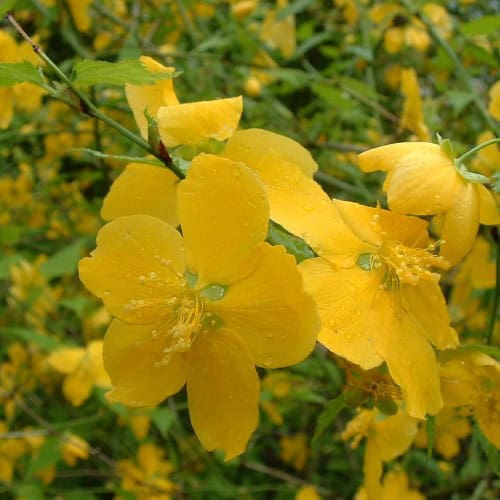
Kerria japonica stands out in winter thanks to its bright green stems, not for flowers at this time of year. The yellow blooms mostly show up in late April and May, not winter.
The arching green branches look lively all winter, which is a nice change from bare twigs. Some types might bloom a little after spring, but that’s more of a warm-weather thing.
15) Mahonia x media ‘Charity’
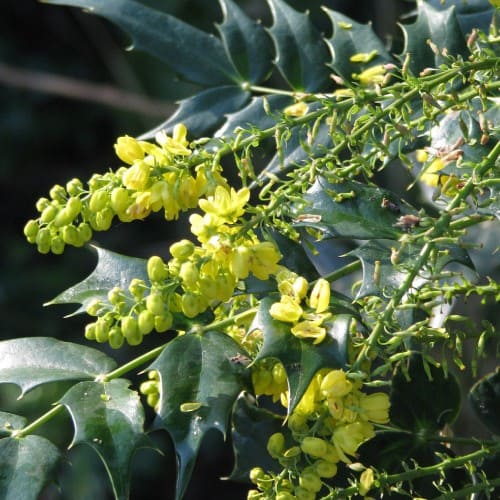
This bold evergreen shrub brings color to winter gardens with tall, bright yellow, fragrant flower spikes. It blooms from November through February, so you get a long stretch of interest when little else is happening.
The dark green, holly-like leaves add structure year-round. After the flowers, purple-blue berries form, drawing birds and wildlife.
16) Japanese andromeda (Pieris japonica)
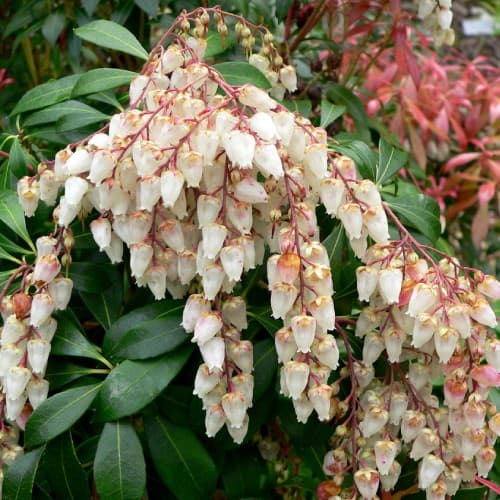
Pieris japonica adds a touch of class to your winter garden. This evergreen shrub develops colorful buds in fall that stick around through winter, often glowing red against shiny green leaves.
The bell-shaped flowers show up in late winter or early spring, in clusters of white, pink, or cream. These can last a couple of months or more, giving you a long stretch of interest when other plants are still waiting for spring.
17) Iris unguicularis (Winter Iris)
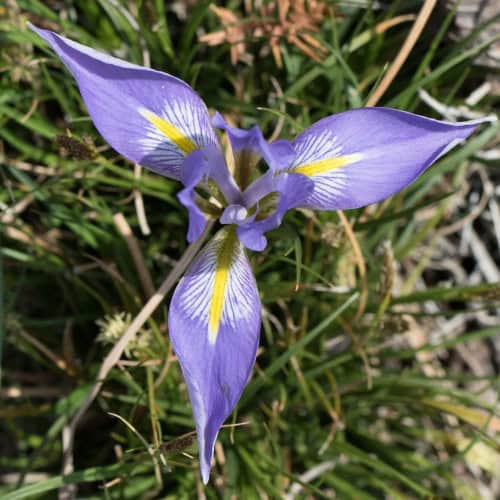
Iris unguicularis puts out fragrant lavender to deep violet flowers from late fall to early spring. The blooms are around 2 to 3 inches wide, with white and yellow markings.
This Mediterranean native likes full sun and well-drained soil. It forms evergreen clumps, 12 to 15 inches tall, with slender, grassy leaves.
Winter iris prefers things dry in summer and will keep blooming through winter, only taking a break if it gets colder than 15°F.
18) Skimmia japonica
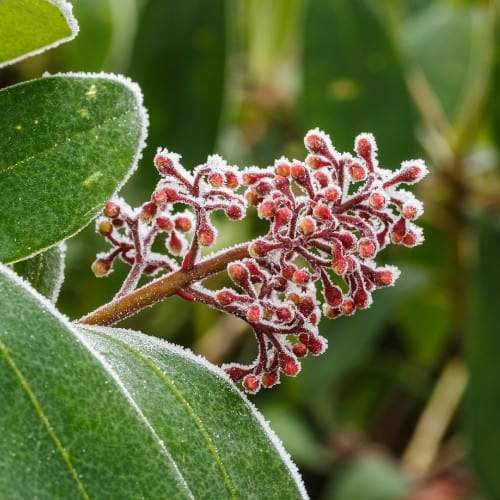
Skimmia japonica brings a steady splash of color to winter gardens with its evergreen leaves and ornamental flair. This shrub grows slowly and shows off clusters of fragrant white flowers, usually blooming from mid to late winter and sometimes stretching into early spring.
In fall, you’ll notice red buds forming that stick around all winter before they finally open. If you have female plants and there’s a pollinator nearby, you’ll get those classic bright red berries, which is always a nice bonus. Skimmia japonica prefers shady spots and tops out around 3 to 4 feet tall, so it’s a good fit for containers or tucked into garden beds.