
Succulents are prized for their low-maintenance care and striking appearances, but a lot of folks don’t realize just how many varieties actually throw out some pretty stunning blooms. While succulents are mostly grown for their funky foliage, quite a few species will reward patient gardeners with colorful flowers if you give them the right conditions. These blooms can be anything from soft pastels to bold reds and oranges!
Figuring out which succulents flower (and how to get them to do it) can totally change your garden game, indoors or out. The plants here are some of the most dependable and eye-catching bloomers you can get your hands on. Each one has its own quirks and blooming schedule, but they all share that tough, drought-loving vibe that makes succulents so easy to love.
1) Echeveria elegans (Mexican snowball)
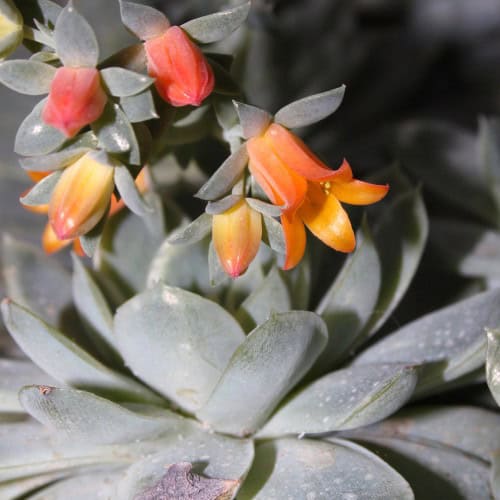
Echeveria elegans, or Mexican snowball, sends up delicate pink flowers tipped in yellow on skinny stalks that can reach about 10 inches tall, usually in late winter or spring.
This one forms tidy rosettes of pale blue-green, spoon-shaped leaves. It’s from the semi-desert parts of Mexico, so it’s happy both inside and out, and really doesn’t ask for much.
2) Crassula ovata (Jade Plant)
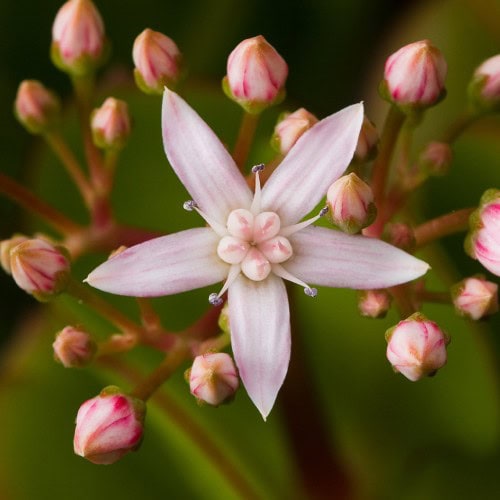
The classic jade plant, Crassula ovata, puts out little star-shaped blooms in white or pink during winter. It’s got those thick, glossy oval leaves and woody stems that make it look a bit like a miniature tree.
If you want it to bloom, let it get a bit cooler and cut back on watering in the fall. The flowers show up in clusters and might even have a gentle scent, and honestly, it’s a great houseplant that’s both easy and rewarding.
3) Kalanchoe blossfeldiana (Flaming Katy)
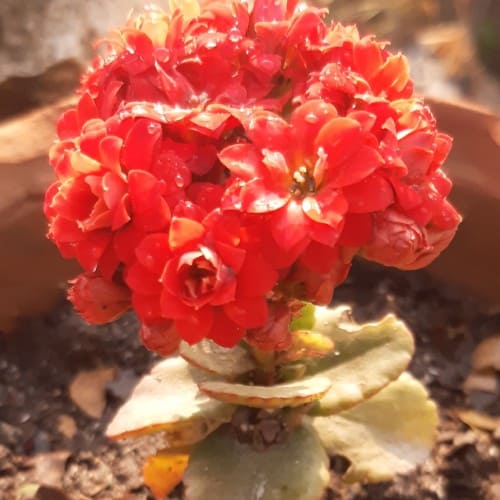
Kalanchoe blossfeldiana bursts into clusters of bright flowers in red, orange, yellow, pink, purple, or white. Also called Flaming Katy, it hails from Madagascar and can bloom for ages, usually from late winter into spring.
You’ll notice its fleshy, scalloped leaves sometimes turn red in strong light. It grows about 1 to 2 feet tall and doesn’t need much fuss, so it’s a solid pick for indoors or out.
4) Aloe vera
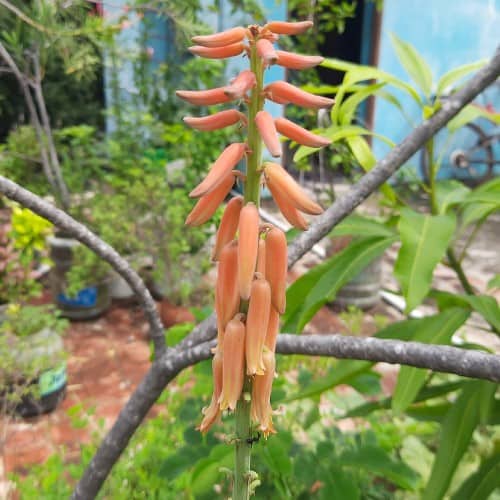
Aloe vera throws up tall spikes of tubular flowers in yellow, orange, or red, usually in the warmer months if it’s getting enough sun.
Give it a spot with 6 to 8 hours of direct sunlight, and don’t overwater, as this plant likes things dry and bright. It’s a breeze to care for, whether you keep it inside or out.
5) Sedum morganianum (Burro’s Tail)
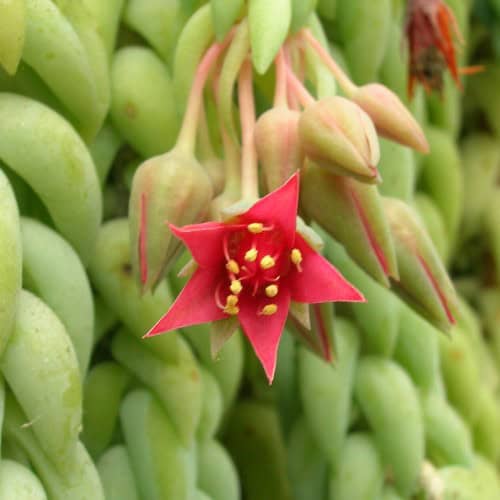
Sedum morganianum, or Burro’s Tail, grows long, trailing stems up to 24 inches, packed with thick blue-green leaves. In summer, it’ll surprise you with pink to red flowers.
This one’s perfect for hanging baskets, as those cascading stems look fantastic. It barely needs any attention and loves bright light, so it’s a win for beginners and collectors alike.
6) Graptopetalum paraguayense (Ghost Plant)
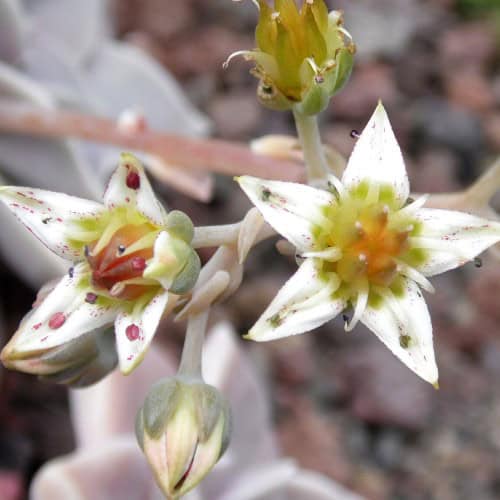
Ghost Plant (Graptopetalum paraguayense) puts out eye-catching star-shaped white flowers with tiny red spots. Its rosettes are thick and fleshy, in pale gray or pearly tones.
The plant’s sprawling stems can get up to a foot long, so it’s handy for ground covers, pots, or baskets. It’s also surprisingly cold-hardy for a succulent and basically takes care of itself.
7) Senecio rowleyanus (String of Pearls)
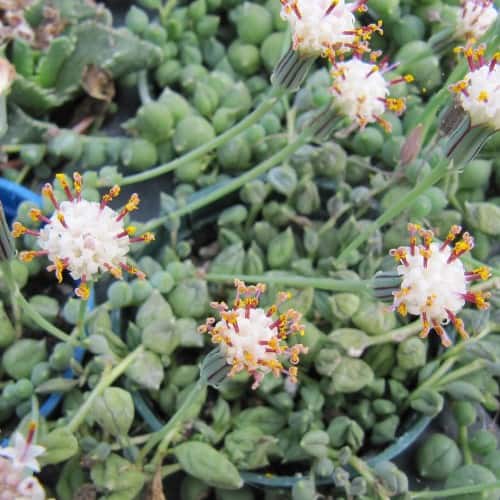
String of Pearls will bloom with small white flowers that have a faint cinnamon scent. The blooms pop up on skinny stalks between the bead-like leaves.
This trailing succulent is a real conversation starter, with its unique, pea-shaped foliage tumbling out of baskets. It comes from southwestern Africa and does best in bright, indirect light and soil that drains super well.
Water it only when the soil is bone dry – seriously, it hates wet feet!
8) Euphorbia milii (Crown of Thorns)
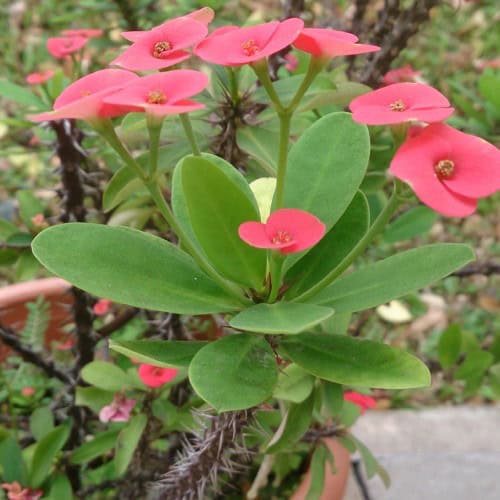
Crown of Thorns, native to Madagascar, is known for almost nonstop blooms. It’s got thorny stems and colorful bracts (red, pink, or yellow) surrounding its tiny flowers.
This one’s a breeze to keep happy indoors. It adapts easily and doesn’t demand much, which is always a plus for your home or patio.
9) Agave americana (Century Plant)
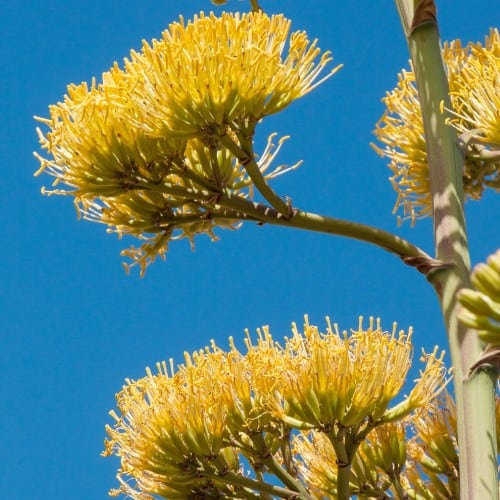
Agave americana, or Century Plant, is famous for its show-stopping flower spike, but you’ll need patience. It forms big rosettes of blue- or gray-green leaves with wicked spines.
Once it’s mature (which can take anywhere from 10 to 30 years), it shoots up a massive stalk, sometimes 20 to 40 feet tall! You’ll get clusters of yellowish-green flowers, and then, well, that’s the end for the plant. Quite a finale.
10) Lithops (Living Stones)
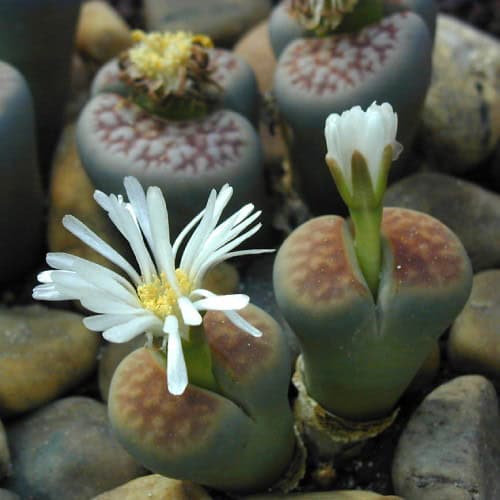
Lithops are tiny succulents from southern Africa that look just like pebbles; a cool disguise against hungry critters.
Each plant is basically two thick, fleshy leaves split by a gap, and that’s where daisy-like flowers pop out in white, yellow, pink, or orange.
They’re great for growing indoors since they barely need water or attention. They’re super slow growers and stay low to the ground, making them quirky little additions to your collection.
11) Sempervivum tectorum (Hens and Chicks)
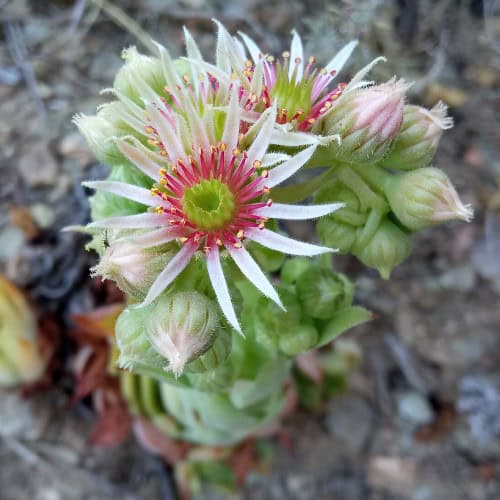
Sempervivum tectorum grows dense rosettes of fat leaves, up to 4 inches across, in green, red, blue, or copper; sometimes with purple tips!
In summer, it sends up tall stems topped with red-purple flowers. The main rosette spreads out, making lots of baby plants, so you get a thick mat over time. It’s right at home in rock gardens or containers and doesn’t ask for much.
12) Aeonium arboreum (Tree Aeonium)
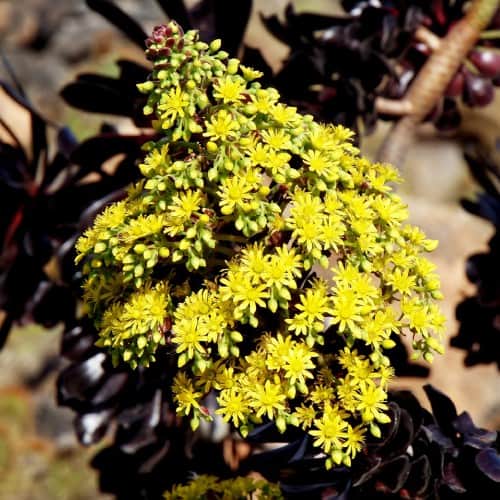
Aeonium arboreum, or Tree Aeonium, produces bold yellow flowers on long bloom spikes. The rosettes can get up to 10 inches wide, with neat, spoon-shaped leaves.
It usually blooms in spring or summer. Once a rosette flowers, it dies, but the plant makes plenty of offsets to keep going. Outdoors in warm climates or as a houseplant, it’s pretty easygoing.
13) Echeveria ‘Perle von Nurnberg’
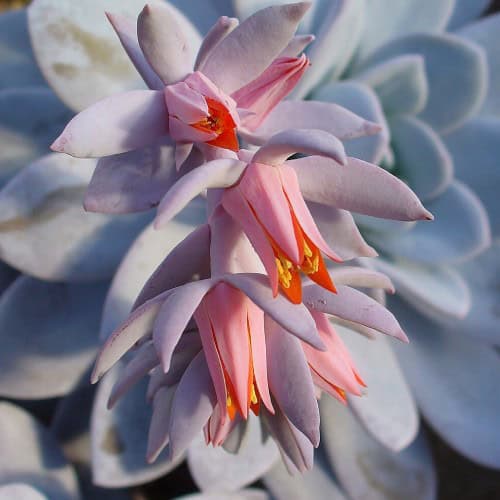
This hybrid puts out coral-pink flowers with yellow centers in summer. The blooms rise above the rosette of pastel gray and purplish-pink leaves on tall stalks.
Full sun helps it bloom, and a little diluted fertilizer once or twice during the growing season doesn’t hurt. The flowers really set off the plant’s already gorgeous foliage.
14) Pachyphytum oviferum (Moonstones)
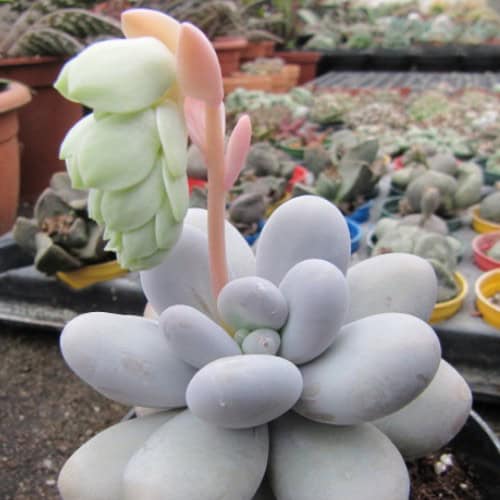
Pachyphytum oviferum, or Moonstones, is a Mexican native with eye-catching red and orange flowers in winter and spring, on stems up to a foot tall.
This one’s known for its plump, rounded leaves in bluish-purple, pink, or gray-lavender, all packed into tight rosettes. It likes bright light, well-drained soil, and not much water.
15) Crassula perforata (String of Buttons)
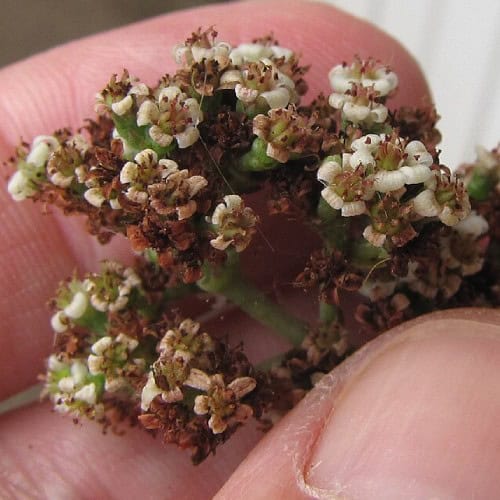
String of Buttons blooms with delicate star-shaped flowers from spring through fall, usually cream to pale yellow and arranged in clusters about 3 inches long.
The triangular leaves stack up along the stems, pale green with reddish edges, giving the whole plant a quirky, geometric look that goes well with the flowers.
16) Sedum rubrotinctum (Jelly Bean Plant)
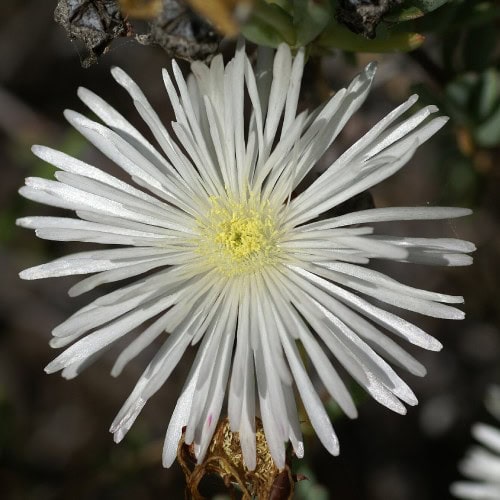
Sedum rubrotinctum, or Jelly Bean Plant, pops out little yellow star flowers in spring and summer. It’s got plump, bean-shaped leaves that turn red in strong sunlight.
You can grow it in USDA zones 9a to 11b. It’s tough in poor soil and dry spots, which makes it ideal for rock gardens or containers. The trailing stems look great in hanging baskets, too.
17) Kalanchoe tomentosa (Panda Plant)
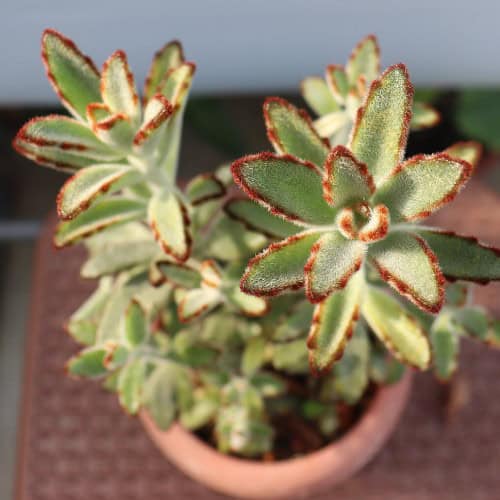
Kalanchoe tomentosa, the Panda Plant, comes from Madagascar and stands out for its fuzzy, silvery leaves. The dark brown or reddish markings along the edges and tips really pop against the soft, pale surface.
It’s a slow grower, topping out around 18 inches, and gets woody stems as it matures. Outdoors, it’s suited for USDA zones 11 and 12, but it’s an easy-care houseplant almost anywhere.
18) Echeveria runyonii ‘Topsy Turvy’
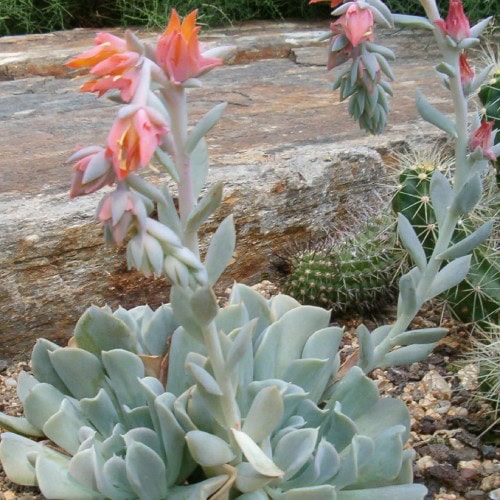
Echeveria runyonii ‘Topsy Turvy’ blooms with arching stems of bright orange and yellow star-shaped flowers in late summer or fall, rising about 8 inches above its blue-gray rosettes.
This award-winner has wild, curving leaves that twist and curl, giving it an unusual look. The silvery-green leaves often get pink tips, which just adds to the charm.
It does best in daytime temps between 68 and 80 degrees Fahrenheit.
19) Aloe brevifolia
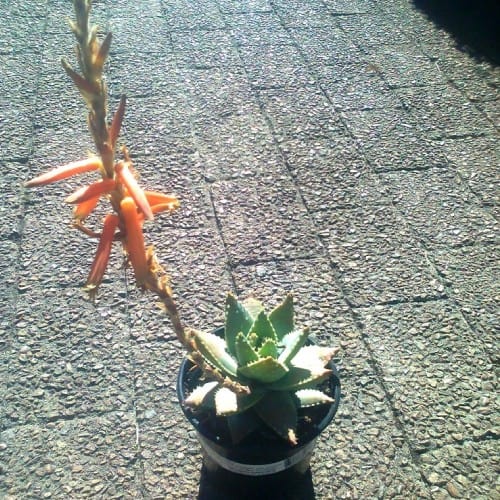
Aloe brevifolia shows off bright red to orange flowers, usually blooming in fall and summer. It stays compact, forming rosettes of triangular, blue-green leaves edged with soft white teeth.
The whole plant only gets about a foot tall and wide. It’s great in rock gardens or containers where it’ll get around six hours of sun. Full sun can bring out rosy-pink or golden-yellow colors in the leaves.
20) Dudleya species
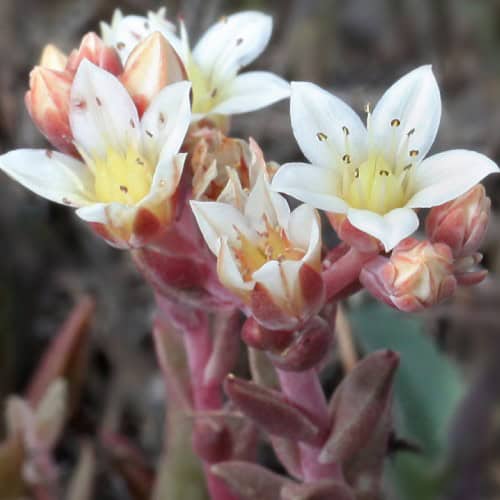
Dudleya succulents are native to California, Baja California, and parts of the southwestern United States. There are about 45 to 50 species in the genus, most of them clinging to rocky cliffs and outcrops where you’d least expect to find them.
These plants grow in tight rosettes and send up flower stalks that sometimes seem almost too tall for their size. Blooms show up in shades of yellow, pink, or red – pretty striking against the compact leaves. The flower stems can get up to 10 or 14 inches tall, which is honestly kind of impressive for such a squat little plant.