
Not every garden basks in full sunlight, and plenty of homeowners wrestle with shaded areas that seem impossible to fill with anything vibrant. The upside? There are loads of plants that not only handle shade, they actually love it, offering lush foliage and surprising pops of color where you might least expect it.
Figuring out which shade-loving plants fit your garden can turn those dim corners into genuinely beautiful spaces. From classic perennials with striking foliage to more delicate flowering types, shade plants deliver a surprising range for low-light spots.
These are the plants that have gotten used to woodland life, thriving beneath trees or along those chilly, north-facing walls where sunlight barely peeks through.
1) Hosta
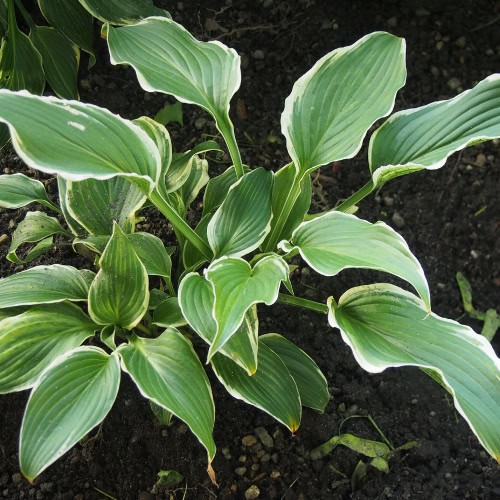
Hostas are the go-to perennials that thrive in shaded spots where most plants just give up. Their foliage is the real draw, coming in blue-green, gold, and even wild variegated patterns.
There’s a hosta for just about every space, from tiny ones for pots to big, dramatic types perfect under trees. Most prefer shade or dappled sunlight, though a few can handle some gentle morning rays. They’re reliable in zones 3 through 8 and just seem to get better every year with barely any fuss.
2) Ferns
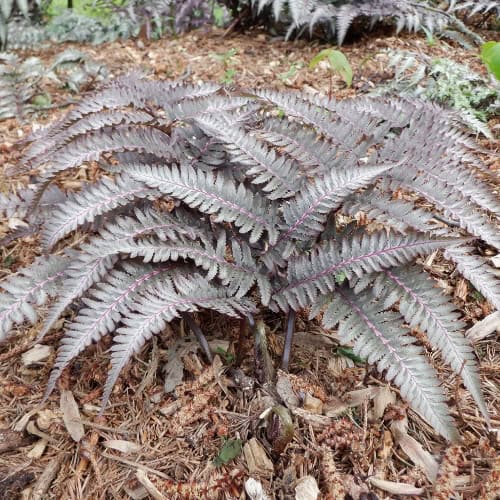
Ferns are pretty much the definition of a shade garden staple. They’re happiest in moist, humus-rich soil and love hanging out under tree canopies or anywhere the sun is shy.
Hardy in zones 3 through 8, most ferns won’t demand much from you. Pests and problems are rare, so you can just let them do their thing. They’re great as a green backdrop or mixed in with other shade-lovers for a more layered look.
3) Impatiens
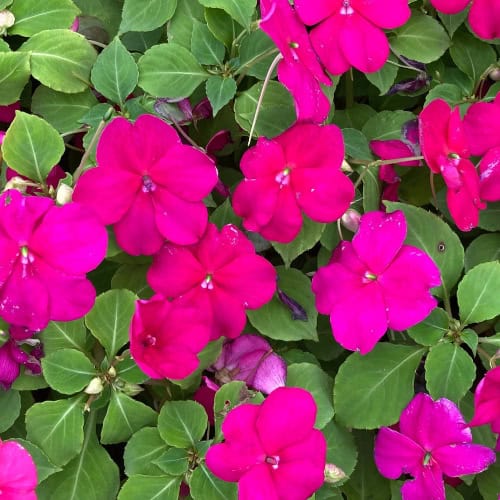
Impatiens are hard to beat if you want flowers in the shade. They really do thrive where most other blooms just won’t perform.
Originally, they grew under trees in wooded areas, so they’re perfectly suited for those shadowy spots. Expect vibrant, continuous blooms from late spring until early fall.
Plant them beneath trees, along those chilly north-facing walls, or anywhere the sun barely hits. Their bright flowers can wake up even the gloomiest corner.
4) Astilbe
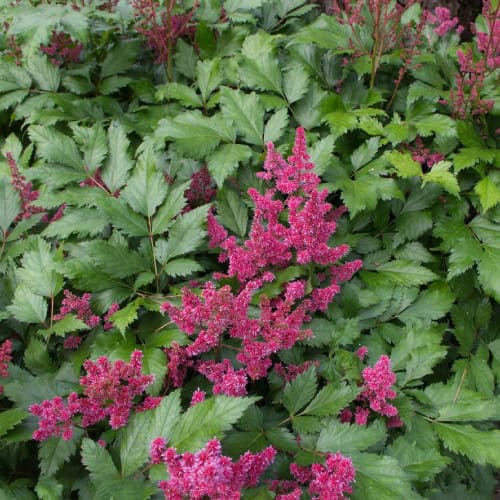
Astilbe’s feathery plumes in pink, red, white, or purple really light up shady spots. These perennials don’t mind part or full shade, which is a relief when so many flowering plants sulk without sun.
They’ll reach about 20–28 inches tall and bloom in the summer. Astilbe likes moist, well-drained soil with plenty of organic matter and grows well in USDA zones 3 through 9.
5) Bleeding Heart (Dicentra)
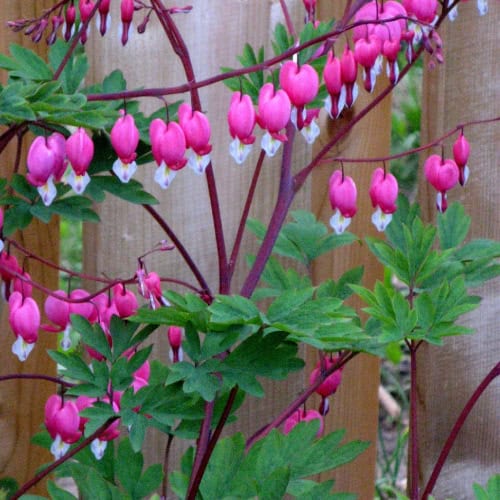
Bleeding heart is a shade-loving perennial known for its heart-shaped flowers that dangle from arching stems. Dicentra spectabilis, the classic kind, can get up to 3 feet tall and prefers partial to full shade with well-drained soil.
There are about 20 species, native to Asia and North America. They bloom in spring and tend to go dormant if summer gets too hot, so it’s smart to pair them with companion plants that fill in later.
6) Caladium
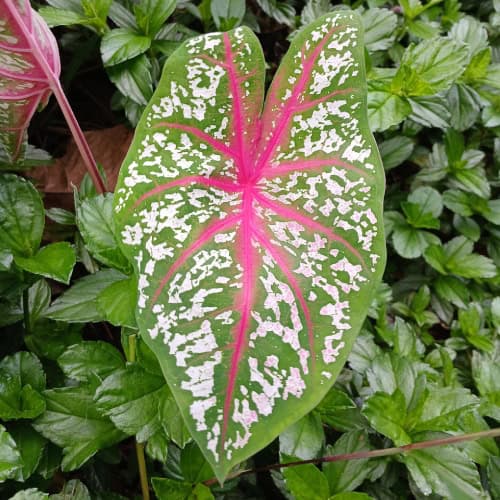
Caladiums add a tropical vibe to your shade garden, thanks to their heart-shaped leaves in wild combos of red, pink, white, and green. They’re a real mood-lifter in darker spots.
They like it warm (above 60°F is best) and do well in shade or partial shade. You can even bring them inside as houseplants for low-light rooms.
Popular picks? ‘Moonlight’, ‘White Queen’, and ‘Miss Muffet’; each with its own unique look.
7) Heuchera (Coral Bells)
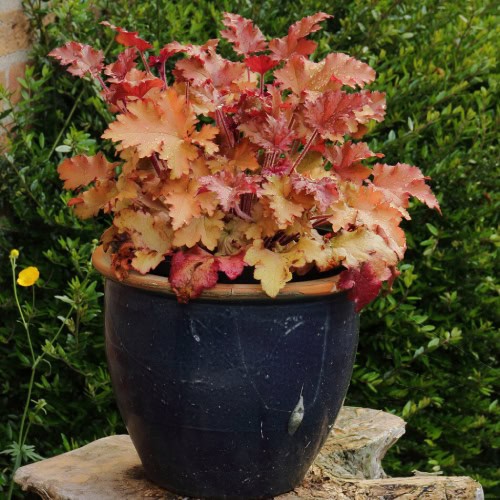
Heuchera, or coral bells, is one of those perennials that just seems to love the shade. Their main claim to fame is their foliage in deep purples, caramel, peach, and lime green.
They’re flexible: plant them in beds, borders, or containers. Once established, they’re not needy and look great with hostas or ferns.
Some favorites are ‘Palace Purple’ for its dark leaves, ‘Caramel’ for amber tones, and ‘Southern Comfort’ with a peachy twist.
8) Lungwort (Pulmonaria)
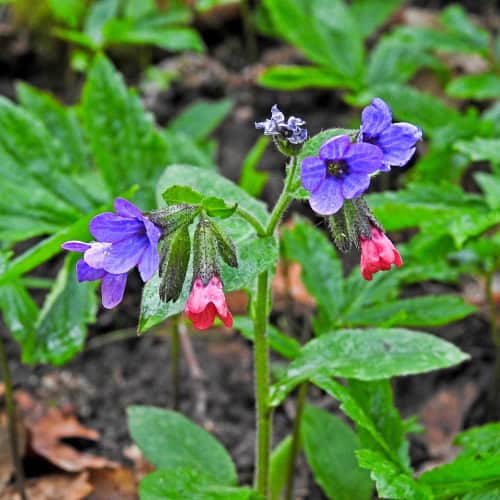
Lungwort is a solid pick for shade or part shade, especially if you want color early in the year. It puts out clusters of tubular flowers in pink, blue, purple, or white in early spring; they even change color as they age!
The spotted or silvery leaves stick around after the blooms fade, so it’s not just a one-season wonder. It stays compact and won’t take over your whole shade garden, which is a plus.
9) Solomon’s Seal
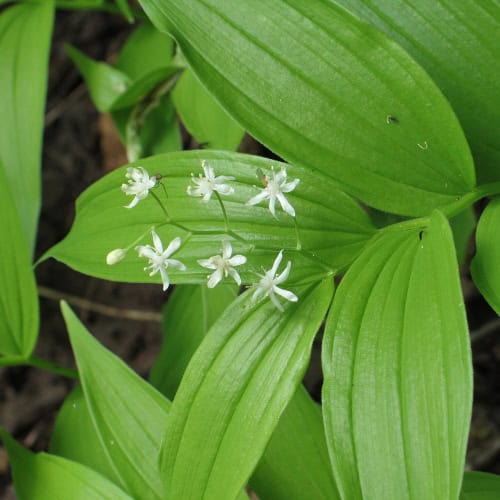
Solomon’s Seal stands out with its arching stems and delicate, bell-shaped flowers that hang beneath the leaves. It’s right at home in partial to full shade, making it a classic for woodland gardens or under trees.
This plant’s spreading habit makes it useful as ground cover. You’ll spot the small white blooms in spring, and by autumn, the foliage turns yellow while the flowers become bluish-black berries.
10) Japanese Forest Grass (Hakonechloa)
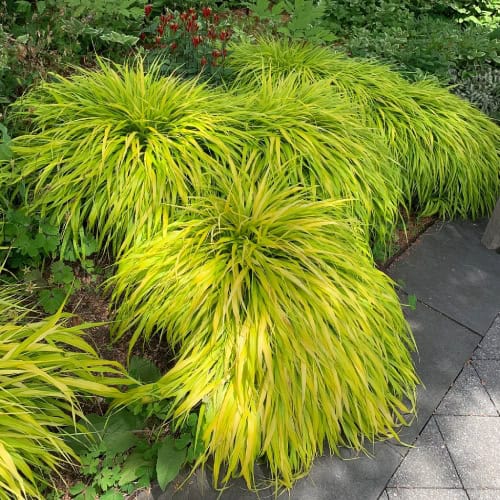
Japanese forest grass brings a soft, flowing look to shady spots with its bamboo-like, cascading leaves. It’s a clumping perennial that handles low light way better than most ornamental grasses.
Varieties like ‘Aureola’ (gold-striped) or ‘All Gold’ (bright yellow) are especially eye-catching. The plant forms graceful mounds, great for adding texture all year.
It likes moist, well-drained soil and works as a groundcover or accent in woodland gardens.
11) Toad Lily (Tricyrtis)
Toad Lily is a bit of a show-off, with exotic, orchid-like flowers that pop up from late summer into fall. The speckled blooms are best appreciated up close.
Native to Asia, it prefers partial to full shade with moist, rich soil. Plant it near the front of your border so you don’t miss the details. Once it’s settled in, it can handle cold winters, but it does need regular watering to keep the soil damp.
12) Brunnera
Brunnera macrophylla, or Siberian bugloss, is another shade-lover with heart-shaped leaves. In spring, it sends up delicate blue flowers that look a lot like forget-me-nots.
The variegated leaves keep their color, even in fairly deep shade, harder to find than you might think. Brunnera works well as ground cover beneath trees or as an accent in shady beds or containers.
13) Foamflower (Tiarella)
Foamflower is a North American native that loves shady woodland conditions and stays pretty compact, topping out around 8 inches. It forms clumps that are handy as ground cover.
Its delicate white or blush-pink flowers rise up in spring, giving a foamy look above the foliage. Foamflower likes moist, humus-rich soil and is happiest in shade or part shade. The lobed leaves keep things interesting all season.
14) Lily of the Valley
Lily of the valley is a classic for shady spots, especially those areas that seem too dark for anything else. This hardy perennial does best in partial shade or dappled light under trees, though it’ll survive in deeper shade, just with fewer blooms.
It’s known for its sweet-scented, bell-shaped white flowers and tidy green leaves. Once it’s happy, it spreads fast, making a dense, weed-proof carpet in places other plants just won’t grow.
15) Tiarella
Tiarella, or foamflower, is another one for shaded or partly shaded spots. It stays low (about 8 inches) and sends up delicate, frothy flower spikes over its attractive leaves.
Give it well-drained, humus-rich soil that holds moisture, and tuck it under trees or in woodland gardens where it’ll get dappled light. Too much direct sun can scorch the leaves, so err on the shady side.
This native wildflower is a solid ground cover for those tricky, shady patches.
16) Sweet Woodruff
Sweet Woodruff (Galium odoratum) is a fantastic ground cover for shade. This low perennial tops out at about a foot and has fragrant leaves with dainty white flowers in late spring.
It’s great under trees, in rock gardens, or around beds, anywhere with partial to full shade. It spreads quickly, forming dense mats that keep weeds at bay and add texture.
17) Jack-in-the-Pulpit
Jack-in-the-Pulpit stands out with its hooded flower that looks like a preacher in a pulpit. The green or purple-striped hood hides tiny flowers, which turn into clusters of bright red berries come fall.
This native perennial likes moist, humus-rich soil and prefers shade, perfect for woodland gardens or shady borders in eastern North America. Once it’s settled in, it barely needs any care, as long as it’s got enough moisture and nutrients.
18) Foamflower
Foamflower puts out a flurry of delicate white or pinkish blooms on tall stems in spring and early summer. It’s at home in woodland conditions with shade and rich, well-drained soil.
The plant forms mounds of heart-shaped leaves that often pick up red tones in the fall. Foamflower is especially good for growing under trees, since it handles acidic soil like a champ.
19) Wild Ginger
Wild ginger (Asarum canadense) is a native ground cover that does best in full to partial shade. This woodland perennial shows off heart-shaped leaves and spreads at a leisurely pace with its rhizomes, eventually forming lush, dense patches.
It’s hardy in zones 2-8 and really likes moist, well-drained soil with plenty of organic matter mixed in. Plant it as a transplant in early spring or fall, either works. In spring, you’ll spot its curious little purplish-brown flowers tucked away under the foliage, almost like a secret for those who look closely.
20) Christmas Fern
Christmas fern is an evergreen native to eastern North America, and it’s honestly a classic for shaded gardens. The plant’s dark green, leathery fronds grow out from a central crown, usually hitting about one to two feet tall and wide, but nothing too unruly.
This fern stays green right through winter, which is more than you can say for most perennials. It works well as ground cover or as a little accent in shady borders. If you tuck it into moist, organic-rich soil beneath tree canopies or in a woodland spot, you’ll probably get the best out of it.