
Deserts might look empty at first, but they’re full of tough, fascinating plant life that’s figured out how to survive some of the harshest conditions on earth. These hardy species have developed wild adaptations to handle scorching heat, barely any rain, and poor soils.
Getting to know which plants actually make it in the desert not only makes you appreciate how diverse these regions really are, but it’s handy knowledge if you’re thinking about desert landscaping or just curious about what grows out there.
Desert plants run the gamut; from the classic cacti and flowering shrubs to sturdy trees and quirky succulents, all with their own survival tricks that let them thrive where most plants would just give up. You’ve got the famous giants of the Sonoran Desert and the little ground covers that seem to pop up overnight after a rare rain.
1) Saguaro Cactus
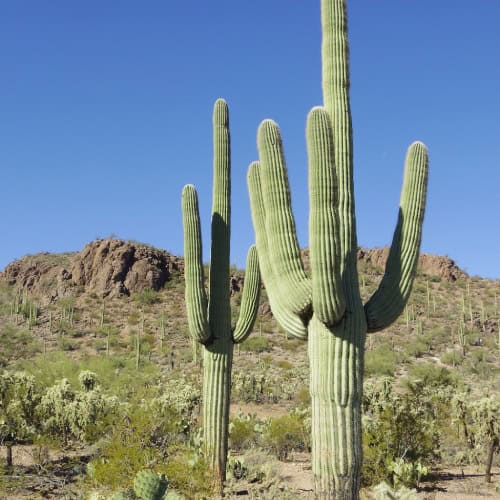
The saguaro cactus is the heavyweight champion of American cacti. You’ll spot these unmistakable giants across the Sonoran Desert, stretching through southern Arizona, southeastern California, and northwestern Mexico.
They grow at a pace that’s almost comical, slowly inching their way up to 40, sometimes even 52 feet, over a lifespan that can reach 200 years. Those classic branching arms? Some saguaros end up with over 50 of them, making each one look a bit unique.
2) Prickly Pear Cactus
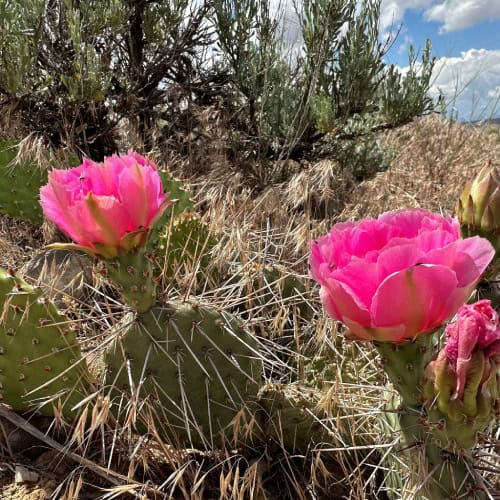
The prickly pear, or Opuntia if you want to get technical, is everywhere in the American Southwest. It’s easy to spot with those flat, paddle-like pads and the sharp spines which are a dead giveaway. The plant’s water-storing pads help it shrug off drought, and both the pads and the fruit are edible, so it’s a favorite for wildlife and, honestly, for foragers too.
Depending on the species, it can reach up to 5 feet tall and spread out 10 to 15 feet wide. The flowers are a bonus, vivid and colorful, usually popping up in spring and summer.
3) Ocotillo
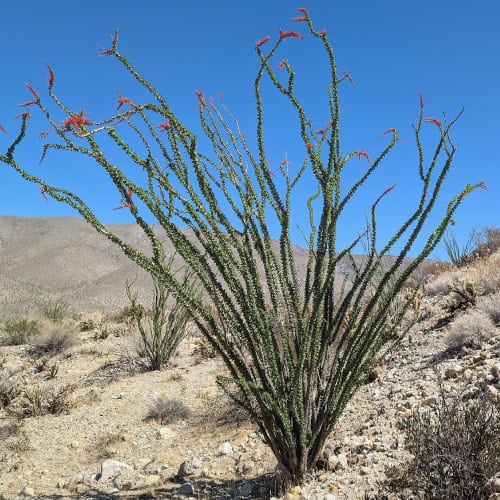
The ocotillo (Fouquieria splendens) is one of those desert plants that just looks dramatic with its tall, spiny stems shooting up from a short trunk, sometimes up to 20 feet high.
When the rain finally comes, it puts out tiny leaves, but most of the year it’s just a bundle of bare sticks. Then, if you’re lucky and the timing’s right, vivid red flowers explode at the tips, drawing in hummingbirds and other pollinators.
4) Joshua Tree
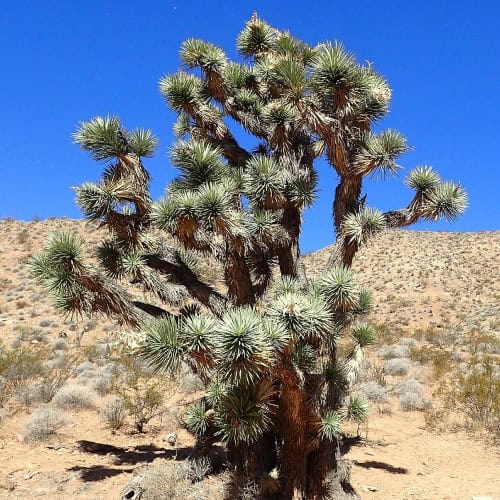
The Joshua tree (Yucca brevifolia) can get up to 50 feet tall in the Mojave Desert. It’s so iconic it gave Joshua Tree National Park its name, and honestly, it’s hard to picture the desert without them.
They’ve figured out how to deal with brutal heat and almost no water. You’ll find them between 1,300 and 5,900 feet elevation, where their odd shapes and spiky leaves make them stand out against the barren landscape.
5) Mesquite Tree
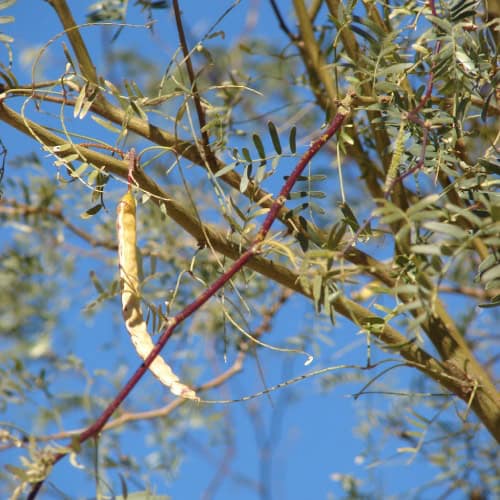
Mesquite trees are some of the toughest legumes you’ll find in the desert. Sometimes they’re more like big shrubs, but they can also grow into small trees up to 30 feet, with canopies that spread wide enough to give a bit of shade.
They’re everywhere in the American Southwest, offering shelter and food for wildlife. The sweet seed pods are a treat for animals, and their deep roots let them tap into water far underground, making them exceptionally drought-hardy.
6) Creosote Bush
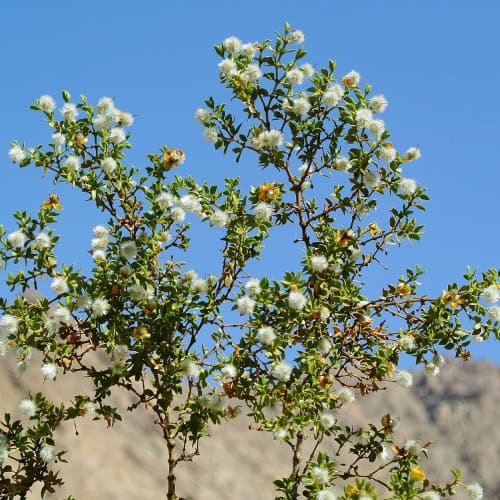
Creosote bush is one of those plants you’ll see all over the Mojave, Sonoran, and Chihuahuan deserts. Its evergreen leaves are sticky with resin, which helps it keep water in when everything around it is baking.
It’s kind of a team player in the desert, creating little microclimates that help other plants get started. Plus, the roots help keep the soil from washing away. Wildlife likes it too, as desert woodrats eat the seeds, and more than 20 bee species show up for the flowers.
7) Barrel Cactus
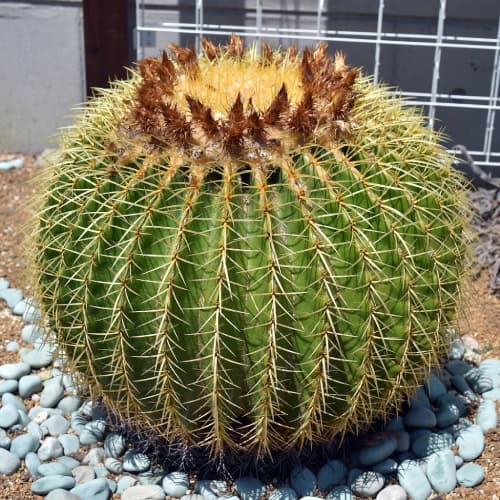
Barrel cacti, from the Ferocactus and Echinocactus families, are easy to spot in the deserts of southwestern North America and Mexico. Look for them along rocky slopes and dry washes in the Mojave, Sonoran, and Chihuahuan deserts.
They’re squat and round, with deep ribs covered in fierce spines, and usually grow between one and four feet tall. In late spring or early summer, you might catch their yellow or orange flowers blooming in a little crown on top.
8) Cholla Cactus
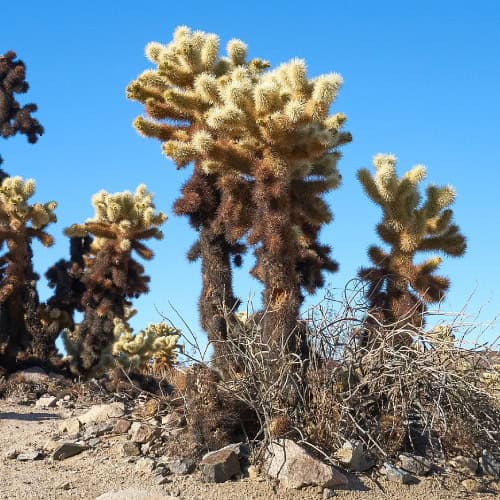
Cholla cacti (genus Cylindropuntia) are a group of more than 20 species scattered throughout North American deserts. Their segmented, cylindrical stems are pretty unmistakable, and the spines are no joke! Barbed and ready to latch on if you get too close. Some, like the Teddy Bear Cholla, look deceptively fuzzy, but trust me, they’re anything but cuddly.
Depending on the species, chollas can reach 4 to 8 feet tall. They bloom with colorful flowers in colors of purple, magenta, yellow, and the fruits are edible if you know what you’re doing.
9) Desert Marigold
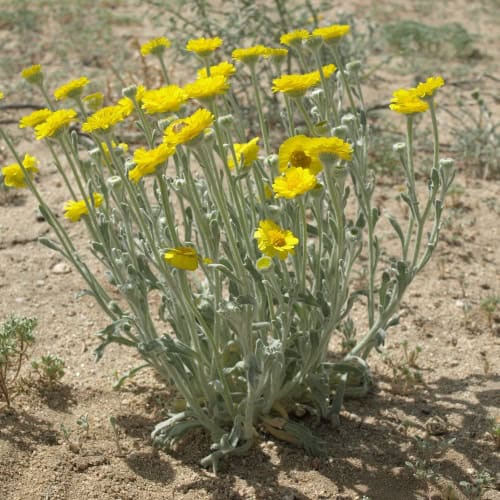
Desert marigold brings a splash of yellow to the dry Southwest, blooming almost year-round if the weather cooperates. It’s especially common in the Mojave, Sonoran, and Chihuahuan deserts.
This low-fuss wildflower has fuzzy, gray-green leaves and cheerful, daisy-like blooms on skinny stems. It handles poor, sandy soil just fine and doesn’t need much water, perfect for anyone who forgets to water their garden. Flowering usually kicks off in March and can keep going until November if there’s rain.
10) Palo Verde Tree
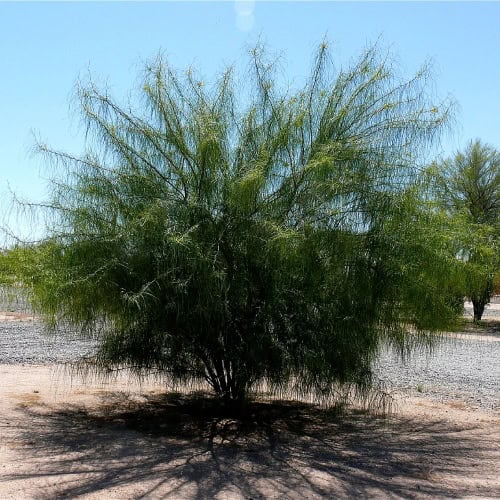
The Palo Verde tree is a classic of the Sonoran Desert, easy to recognize by its green bark and branches. “Palo verde” literally means “green stick” in Spanish, which fits.
It’s got an interesting trick: when it’s too dry for leaves, it just photosynthesizes right through its bark. The tree offers much-needed shade for other plants, like young saguaros that need some protection to get started.
Bright yellow flowers are a spring highlight, and once established, the tree barely needs any water. Its heat tolerance makes it a go-to for desert yards.
11) Yucca plant
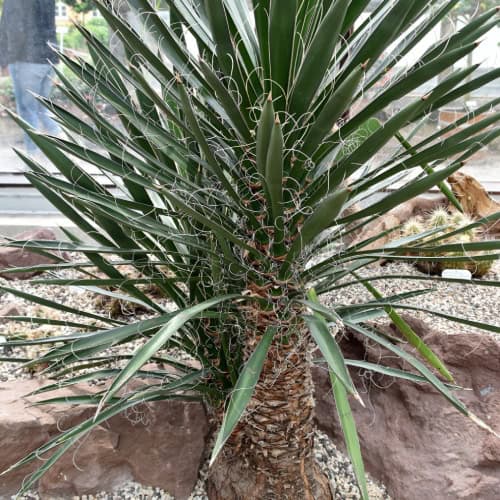
Yucca plants are some of the ultimate desert survivors, native to the dry parts of North and Central America. There are about 48 species, ranging from tiny ground huggers to tree-like giants that can hit 50 feet.
They’ve got thick, waxy leaves to hold onto moisture, and some can store water in their tissues. Yuccas have a quirky partnership with yucca moths, which pollinate the flowers and lay their eggs there – a win-win for both!
12) Desert Ironwood
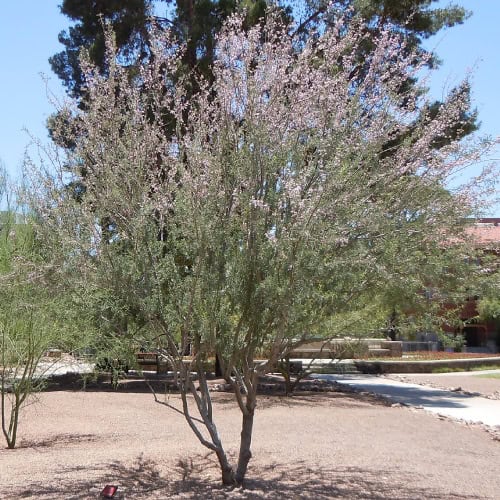
Desert ironwood is a Sonoran Desert exclusive, topping out at around 45 feet and, believe it or not, living for over a thousand years. Its gray-green leaves and rugged, fissured bark make it easy to spot if you know what to look for.
The tree acts as a nurse plant, sheltering seedlings and protecting them from wild temperature swings. Its shady canopy is home to more than 500 desert species!
13) Mojave Aster
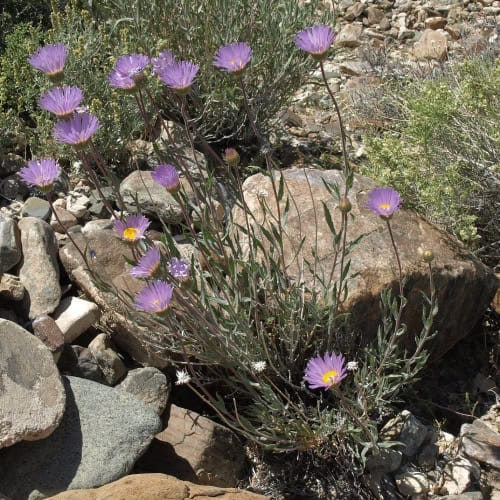
The Mojave Aster puts out gorgeous pink to purple blooms from March through June. You’ll find it on rocky slopes and open flats in the Mojave, Sonoran, and Great Basin deserts.
Each plant is modest in size (only approx. 8 to 24 inches across) but can put out up to 20 big flowerheads. It likes well-drained, gravelly soil at elevations between 2,000 and 5,500 feet, so if you’re planning a desert garden, it’s a solid pick.
14) Mormon Tea
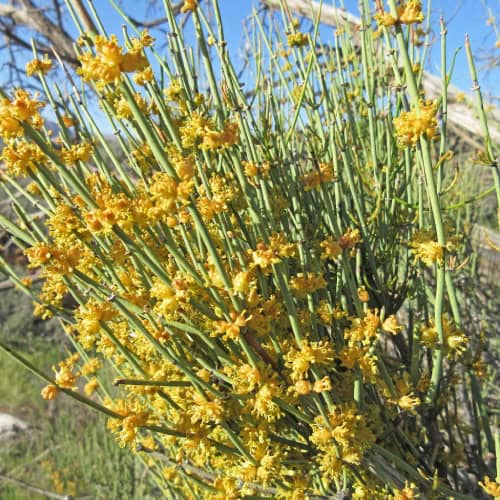
Mormon tea (Ephedra nevadensis or Ephedra viridis) is a bushy evergreen with bright green, almost leafless branches, usually topping out at 3 to 5 feet. It’s scattered all over the arid Southwest.
Wildlife like quail and deer depend on it, and back in the day, Mormon pioneers brewed its dried stems as a coffee substitute. It’s about as low-maintenance as desert plants get with barely any water needed.
15) Desert Willow
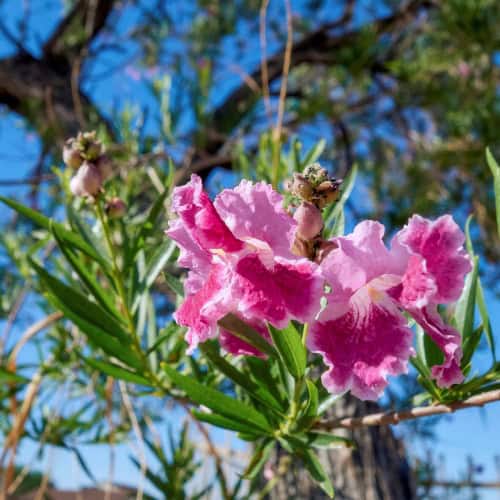
Desert willow is a drought-tough tree native to the Southwest, loved for its showy, trumpet-shaped flowers in shades of pink, lavender, and white. It blooms on and off all season.
The tree usually grows 15 to 20 feet tall with a broad canopy. Despite the name, it’s actually part of the bignonia family, not a true willow. The slender leaves give it a graceful, almost wispy look.
It’s happy in well-drained soil and full sun. The flowers are a magnet for hummingbirds, bees, and butterflies.
16) Brittlebush
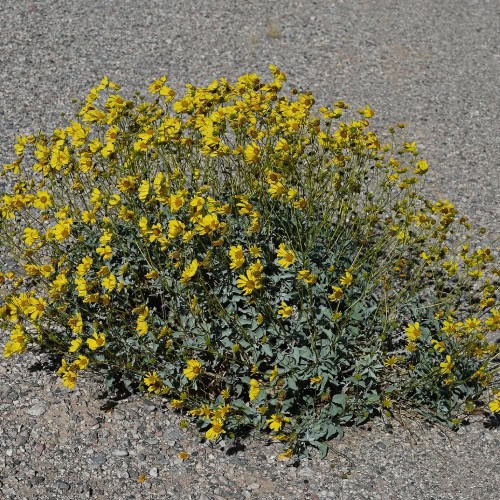
Brittlebush is a tough desert shrub that’s right at home in the Sonoran and Mojave. The silvery gray leaves, covered in fine hairs, help bounce back sunlight and keep the plant cool.
It puts out bright yellow daisy-like flowers from late winter through spring, growing in a rounded mound up to 5 feet high. Birds go for the seeds, and bighorn sheep sometimes snack on the foliage.
17) Wolfberry
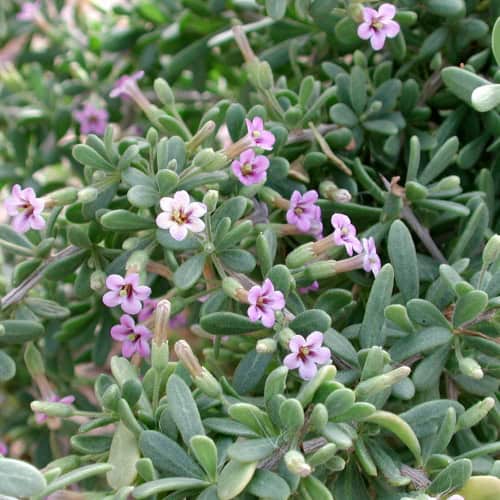
Wolfberry (Lycium fremontii) is a sturdy shrub in the Sonoran Desert, usually standing 4 to 9 feet tall. It produces small greenish-white flowers and then red berries, which are a food source for wildlife and edible for people (if you know how to prepare them).
This plant isn’t picky about soil and is an important habitat for butterflies, moths, and nesting birds. Its dense, tangled branches offer great shelter and barely need any upkeep.
18) Desert Globemallow
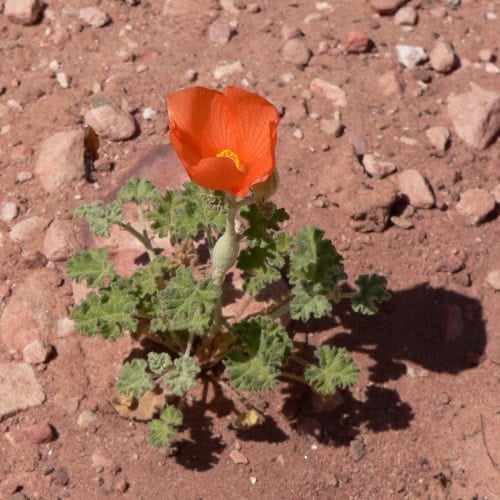
Desert globemallow is a perennial shrub that lights up the Mojave and Sonoran deserts with its bright apricot to orange flowers and fuzzy, whitish-green leaves. It grows in big, rounded clumps, usually 20 to 40 inches tall.
You’ll spot it all over southwestern Utah, southern California, southern Nevada, and parts of Arizona. It’s happiest in alkaline soils below 3,500 feet, especially on dry slopes and near sandy washes.
19) Fairy Duster
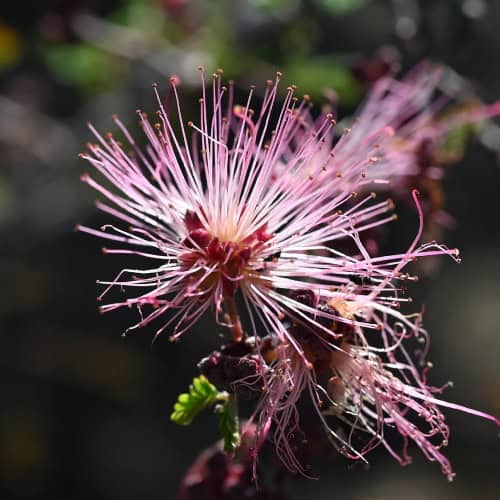
Fairy duster is a low, spreading shrub that calls the deserts of California, Arizona, New Mexico, Texas, and Mexico home. You’ll usually find it somewhere between 8 and 20 inches tall, but it can sprawl out to about 4 feet across if it’s happy.
Its pink flowers show up mostly from late winter into spring, popping in clusters of delicate stamens that honestly look a bit like tiny feather dusters. The shrub’s got gray stems and these ferny leaves that actually fold up at night, keeping things interesting in a desert garden, season after season.
20) Spanish Dagger
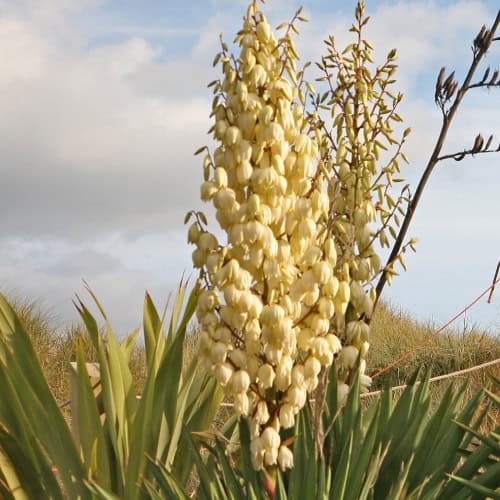
Spanish Dagger is the common name for several yucca species native to the deserts of the southwestern U.S. These striking plants have tough, sword-like evergreen leaves that fan out in bold, spiky rosettes, making it hard to miss!
You’ll spot them scattered through the Mojave and Sonoran Deserts, where they soak up full sun and don’t fuss over poor, sandy soil. When they bloom, they send up these towering flower spikes ; sometimes shooting up 8 to 20 feet, depending on which species you’re looking at.
Once settled in, Spanish Dagger barely needs any water, so it’s a go-to for xeriscaping or tossing into a rock garden if you want something dramatic without the maintenance.