
You can add water to almost any backyard with a container pond, a shallow wildlife pool, or a lined pond with a waterfall, choosing the scale to match your space and budget. A half-barrel gives you reflected foliage beside a chair; a larger garden pond gives you room for planting shelves and moving water.
Among these 15 DIY garden pond ideas, your most manageable starting points are fish-free designs with durable, aquatic-safe materials. Fishkeeping adds ongoing filtration needs and a larger commitment to water quality.
Before you settle on a location, check underground utilities before digging and local barrier requirements for child safety. For powered features, you need outdoor-rated equipment and GFCI-protected electrical connections. Even shallow water requires careful placement wherever children have access.
1) Naturalistic Pond With a Waterfall
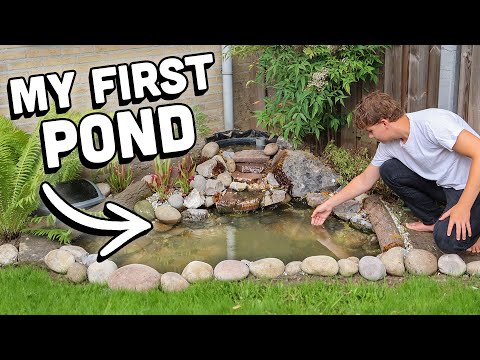
With an irregular shoreline and a low waterfall, you get a pond that settles comfortably into established garden beds. You gain the sound of moving water without needing a towering rock feature.
You have plenty of flexibility when planning a small pond: a flexible liner accommodates curves, while planting shelves give marginal plants their preferred shallow water.
Your main trade-offs are excavation and careful rock placement. A modest cascade keeps splash easier to contain, and accessible pump housing makes seasonal cleaning less awkward. You also benefit from a gently sloping edge where visiting animals can climb out.
2) Half-Barrel Patio Pond

A half-barrel brings a generous patch of water to your patio without excavation. You get rustic texture around the outside and enough surface area for a restrained planting display.
For a durable small container pond, your priorities are a sound barrel and an aquatic-safe liner or fitted insert. Reclaimed containers with unknown chemical histories carry avoidable risks.
You also need to account for weight: water weighs about 8.34 pounds per gallon, before the barrel and planting media. On a deck, your proposed location needs verified load capacity. Keep this compact design focused on plants.
3) Shallow Wildlife Pond With a Pebble Beach

For wildlife watching, you gain accessible water and varied habitat from a shallow pond with a gently graded pebble beach. Your sloping shoreline gives birds somewhere to approach and small animals a dependable escape route.
You get more ecological value from wildlife-friendly pond design when you include several water depths and locally appropriate native plants. A fish-free pond gives aquatic insects and amphibian young refuge from fish predation.
Your shallowest areas will warm and evaporate quickly in hot weather. Some deeper water improves resilience, while nearby planting offers cover without filling the entire shoreline.
4) Budget Pond with Spillways
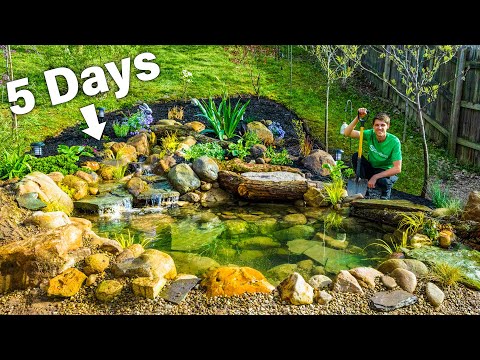
Connected basins let you enjoy several small cascades while keeping your pond layout compact. You get distinct planting pockets and more visible movement from a modest change in elevation.
When you’re saving money on a garden pond, sound reclaimed edging offers better value than questionable waterproofing. Your liner and plumbing deserve enough of the budget to remain dependable.
You will hear even a short drop from a nearby seat. Broad, gentle spillways suit a quieter patio, while narrower drops produce a sharper splash. Your lower basin needs enough spare capacity for water returning when the pump stops.
5) Raised Patio Pond with Bog Filter
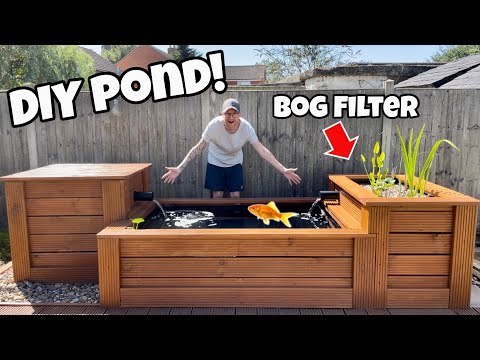
By pairing a raised pond with a bog filter, you bring your water garden closer to seated viewing height and give filtration an attractive planted home. Your filter passes water through gravel that supports beneficial microbes, with plants using some dissolved nutrients.
A well-planned bog filter gives you useful growing space alongside the main pool. You still need appropriate sizing and access for maintenance.
Your supporting surface must carry both water-filled sections. On a small patio, a narrow planted compartment along the back preserves open water at the front.
6) Mini “Pond in a Pot”

Even a broad pot gives you a satisfying water garden when your available space is limited. You get reflections and close-up views of aquatic foliage in a container that fits beside other patio planters.
Your choice of plants for mini ponds should reflect mature size and required planting depth. A compact marginal plant leaves more visible water than an oversized specimen.
Choose a durable watertight vessel, with an aquatic-safe sealant if sealing is required. You will have easier temperature management with some afternoon shade, especially in hot climates. A plant-only display suits this small water volume.
7) Small DIY Pond with Rock Garden

Combining a small pond with a rock garden gives you contrasting textures within one compact bed. You get reflective water beside dry stone, with planting softening the transition into your yard.
Your rock garden also provides visual weight without requiring a larger pond. A few substantial stones give the shoreline a more settled appearance than a uniform ring of small pebbles.
You need distinct moisture conditions for the surrounding plants. Drought-tolerant rock-garden species belong in freely draining pockets above the splash zone. Stable edging and a rough, sloping exit keep your decorative shoreline useful to visiting wildlife.
8) Easy Wooden Raised Sleeper Pond

Wooden landscape sleepers give your pond a strong outline and a convenient viewing height. You gain a defined garden feature that fits naturally beside timber fencing or a paved seating area.
Compared with excavated designs, your raised pond shifts much of the work toward structural support. Water pressure pushes outward continuously, so sound connections and an appropriately designed frame are essential.
Your safest material choices include pond-suitable timber isolated from the water by a protected liner. Avoid reclaimed railroad ties containing creosote. A broad coping creates a finished edge, though your pond still needs appropriate child-safety measures.
9) Decorative Cement Mini Waterfall Pond

Sculpted cement gives you control over the shape of a compact waterfall and its surrounding basin. You get a coordinated feature with ledges and channels tailored to a tight garden corner.
Your finished piece also offers a substantial, permanent appearance. That permanence comes with weight, so your chosen base needs to remain stable through wet weather and seasonal ground movement.
Fresh cement requires proper curing and aquatic-safe finishing before supporting aquatic life. You should verify stable water chemistry after curing because cementitious materials can raise pH. In freezing climates, your design also needs a practical winter-draining arrangement.
10) Solar-Powered Pond & Stream

Along a narrow bed, a solar-powered stream gives you moving water without taking up the footprint of a broad pond. Your eye follows the channel, helping connect separate planting areas.
You get the strongest flow when your panel receives unobstructed sunlight. With a direct-drive solar pump, cloud cover changes the performance; a compatible battery-backed system extends operation within its storage limits.
Your pump selection needs to account for vertical lift and tubing resistance. Keep this feature decorative unless you have dependable life-support equipment for fish. You also need reservoir capacity for the stream’s returning water after shutdown.
11) Modern Square Pond with Filter Housing
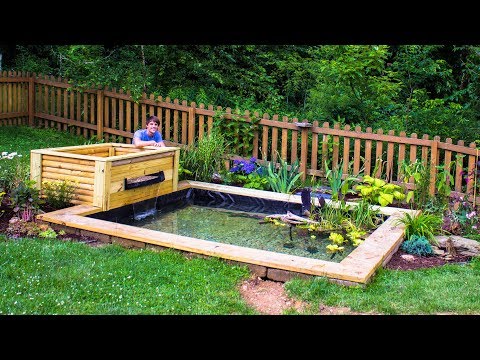
Clean square edges give your pond a deliberate architectural presence beside paving or contemporary planting. You also gain a tidy place to conceal equipment when filter housing forms part of the design.
Your enclosure works best when it preserves easy access to valves and filter media. Removable covers make routine cleaning practical, while adequate ventilation suits the equipment manufacturer’s requirements.
A dark interior strengthens reflections, especially when you leave some surface water open. Keep your filtration matched to the pond’s intended use: fish stocking and feeding create demands beyond those of a lightly planted ornamental pool.
12) DIY Mini Solar Powered Fountain

Small-scale bubbling gives you water movement in a bowl-sized footprint, making a mini solar fountain useful beside a patio chair. You get shifting reflections with very little visual clutter.
A low bubbling attachment keeps more water inside your container than a tall spray exposed to wind. Your fountain still needs regular checks because splash and evaporation lower the water level.
You gain flexibility from a separate solar panel: the panel belongs in strong sunlight, while the basin benefits from some protection against overheating. Check whether your chosen pump includes dry-run protection before relying on automatic operation.
13) Low Budget Koi Pond Build

Careful budgeting gives you a koi pond with restrained finishes while preserving the space and life-support equipment your fish need. Your most sensible savings come from a straightforward shape and limited decorative stonework.
With koi pond design, you need to plan around adult fish size and local climate. A tiny ornamental pool offers inadequate long-term accommodation.
Your essential expenses include reliable aeration and mechanical and biological filtration. You also need water testing and dechlorination for treated tap water. A waterfall adds enjoyment, but your fish still depend on properly sized equipment and ongoing maintenance.
14) DIY Koi Pond with Window

Through a viewing window, you enjoy your koi at eye level and see movement beneath the surface. Your raised pond becomes especially engaging beside a sheltered seating area.
You also take on a specialist structural project. Window material, panel thickness, and the supporting frame must suit the water depth and opening dimensions. Your glazing supplier or structural professional should specify the assembly and compatible seals.
Access deserves equal attention because you will need to clean both faces of the window. Allowing working room beside the panel keeps algae removal manageable without leaning awkwardly over the pond edge.
15) Easy Preformed Pond with Waterfall

A preformed shell gives you a defined pond shape and ready-made planting shelves, reducing the design decisions involved in your first in-ground water garden. You get a predictable outline that is easy to coordinate with surrounding beds.
Your installation still requires excavation and continuous support beneath the shell and shelves. Uneven support puts stress on the rigid basin, so ground preparation deserves time.
A compact waterfall adds sound while disguising part of the molded edge. Keep equipment accessible, and provide a rough-textured wildlife ramp if your shell has steep sides. In cold regions, follow the shell and pump manufacturers’ winter-care instructions.