
You’ll get practical, budget-conscious plant supports from these 15 DIY garden trellis project ideas, whether you use salvaged wood, garden branches, bamboo, or sturdy wire panels.
Your biggest savings come from matching materials you already have to the plants you want to grow. Peas need a different level of support from a mature climbing rose, and a container trellis needs careful attention to balance.
Plan for the weight of wet foliage and exposure to wind. You’ll also want access for harvesting, pruning, and removing tangled stems at the end of the season.
1) Trellis Fence Panel from Pallet Wood

You give discarded pallet boards a useful second life when you turn them into an open fence-style support for climbing plants. Among the practical garden uses for pallets, this project lets you make good use of sound boards even when their lengths vary.
Your main expense shifts toward exterior fasteners and reliable supports if you already have suitable wood. The rustic finish also makes small cosmetic imperfections less noticeable.
Choose pallets with a known history, and reject wood with spills or unknown coatings. You’ll want an open climbing framework here; a pallet fitted with planting pockets serves a different purpose and brings extra soil weight.
2) DIY Trellis from Garden Branches
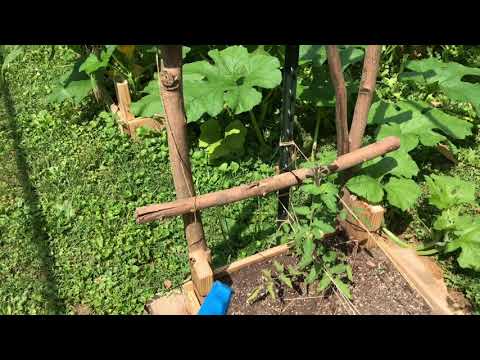
Your pruning pile becomes useful garden material with a branch trellis suited to peas or other lightweight seasonal climbers. You get a relaxed, natural-looking support without needing perfectly straight lumber.
The enjoyable part is working with the bends and forks already in your branches. You have room for an irregular design, so precision woodworking takes a back seat to choosing sound material.
Expect a shorter service life where branches touch damp soil, and check lashings as they weather. Avoid brittle or decaying pieces, and use fully dried branches from species such as willow that readily root when fresh.
3) DIY Bamboo Garden Trellis

Bamboo gives you a lightweight support that’s easy to handle around a raised bed or vegetable patch. You get useful height without the bulk of a substantial wooden frame.
For plants that climb a trellis, match your layout to the climbing habit: pole beans wrap around upright canes, while peas appreciate finer cross-supports for their tendrils.
You’ll find this project especially appealing if you want seasonal supports that store compactly. Its weak points deserve attention, though: smooth canes need secure lashings, and thin bamboo deteriorates with repeated soil contact. Reserve heavier crops for a framework sized to carry their full harvest weight.
4) DIY Honeycomb Garden Trellis
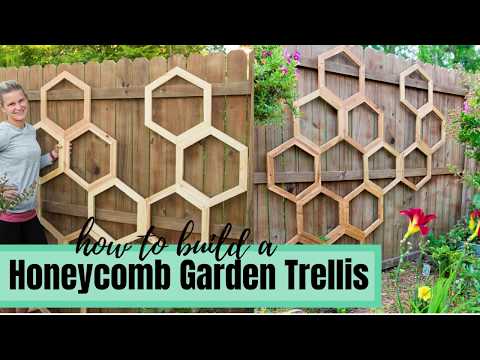
With a honeycomb trellis, you get a repeating geometric pattern that stays interesting while your plants are small or dormant. The connected cells give you more decorative flexibility than a plain rectangular grid.
You’ll enjoy this option if careful measuring appeals to you. Repeated angled joints demand patience, making it a more involved woodworking project than a branch or bamboo support.
Your material costs also include the waste from angled cuts and the hardware needed to connect the cells securely. Choose lightweight vines, and leave access around the joints for inspecting weather damage. For wall mounting, allow clearance behind the wood for air movement and maintenance.
5) DIY Hexagonal Trellis
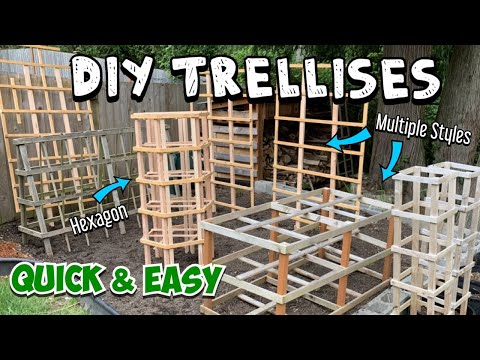
A single hexagonal trellis gives you a compact focal point for a patio container or narrow planting bed. You get the geometric look of honeycomb with fewer individual frames to manage.
Your plant choice helps determine how useful that open center becomes. With delicate flowering vines for trellises, fine interior supports give tendrils something to catch as growth crosses the opening.
This project suits you if you want to practice accurate angled joints without committing to a whole feature wall. In a pot, pay particular attention to proportion: a broad frame covered in leaves creates wind resistance, so your container needs enough stability to resist tipping.
6) Wire Trellis for Cucumbers

Growing cucumbers on a wire trellis gives you easier access to hanging fruit and keeps trailing stems from spreading across your paths. You also get a clearer view of the crop when it’s time to harvest.
A rigid welded-wire panel offers useful support through repeated seasons, provided your posts and attachments carry the loaded vines. Flexible netting weighs less, though you’ll spend more time keeping it taut and untangling old growth.
Choose a vining cucumber variety for this project. You’ll appreciate openings large enough for your hand to pass through comfortably, and every cut wire end needs attention before you reach among the leaves.
7) Garden Obelisk Trellis

An obelisk gives you growing space around a tapered, freestanding frame, making it useful in the middle of a bed. You retain access from several sides for training stems and picking flowers.
You also get a garden feature that holds its shape through the off-season. Among plants that vine, annual climbers offer you a manageable starting point while you learn how densely foliage fills the frame.
The angled legs make this a step up from a basic ladder trellis. Choose your footprint carefully: a narrow tower looks tidy, while a wider base gives you greater resistance to tipping under uneven growth.
8) DIY Wood Trellis with Planters

Combining a wooden trellis with planters gives you vertical growing space on a paved patio or beside an entrance. You gain a defined planting area even where digging into the ground is impractical.
For your DIY garden landscaping projects, this design offers a coordinated look because the growing container and support share the same materials.
Your budget needs to cover potting mix and drainage provisions alongside the lumber. Expect filled planters to be difficult to move, and account for the weight if you’re placing them on a deck. A tall trellis also needs anchoring appropriate to its exposure; soil weight alone deserves careful scrutiny.
9) 6FT Trellis from a Single Board

Stretching a single board into a tall trellis gives you a satisfying material-saving project for a narrow bed. You get height and a consistent wood finish from a limited lumber purchase.
Your available tools make a big difference to accessibility. Dividing a board into slender strips requires suitable equipment and safe cutting practices, so this idea suits you better once you’re comfortable with woodworking.
“Single board” describes the lumber supply; your fasteners and anchoring still belong in the budget. Keep the finished support for lighter vines, and check the usable aboveground height if part of the frame extends into the soil.
10) Simple Decorative Metal Trellis

Metal gives you a slim trellis profile with useful stiffness, especially where a wooden frame would feel bulky. You also get a decorative outline that remains visible between growing seasons.
Your choice of metal determines much of the maintenance. Galvanized steel offers corrosion protection, while exposed plain steel develops rust; painted finishes need attention when scratched.
This becomes a more specialized craft if your design requires bending or welding. A mechanically fastened design keeps the tool requirements more approachable. Pay close attention to exposed rod ends and rough joints, particularly beside a path where your clothing or hands might catch.
11) DIY PVC Ladder Trellis

For a lightweight seasonal support, a PVC ladder trellis gives you a straightforward shape without demanding woodworking joints. You’ll find it convenient where easy handling and a washable surface are priorities.
The fittings are worth pricing before you commit, since connectors add to the pipe cost. Your design also needs to account for sideways movement: a tall, narrow ladder flexes under wind and plant weight.
Choose pipe intended for outdoor exposure, and reserve slender frames for lighter growth. If seasonal storage appeals to you, connection choices affect how readily the frame comes apart. Loose-fitting joints still need enough security to remain together outdoors.
12) Mounted Bicycle Wheel Trellis

Repurposing a bicycle wheel gives you a distinctive circular support with ready-made spokes for delicate climbers. You get the strongest upcycling benefit when you already have an unwanted wheel in sound condition.
For plants trained against walls, your mounting arrangement needs space behind the wheel for stems and routine maintenance. Secure attachment to a suitable supporting surface deserves more attention than the wheel’s decorative placement.
Check your salvaged wheel for broken spokes and sharp metal before putting it within reach. Lightweight annual vines suit this idea; substantial woody growth makes future removal and repairs much harder around the spokes.
13) Simple Wooden Privacy Screen Trellis

A wooden privacy screen trellis gives you a defined boundary with space for climbing foliage. You gain some screening from the slats immediately, followed by additional coverage as your plants fill in.
When planning landscaping around a privacy fence, leave yourself room to maintain both the planting and the wood. Dense vines make repainting or replacing damaged slats more awkward.
Your main trade-off is between openness and screening. Closer spacing blocks more of the view and catches more wind, which increases demands on the posts. Check local requirements for fence height and placement before committing to a permanent screen.
14) Gothic Arch Trellis

Pointed arches give you a distinctive frame for a garden entrance or a formal planting bed. You get a satisfying craft project if you enjoy templates and careful shaping.
Your material choice changes the difficulty considerably. Shaped wooden pieces require accurate cutting and weather-resistant joints; metal versions bring bending and connection work into the project.
Allow for the mature plant when deciding how much open space you need beneath the point. You’ll want comfortable passage after side shoots develop. A substantial climbing rose also calls for a much stronger frame than a seasonal flowering vine, so choose the plant before settling on the arch’s construction.
15) Budget DIY Garden Arch Trellis

Spanning a path with a simple garden arch gives you growing space overhead while preserving access between beds. You get particularly good plant-support value from a suitable livestock panel when its dimensions fit your layout.
Within your budget garden design, include delivery and anchoring costs when comparing a large panel with smaller materials. Handling a springy metal panel also calls for help and protective gloves.
Keep your arch wide enough for comfortable passage once foliage develops. Protect exposed wire ends, and allow clearance for hanging vegetables. If you grow heavy fruit overhead, provide individual slings and keep the walking route clear beneath the crop.