
Your koi learn and explore, but you cannot confidently interpret their behavior as human-like boredom. You give them useful stimulation by providing opportunities to forage, investigate their surroundings, and interact with other koi.
Watching the same swimming route every day can leave you wondering whether something is missing. That route alone tells you little about your fish’s well-being. Changes in appetite, breathing, and movement deserve closer attention, especially when they appear suddenly.
You also don’t need to keep introducing something new. A spacious, stable pond with good water quality gives your koi room to express natural behavior without the disturbance of frequent rearrangement.
What Does Koi Behavior Reveal About Their Well-Being?
Your koi’s behavior helps you spot changes in their well-being when you compare it with their normal routines. Watch how they use the pond throughout the day, including periods when you’re standing away from the feeding spot.
What Can Koi Learning and Exploration Tell Us?
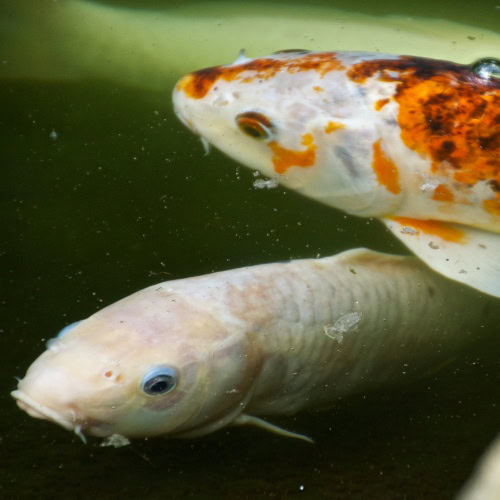
You see learning in action when your koi gather where you normally feed them or approach after a familiar cue. Your koi’s responses fit a broader pattern, as fish demonstrate learning, memory, and spatial navigation.
When your koi respond to your arrival, you’re seeing a learned association with a familiar presence or routine. That response gives you a useful opportunity for calm interaction, although it doesn’t tell you exactly what your fish feel.
Look for voluntary exploration as well. You might notice your koi inspecting plant roots, picking at pond surfaces, or investigating a different feeding location. Let them approach at their own pace, and keep food rewards within their normal ration.
You’ll get a more useful picture by observing them away from meals. Fish that cruise through different areas and pause to graze are expressing behaviors you want their pond to support.
Is Repetitive Swimming Normal or a Warning Sign?
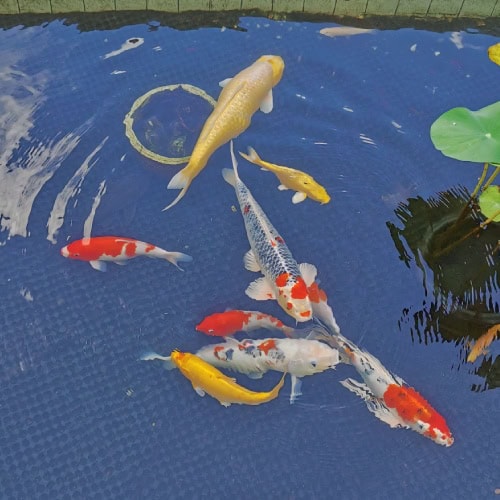
You should judge a repeated swimming route by its context and whether it represents a change. Your koi might follow the pond edge, move with a return current, or gather near a familiar feeding place.
Watch the quality of the movement. Relaxed cruising with normal balance is different from frantic pacing, repeated collisions, or difficulty turning. A fixed route alone doesn’t establish boredom.
If you notice your koi staying in one spot, check the temperature and watch their breathing before changing the habitat. Your fish’s activity changes with water temperature, and quiet periods are part of pond life.
Record a short video when something looks unusual. Include nearby fish and the surrounding water so you have a useful comparison if the behavior continues. Avoid chasing the affected koi around the pond for a closer look.
When Should You Check Water Quality and Fish Health?
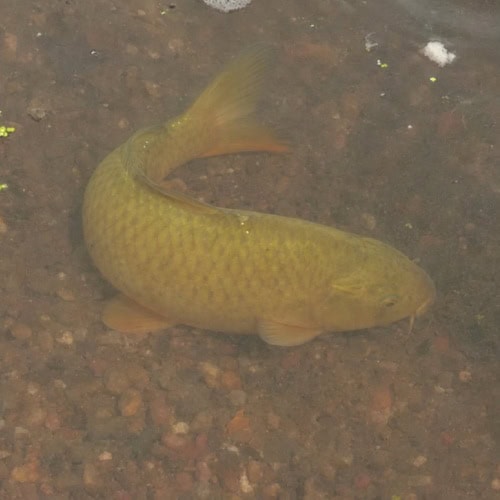
Check your pond promptly when you see sudden appetite loss, gasping, flashing, or clamped fins. Flashing means rubbing or scraping against surfaces; repeated episodes deserve attention.
Start with temperature, ammonia, nitrite, and pH. Check dissolved oxygen with suitable equipment, and review recent events such as heavy feeding, filter cleaning, a power outage, or new fish.
If several koi are gasping, increase aeration immediately while you investigate. Give early-morning symptoms particular attention because your pond’s oxygen levels reach their daily low just before sunrise.
Use your test results to guide corrective action. When a partial pond water change is appropriate, treat replacement water for chlorine and chloramine and avoid abrupt temperature changes.
You also need to consider disease. When your koi show flashing, rapid breathing, and clamped fins, parasites are among the possible causes. Persistent symptoms, visible sores, or balance problems warrant an aquatic veterinarian’s assessment; avoid adding medication on a guess.
How Can You Safely Enrich a Koi Pond?
You safely enrich a koi pond by supporting natural feeding and exploration while preserving open swimming space. Keep changes modest, maintain access to equipment, and let your fish choose whether to investigate.
Prioritize Swimming Space, Filtration, and Oxygen
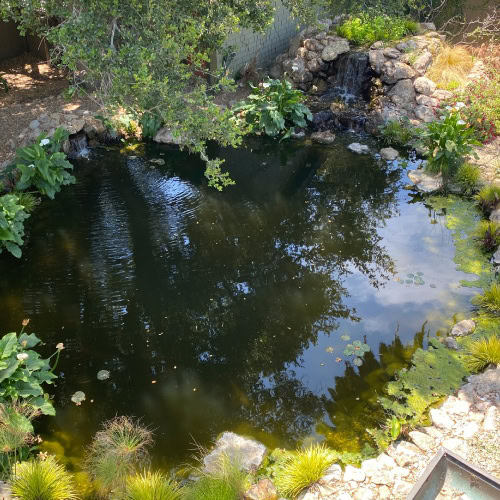
Begin with the conditions your koi use every moment: room to swim, reliable filtration, and sufficient oxygen. Make these the foundation of your routine koi pond care before adding enrichment.
Leave broad, unobstructed routes where your largest fish can turn comfortably. Judge additions against your koi’s adult size, including the clearance beneath any structure. A narrow opening that suits a young fish becomes a hazard as it grows.
Keep drains and skimmers accessible. Decorations that trap waste or obstruct cleaning create extra maintenance and undermine the water conditions you’re trying to protect.
If you provide a flowing return, preserve quieter water where your koi can rest. Avoid forcing every fish to swim continuously against a strong current. Maintain aeration overnight, including when a planted pond looks well oxygenated during daylight.
Add Shade, Plants, and Safe Places to Explore
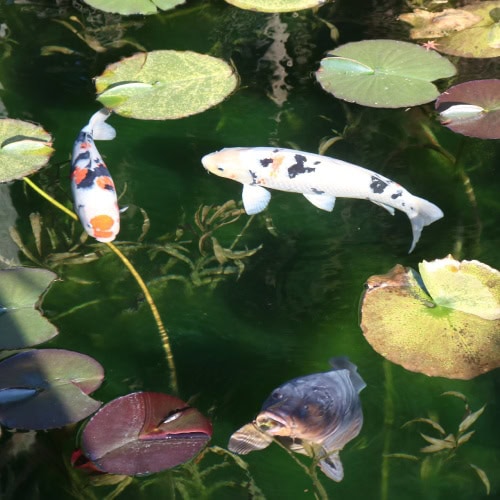
Give your koi a choice between exposed water and sheltered areas. Shade from a securely installed cover or suitable planting adds variety without filling the pond with objects.
Choose pond-safe, noninvasive plants suited to your climate. Protect roots where necessary, and secure planting baskets so your koi cannot overturn them. Remove loose ties or mesh that could catch a fin or gill cover.
Any submerged shelter needs smooth surfaces, stable construction, and generous clearance for your largest fish. Open-sided cover makes inspection easier and reduces the chance of a fish getting trapped. Keep supports clear of main swimming routes.
Preserve the pond’s familiar layout where it works well. Add a feature gradually and watch how your koi use it before making another change. You don’t need to rearrange established shelter to create novelty.
Encourage Foraging and Gentle Feeding Interactions
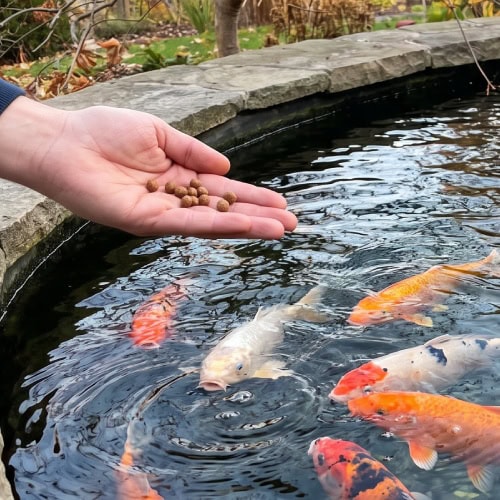
Use part of your koi’s normal food allowance to create opportunities to search and investigate. Scatter pellets across an open area or offer a portion in a different accessible location so feeding involves some movement.
Give slower fish access to food without encouraging a crowded scramble. Watch the group as you feed, and adjust where you distribute pellets if the same fish repeatedly miss out. Remove uneaten food before it collects around equipment or planting baskets.

- Contains our proprietary Hikari-Germ, a live (viable) naturally occurring microorganism (probiotic) and a uniquely blended ingredient mix...
- A uniquely balanced diet rich in the necessary nutrients to support immune system health
- Contains higher levels of highly digestible ingredients which make it ideal for feeding in cooler water temperatures
For closer interaction, remain still at the edge and let your koi approach voluntarily. If you hand-feed, keep the food at the water surface and allow each fish to withdraw freely. Your koi’s protective slime coat is another reason to keep your hands off their bodies.
During cold-water inactivity or a water-quality problem, adjust feeding to the conditions and pause food-based enrichment.
Do Koi Need Other Koi for Companionship?
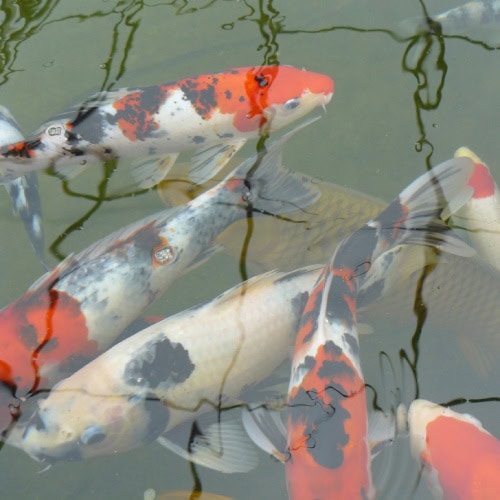
You should plan suitable koi housing with their social behavior in mind. Your fish interact with one another and form loose groups, so compatible koi provide opportunities for social contact.
When you observe social behavior among your koi, you’re seeing how they associate and respond to one another. You still cannot use a solitary fish’s quiet behavior to establish human-like loneliness.
Before adding companions, assess your pond’s swimming space and filtration capacity for the fish at adult size. An extra koi increases waste and oxygen demand. If your pond is already crowded, improve its capacity or reduce stocking before considering another fish.
Quarantine newcomers in a separate, appropriately equipped system before introduction. After they join the pond, watch whether every koi can feed and reach sheltered water. Persistent chasing or a fish being excluded from food calls for a husbandry assessment, with particular attention to injuries and spawning activity.