
Starting a pond can feel complicated, but you can simplify the process by choosing plants that grow easily and adapt well to changing conditions. The right mix of floating, submerged, and marginal varieties helps you maintain clear water, support aquatic life, and create steady growth without constant adjustments.
This guide walks you through dependable options that suit small backyard ponds, larger water gardens, and beginner setups alike. You will discover plants that add color, improve water quality, and handle common challenges with ease.
1) Hardy Water Lily (Nymphaea spp.)
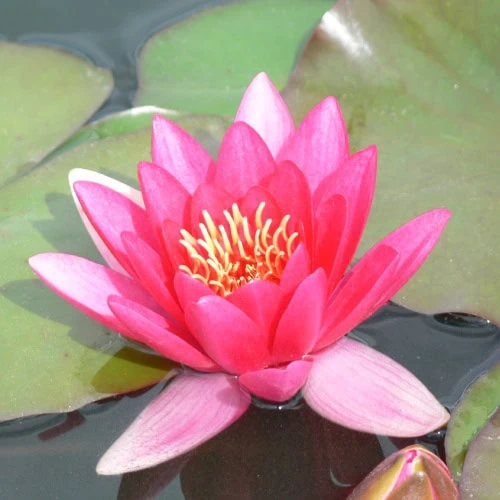
Hardy water lilies are classic pond plants with floating leaves and showy flowers. You can grow them in USDA zones 3 to 11, making them suitable for most temperate gardens.
Plant them in a container with heavy aquatic soil and place them in full sun. Set the pot at the recommended depth so the leaves can reach the surface.
Their broad leaves shade the water, which helps limit algae and keeps your pond cooler. They also provide cover for fish and other aquatic life.
2) Anacharis / Elodea (Egeria densa)
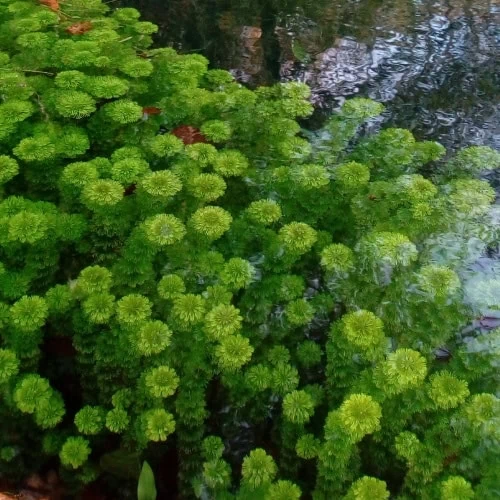
Anacharis, also sold as Elodea or Brazilian waterweed, is a fast growing submerged plant suited for beginner ponds. You can root it in substrate or let it float freely.
It tolerates a wide range of water conditions and grows well in moderate light. You will notice it absorbs excess nutrients, which can help limit algae growth.
Trim stems regularly to control spread and maintain healthy circulation in your pond.
3) Hornwort (Ceratophyllum demersum)
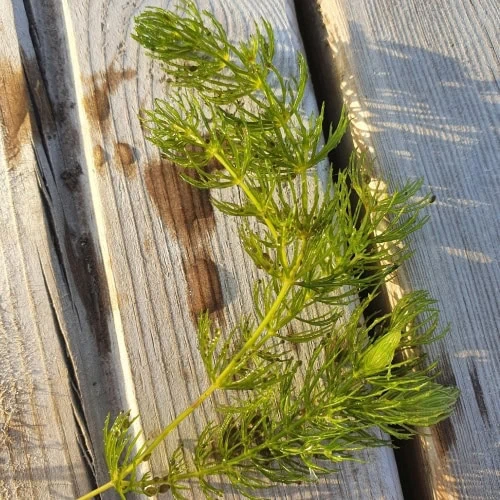
Hornwort is a fast growing, low maintenance pond plant you can float freely or anchor loosely. It does not develop true roots, so you can simply place it in the water and let it grow.
You can use hornwort to absorb excess nutrients and help limit algae growth. Its dense, feathery foliage also provides cover for fry and small fish.
It tolerates a wide range of temperatures and light conditions, which makes it suitable for beginners.
4) Water Lettuce (Pistia stratiotes)
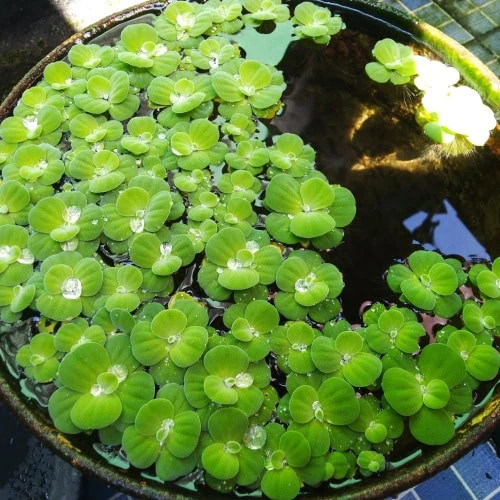
Water lettuce is a floating plant with soft, rosette shaped leaves and feathery roots that hang beneath the surface. You can use it to add texture and shade to your pond.
It grows best in warm temperatures and full sun to partial shade. You should place it on still water, as strong movement can damage the leaves.
Water lettuce spreads quickly, so you need to thin it regularly to prevent overcrowding.
5) Water Hyacinth (Eichhornia crassipes)
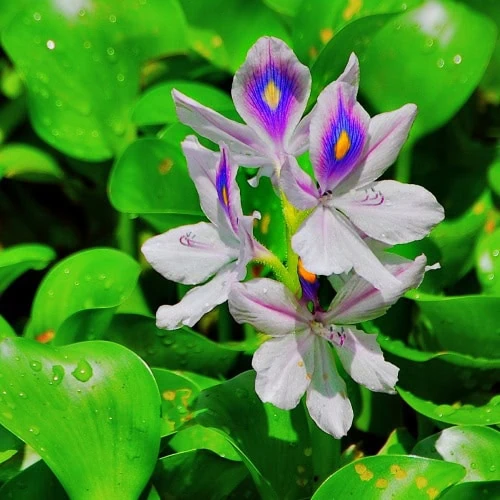
Water hyacinth is a floating plant with rounded green leaves and lavender summer flowers. You can place it directly on the pond surface, where it drifts freely and spreads.
It absorbs excess nutrients from the water, which can help limit algae growth. The dangling roots also provide shelter for small fish and fry.
You should thin it regularly, as it grows quickly in warm weather. In cold climates, treat it as an annual.
6) Pickerelweed (Pontederia cordata)
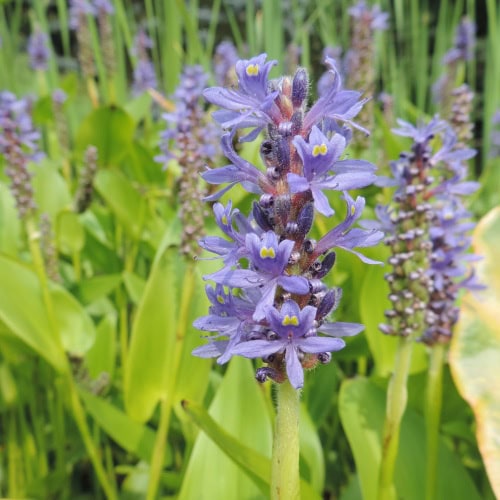
Pickerelweed is a hardy native aquatic perennial that grows well in shallow water along pond edges. You can plant it in 6 to 12 inches of water with full sun for best flowering.
It produces upright spikes of violet to blue flowers through summer, above glossy, heart shaped leaves. The blooms attract bees and other pollinators.
It spreads by rhizomes, so you can contain it in a planting basket. Divide clumps every few years to control size and refresh growth.
7) Iris (Iris pseudacorus / Iris laevigata)
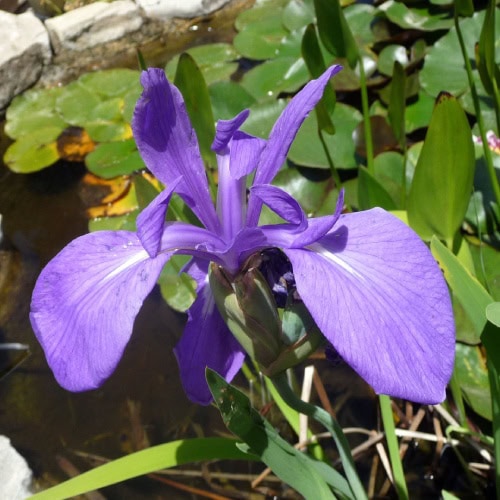
Iris adds upright form and clear color to pond edges. You can grow Iris pseudacorus in shallow water or wet soil, while Iris laevigata tolerates water up to about 12 inches deep.
Plant them in aquatic baskets with heavy, peat free soil to control spread. Set the crown just at or slightly below the water surface.
Provide full sun and consistent moisture. Divide crowded clumps every few years to maintain healthy growth and steady flowering.
8) Blue Flag Iris (Iris versicolor)
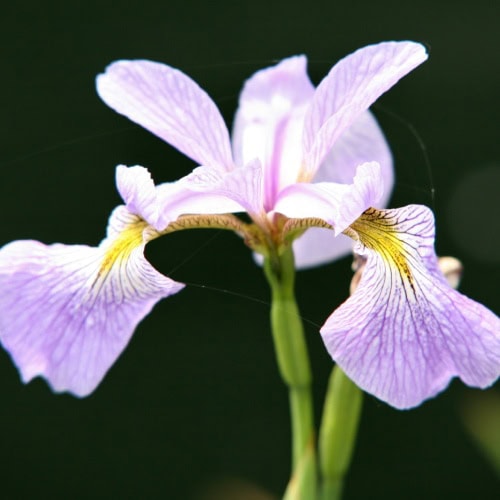
Blue Flag Iris, Iris versicolor, is a hardy native pond plant that thrives along shallow edges and in consistently wet soil.
You can grow it in full sun where it reaches about 24 to 30 inches tall and produces violet blue flowers in late spring.
Its sword shaped foliage stays attractive through summer, and it returns reliably each year with minimal care.
9) Cattail (Typha latifolia)
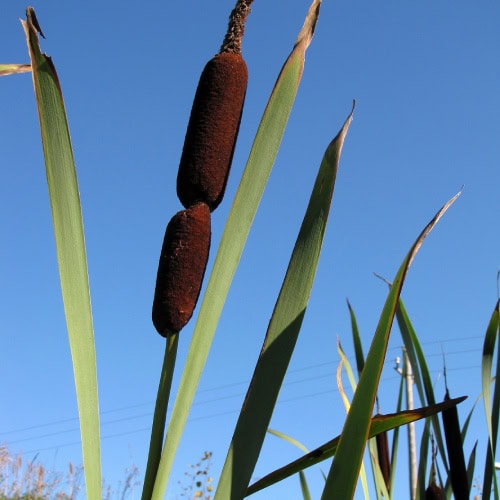
Cattail is a hardy native plant that adds height and structure to your pond. You can grow it in shallow water, ideally 2 to 12 inches deep.
Plant it in a submerged container to control its spreading rhizomes. One plant can form a dense colony within one or two seasons, so divide it regularly.
Cattails provide cover for fish and habitat for wildlife. Trim old growth in late winter to keep your pond tidy.
10) Marsh Marigold (Caltha palustris)
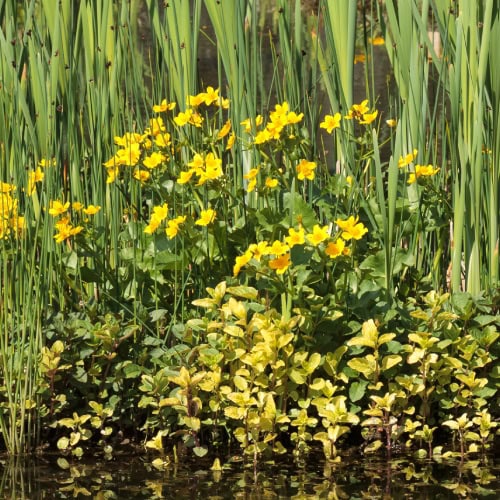
Marsh marigold is a reliable choice for pond edges and damp soil. You can plant it in shallow water up to about 4 inches deep or in consistently wet ground.
It produces bright yellow flowers in early spring. These blooms attract early pollinators such as bees.
Give your plant full sun to partial shade and rich, moist soil. Cut back fading foliage after flowering to keep your pond margins tidy.
11) Sweet Flag (Acorus calamus)
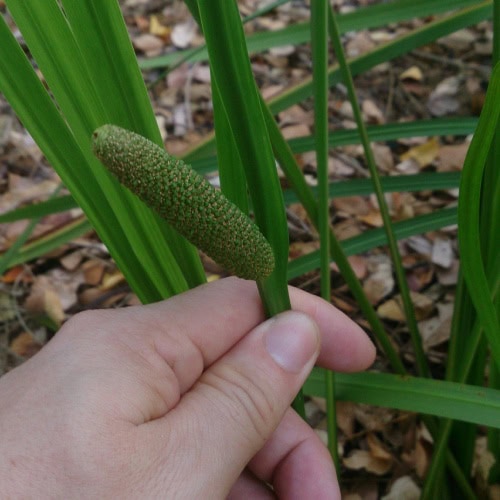
Sweet flag grows well along pond edges where soil stays wet or shallow water covers the crown. You can plant it in 4 to 12 inches of water, depending on the variety.
Its upright, sword shaped leaves add structure and texture. The plant spreads by rhizomes, forming dense clumps over time.
Provide full sun to partial shade and consistently moist soil. Divide established clumps to control spread and refresh growth.
12) Bog Bean (Menyanthes trifoliata)
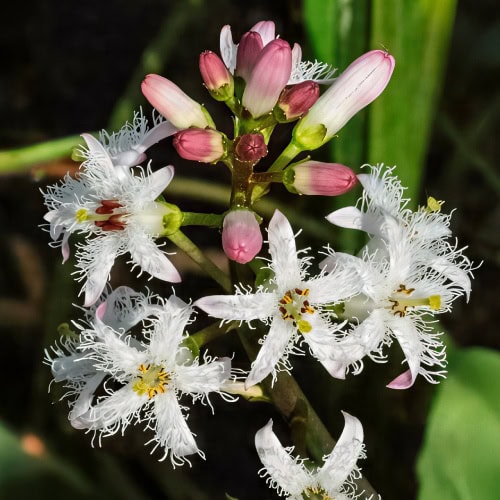
Bog bean is a hardy marginal plant that suits pond edges and bog gardens. You can grow it in shallow water up to about 25 cm deep or in consistently damp soil.
It produces three-part, olive green leaves that rise above the water surface. In spring, you get clusters of white flowers with fringed petals, sometimes tinged pink.
Plant it in full sun for better flowering and divide rhizomes to control spread.