

Deterring a heron from a pond it regularly visits can be tough, but there are a range of heron pest control options available which could prove effective.
Sometimes one method is enough, but for particularly stubborn herons, mixing various types of deterrents together may be the best solution. All the below recommendations will help heron proof your garden pond and provide extra protection for your pond fish.
1) Pond Netting

- Effortlessly Keep Pond Clean & Beautiful - Fed up with exhausting leaves removal work? Alloxity pond netting will completely eliminates this...
- Strong Barrier against predators — The anti-tear pond netting for koi ponds is enhanced to protect fishes against strong or trick...
- Stretchy & Sturdy Material to Ensure Durability - Made of high-density polyethylene (HDPE) material, the heavy-duty netting shows unbeatable...
One of the best heron deterrent methods is to simply install a strong pond netting over your surface water. Both netting and covers will immediately deter most herons and will also add an extra layer of protection between them and your fish.
Since herons need to physically reach into a pond to make catches, having a net over the surface makes stalking the fish much more difficult. It also prevents a heron from wading into the pond water when fish begin to retreat further into the center.
Pond netting works well in both floating and raised forms, and will help stop herons from entering the water so long as the netting is secured and maintained properly.
Floating netting is sometimes preferred for stopping herons as it’s very discreet and there is less chance of the heron getting under it like with raised netting. Metal interlocking floating protectors have also become popular in recent years, and work very well for smaller ponds or along the edges of a larger pond to deter herons.
Unlike other deterrents which become less effective as a heron gets used to seeing it, pond netting creates a physical barrier that often stops herons before they’re able to get within striking distance. We recommend netting as a foundation to heron control, as it can be combined with various other deterrents for maximum protection from predators.
2) Koi and Goldfish Shelter

- Provides a place for fish to hide from predators
- Provides fish shade on sunny days
- Features an aluminum frame and fiberglass mesh
A great heron and cat deterrent which provides pond fish a safe hiding place at the bottom of your pond. Koi and goldfish shelters are designed to sit naturally on the pond floor and blend into the surroundings, helping to hide signs of fish. If you have a pond with nowhere for fish to hide, they’ll become very stressed every time a heron visits, even if the heron is unsuccessful at catching any fish.
When frightened, pond fish will retreat to deeper parts of the pond for cover, but unless your pond is packed with plants or is very deep, they may not have adequate protection.
Fish shelters are a cost-effective and easy way to create a durable cover system on the pond floor, giving both koi and goldfish somewhere to retreat and de-stress. They won’t scare away a heron, but they allow your fish a much better chance of not becoming easy heron food.
If you have a pond with no natural cover, especially if the pond is shallow, we recommend a fish shelter as this will make hunting much harder for predators. As they won’t directly deter herons, fish shelters are best mixed with other deterrents, such as pond netting, decoys, or automatic repellers (water or sound).
3) Electric Pond Fencing
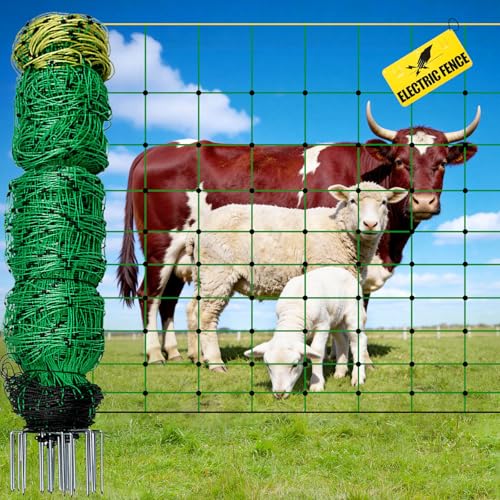
- ⚠️ ⚠️ ⚠️ Important Warning: This electric fence netting is intended exclusively for livestock. It is NOT suitable for containing...
- Secure Livestock-Only Electric Netting: Standing 49.6” high and spanning 164 ft in length, this electric netting fence creates a safe...
- Built Strong & Resists Sagging: Constructed with a dense, high‑strength PE mesh, 14 rigid fiberglass posts, and double‑spiked steel...
A second option to stop herons from eating pond fish is to try to install pond fencing or wire around the perimeter of the pond. If you can stop herons from getting to the sides of the pond, they won’t be able to effectively hunt for fish. Although sometimes more effective than pond netting, fencing is more noticeable and harder to maintain. Using thin wiring for fencing is a popular middle-ground, as it’s strong enough to stop predators getting near the water but small enough to not be visually distracting.
An alternative type of fencing that is very effective at deterring even the most persistent heron is by surrounding your pond with low-voltage electric fencing. While a determined heron may get through some regular fencing, an electric fence will give them a small “shock” every time they touch it. This shock, although not dangerous, is plenty to scare even the most stubborn predators away. After a short time they’ll likely stop coming down altogether to seek fish elsewhere – it’s just not worth the shocked feathers!
Either choice of fencing would be fine for most ponds, but we would probably recommend regular fencing first as it’s cheaper and easier to install. If the heron continues to persist, you can then try upgrading to an electric type fence system. We recommend Veldas Pond Protector electric fencing products (pictured) which are available from the UK and have been designed with heron control in mind.
4) Automatic Heron Sprinkler
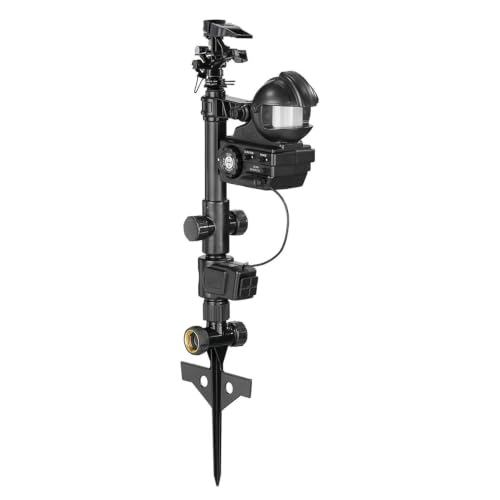
- Humane Lawn Protection: The Orbit Yard Enforcer Motion-Activated Sprinkler helps guard gardens and lawns from unwanted animals using a...
- Smart Motion Detection: Advanced technology delivers wide multi-angle detection with infrared accuracy, allowing this motion sensor...
- Water & Spray Control: Customizable settings include adjustable spray duration and optional timed watering feature, allowing the system to...

Since herons are skittish animals, they’ll not stick around long after something spooks them. One of the best ways to deal with a heron eating fish from a pond is to constantly scare them off as soon as they arrive. Luckily, there are a few kinds of automatic systems available that work with motion sensors to scare away different kinds of pests, and also work great for herons.
Automatic garden sprinklers work very well for cats, dogs, and even herons. Cats and herons in particular like to hunt prey slowly and silently, so any sudden movement will give them a scare. Automatic sprinklers can be fitted around the perimeter of your garden pond where herons like to fish, and they will automatically detect the bird’s movement and start spraying out water when it gets close.
The best brands, such as the ScareCrow sprinkler, can cover large distances with their water jets, so are suitable for both small and large garden ponds. They’re ideally placed alongside regular pond netting for maximum protection, but work very well on their own at deterring most predators from ponds.
5) Ultrasonic Animal Repeller
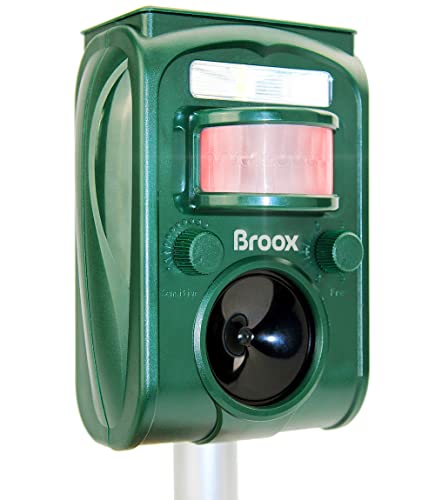
- Do you have problem with unwanted animals in your area, garden, farm? Are they destroying your garden or eating the fruits? Do they bring...
- Repel animals in a humane way: Broox squirrel repellent outdoor, repels animals by emitting ultrasonic sound, alarm and LED flashing light...
- Solar Powered and Waterproof: With a solar panel on the top of the device, it can be charged by solar energy, that benefits in energy saving...
Another type of automated sensor device is one that emits a sudden sound to scare animals away. Automatic sound repellents are useful for getting rid of flighty animals and work well against all but the most stubborn of herons. They usually come in two forms – one being a normal sound recording, and the other a low-pitched ultrasound device.
The first which just emits a loud noise works well for most pests, especially if the recording is something the animal is naturally wary about, such as gunshots or barking noises. The downside of this type of device is that they’re activated by motion sensors, so will go off whenever anything larger passes through the sensor. If you have pets or regular garden birds, this could prove quite frustrating if the noise keeps going off.
A second type of noise emitting device is one that emits a low-pitched ultrasound that humans can’t hear. The sound can only be picked up by the more sensitive ears of many animals and works well to deter dogs, cats, and herons. We found that this type of device works better for dogs and cats, with not all herons being particularly bothered by the noise. With that said, it’s very discreet, easy to install, and maybe worth a shot if all else has failed at getting rid of a heron in your garden!
6) Blue Heron Decoy
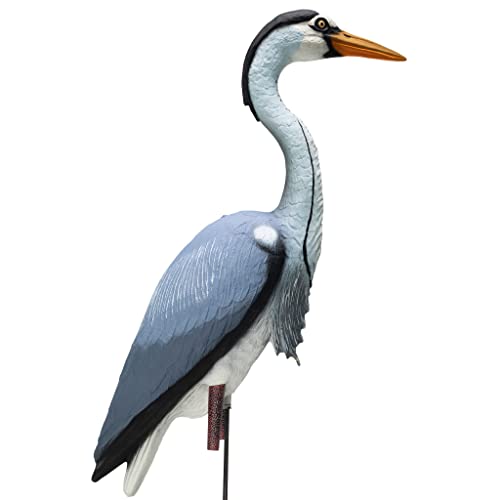
- Ultra-realistic and True to Life Paint Scheme.
- The Blue Heron Adds Confidence to Your Waterfowl Decoy Spread.
- A Natural Deterrent to Other Herons that Assists in Koi Pond and Water Garden Predation Protection.

A popular solution that most pond owners have likely tried is with a decoy plastic heron model. Blue heron decoys and grey heron decoys are generally a very cheap and easy method of deterring a new heron from your garden.
Decoys rely on the idea that herons are solitary feeders and do not like eating in the company of other herons, so the fake heron should be enough to stop a real heron landing and feeding. This generally works very well for herons not used to the surroundings, but most herons will grow more bold over time and eventually begin to figure out the decoy isn’t a threat.
With that said, some herons may not be deterred by decoys at all, as it all depends on the personality of the heron and whether or not it’s already become used to eating with company (or decoys) in other ponds.
If you live around gardens with other ponds with heron decoys, the herons in the area will more quickly become accustomed to seeing them and they’ll soon become less effective. Decoys work best for rural ponds, or when combined with other deterrent methods. A combination of heron decoy, pond netting, and automatic sprinkler/sound system would be a pretty effective deterrent for even the most persistent of predators.
Since heron decoys are generally a very cheap solution, it’s worth it to try one in your pond and hope for the best – you may get lucky and have a particularly anti-social heron who hates company!
7) Alligator Decoy
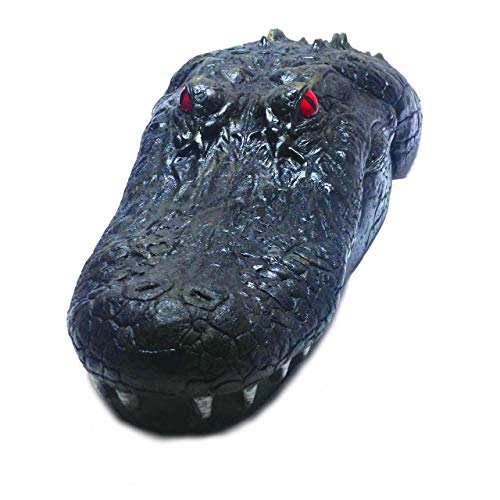
- Gator decoy floats freely across koi ponds and water gardens
- Life-like motion with wind or water movement
- Realistic, life-sized floating replica of an alligator head is perfect for any water area infested by birds, geese, egrets, cormorants...
Another decoy that works on a blue heron’s fear of predators is a realistic alligator decoy. These decoys are designed to mimic how an alligator swims through the water when hunting for prey, and since alligators are a blue heron’s natural predator, it can actually work very well as a deterrent. You can get models which are just the head, and also decoys which include a head with parts of the body and tail. The best alligator decoys we have found are full body decoys, although a realistic head decoy will do the trick in most situations.
Placing the decoy around the banks of the pond where a heron usually lands, or around pond plants (lilies), will create a more natural illusion of a hunting gator. Combining an alligator decoy with a pond net and automatic sprinkler/sound system will likely deter even the bravest of herons.
Since alligators are not native to the UK and Europe, these decoys are unlikely to work as well for grey herons as they won’t know to be afraid of them, so we would only recommend alligator decoys for blue heron control.
8) Mirrors or reflective surfaces
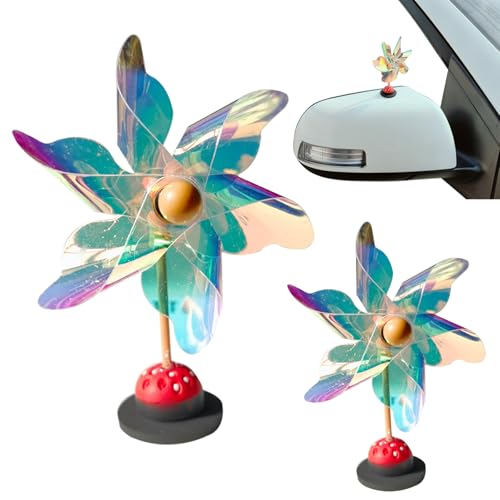
- EFFECTIVE BIRD REPELLER: The windmill blades are made of dazzling color laser reflective material, which is highly reflective, effectively...
- EASY TO INSTALL: Just install the windmill blades on the shaft in the right direction and put on the plug cap, then peel off the...
- DECORATIVE FUNCTION: Comes with acrylic double sided tape, which has the advantage of strong bonding and no adhesive falling off. This...
Since the goal of most heron deterrents is to cause panic and scare the heron into flight, what better way than by showing them a picture of themselves! Although this is an often overlooked method of deterring herons, it actually works surprisingly well for smaller garden ponds.
The mirror is typically mounted or placed on the opposite side of the pond where the heron lands, and as the heron approaches the water it will see its image appear in the mirror directly ahead. If there is little movement it may think it’s just another decoy, but as it gets closer the moving image may be enough to spook the heron away.
Having a mirror in the garden may sound odd, but it’s a method that can work better than actual decoys in some cases. Herons are intelligent birds, and the closer they get to a decoy, the more likely they are to notice it’s not the real thing. A mirror image of the heron itself with actual movement will likely confuse even the smartest of birds, and is a good alternative to regular decoys.
A large mirror opposite a small pond will give great coverage, with the heron being able to see its image from a wide range of directions. For a larger pond, you would need a very wide mirror, or know exactly where the heron lands for correct placement. You would also need to keep the mirror cleaned and in good shape to ensure the image is clear, which can be difficult to do in a garden environment.
Overall, an interesting heron solution that may be worth a try in smaller ponds, but we would only really recommend this method when all other deterrents have failed.
Herons and Garden Ponds

Herons are a large family of wading bird species native throughout much of the western hemisphere. If you have a pond in the United States, it’s very likely you’ll have been visited by a blue heron at least once, especially if you have fish. Likewise, in the United Kingdom and Europe, grey herons often inspect local ponds and lakes in search of a catch.
Both species of heron feed mostly on aquatic organisms, with their favourite dishes being small fish, frogs, and any large insects or larvae. Due to their diet, garden ponds are especially attractive to feeding grounds for herons, as both goldfish and koi are easy pickings for a full grown bird.
Even though they can be a nuisance to fish keepers and pond owners, both types of common heron are protected species. Grey herons are protected under the UK Wildlife and Countryside Act 1981, and killing herons can incur hefty fines and even a prison sentence. Likewise, blue herons are also protected in the United States, including their nests and breeding grounds, by both state and federal laws. These laws make it illegal to kill or capture the birds without a legal permit.
Are herons to blame for missing fish?
If you notice fish are disappearing from your pond but you’ve not seen a heron, this may because they tend to arrive very early in the morning or late in the evenings. Feeding at first and last night is generally safer, and they have less competition for food from other predators. Tell tale signs of heron activity would include feathers on the water, broken plants, torn netting, or injured fish (who just managed to get away).
Herons are also smart animals, and they quickly become accustomed to their surroundings and feeding grounds. Often herons will start arriving more and more frequently throughout the day if your pond is unprotected, as this is prime feeding for very little effort. Since herons are quite intelligent, it can be very difficult to dissuade them from eating your pond fish, especially if they’re already used to the surroundings. The best heron deterrent is often a mix of different approaches, stopping the birds becoming too “at home” and used to the things in your garden and pond.
Even though they can be very stubborn, and sometimes nothing will stop the most persistent of feeders, there are still things you can do to help deter them and increase the safely on your pond fish. Understanding more about herons in general and knowing what methods would work best with your pond is often the best approach.

Would a heron try to walk over a 2 foot picket fence around a pond if it was 4 or 5 feet away from the edge?
Hi Nessa,
It’s difficult to say, as it depends on how familiar the animal is with its environment, but with such as large distance between fence and pond, most likely yes. A large fence (or new deterrent) may spook predators that don’t regularly hunt in the area, but a predator that knows its hunting range well will be far more bold. If you’re worried about your fish, I’d definitely recommend adding a few more deterrents alongside the fence to be as safe as possible – such as strong netting, fish shelters, or automated systems.
We have a 2 foot fence around our pond, with a 4 inch ledge between it and the water – the heron flew in, landed on the ledge and then walked onto the top of the plant basket and onto the shelf in the pond that the basket sat on!
A heron would just fly in and land inside your fence if it is 4 feet away from the edge
How far down will a heron reach? Or would it simply jump into the water if it was too far?
Hi Wayne,
This depends somewhat on the heron species, but generally they’re not going to work any harder than they need to. They’ll go for fish that are slower and closer to the surface, as herons tend to prefer only sticking their bills or, at most, their heads in the water. They will wade or even swim in water, but tend to avoid water greater than a foot in depth – but again, this does somewhat differ depending on the species. Great blue herons, for example, don’t tend to swim, whereas green herons (which are considerably smaller and more lithe than great blue herons) have been known to dive fully into water to spear fish with sharp bills and then swim back to shore.
https://www.allaboutbirds.org/ and https://www.audubon.org/birds both have exceptional databases if you would like to look into further info on bird species and their behaviours.
Absolutely. Look online for videos of hunting herons. I have found some type of netting plus scarecrows has been effective now for two years. This year I’ll try floating netting for esthetic appeal.
Would wind chimes work
Hi Backstrom,
In my experience, unless the predator is particularly cautious of the area, wind chimes alone won’t be enough to deter them. Combining wind chimes with other deterrents would provide much better protection, and if you can get chimes with a highly reflective surface, they can help alongside the noise to daze potential predators.
Can herons or ravens peck through bird netting? I have one stretched across the pond and staked to the bank but fish keep disappearing. Small birds do drink water through the netting at the edges of the pond so I was wondering if larger birds can grab fish through the 1 inch gaps in the net, though it would be really difficult. The netting doesn’t ever look disturbed but fish keep vanishing within 24 hours of being released.
Hi Emily,
As with most predators, the hardest part is catching them in the act, but I’d say it’s certainly a possibility, especially if the birds are accustomed to hunting around your garden/pond. However, it could also be another type of predator, such as a cat or a fox.
Are the new fish you add quite curious and often at the surface of the pond? Many young fish become used to hand-feeding in their stock tanks, and after you add them to a pond, they’ll continue to hang around the surface if they see any shadows as they associate it with food – making them easy prey.
Is netting the only deterrent you have in place? I’d try adding a few extra deterrents, such as a automatic sprinkler/alarm/ultrasound, and also raising the netting above the water surface to try to prevent smaller predators pecking through it. If the issue is a cat or a fox, fencing around the perimeter would be the safest option.
Emily,
I am going on year 4 with my koi pond and every year I have had a predator with the exception of last year. In fact the heron just hit me yesterday and took about 9 fish. This is only the 2nd time the heron paid a visit. As Chris mentioned cats and fox as well as raccoons can make a meal out of your pond. However, I have had a visit two years in a row by the most unlikely of predators the northern water snake. Yep that’s right a snake!!! I would not have believed it if I did not see it with my own eyes, literally witnessed a snake attack my fish. I started noticing that I was missing probably at least 1 fish a week (it becomes more noticeable after 2). A snake hit 2 years in a row and would live in my waterfall, needless to say it did not work out so well for the snake. The snake is predator that I cannot seem to figure out a way to scare away and the only way to know for sure is to actually watch your pond and catch it in action.
Hi Michelle,
Thank you for your comment and for sharing your experiences! A snake really is an unusual pond predator, and it’s even more unusual to hear it attacked an adult fish (often they’re attracted to eggs, juveniles and amphibians)! Even though they’re not very common in comparison to other predators, we still placed them as a “medium risk” predator in another article simply due to the probability of one coming in contact with a pond, as many tend to live near water sources – https://pondinformer.com/pond-fish-predator-guide/
In terms of deterring snakes, I agree, that’s a tough one. Since they like to hide away in nooks and crannies very close to water, closing off as many hiding spots as possible around the pond may help prevent them from hanging around, but I doubt this would keep them away all together. Your advise of simply keeping a close eye on your pond everyday, as well as monitoring fish for injuries and unusual behaviour, is likely the best way in most situations to determine if a predator is present.
I’m rebuilding the pond in my yard as the original design was fatally flawed in being far too shallow and had no bottom drain. If I make the perimeter walls high and vertical, will this deter great blue herons as they will think they cannot stand in deep water? Is there a magic depth that herons will not walk into? I am considering perimeter walls that are 6″ vertical on the outside (keep wind-blown debris out of the pond) and maybe 18″ vertical on the pond side with a 10-12″ stone top. Any advice on how effective this might be at heron deflection?
Hi Randy,
Apologies for the slow reply!
In terms of heron hunting depths, both the great blue and great egret (the ones more likely to take koi) usually hunt within a depth range of 5-11 inches (13-28 cm), with the most frequent hunting depth being 7-9 inches (18-23 cm) of water. It appears that depths of 13 inches+ (33 cm) are very rarely, if ever, hunted in by the larger heron species. Source (Table 3, Fig.4) – https://sora.unm.edu/sites/default/files/journals/condor/v079n04/p0462-p0470.pdf
The wall design sounds like a great deterrent, and if you’re able to couple this with ample depth (13″+), you would be creating a very undesirable hunting ground for herons. For maximum protection, installing some floating netting (which would make wading seem even more troublesome), installing a noise alarm on the inner wall (in case one does enter), and even rubbing natural predator scents (fox, coyote urine etc.) on the top wall and around the outer/inner perimeter will help deter the birds further.
Best of luck with the pond! I’d be very interested to hear in future how things turn out.
I’ve had a pond for 20 years, lost a lot of fish to the Herons, once they discover your pond they are relentless, especially when they have young to feed, proper pond design is essential! Designing a pond 3′ to 4′ deep with steep walls is ideal to keep them out, don’t put plant ledges or anything in the centre of your pond, or the heron will use it as a base, they are very cunning and will figure out any advantage. I live in Ontario so a 4′ deep pond is ideal for the cold weather as well as a Heron deterrent. If you like water plants and I use only water plants to purify my pond, install waterfall ponds and put plants in them.
Hi Henry,
Thanks for sharing your knowledge about your long battle with herons! Great advice all round, and I agree with you. I think if you live within a territory which is known to have a lot of active heron, making some sacrifices (such as reducing shallow ledges) when designing a pond is one of the best ways to deter these kinds of predators long-term. Prevention is always better than cure, as they say!
Would an alligator head scare small desirable song birds from drinking from the edge of the pond?
Hi Maryann,
It’s possible, yes, as any big change to their environment could make them more cautious. However, from personal experience, small song birds seem the least deterred by these floating predator decoys, so I don’t think it would be a problem. Even if they are initially spooked, I think there is a very good chance they’ll return when they get used to seeing it.
I have a very large garter snake living in the rock formation of my waterfall. I have a photo of it eating a green frog. I know from experience that they will eat small fish since I had a pet garter and gold fish are what I fed it! Currently using netting for the heron – I have been hit twice in the past (without netting) and the netting seems to be working. I have also strung a 6 foot wing-span eagle kite over the pond so that it flaps in the wind. It worked well for two years until it disintegrated. Not very good looking, though.
Hi Jack,
Thanks for commenting and sharing your experiences! It’s always very useful to hear how other pond owners are tackling predators, as everyone has slightly different methods and successes. Your kite method is especially interesting, and not something I’ve tested or heard of before. Certainly something to try in future!
I’ve tried an electric fence around the edge – they dive in off bushes like a cormorant, netting – they walk on it and fish through the net and electronic scarers – they take no notice.
Any other ideas ?
Hi Mike,
Unfortunately, herons can be extremely stubborn, and if you have a particularly bold one, very little will stop it getting to the pond. Can I ask how deep your pond is? Also, do the birds wade into the water or hunt from the edges?
If they’re not wading in directly, you can try putting up your own (much taller) fencing around the pond, as close to the water edge as possible. This would prevent them getting in behind it to hunt, but if they’re also wading in directly, you could consider adding netting or some chicken wire over the top to block their access fully.
Hi there struggling to find info’ to help with my Heron problem. It’s not that I’m trying to stop him eating the fish but it keeps annihilating all the ducklings. At first I thought it was the crows and magpies, then found out it was deffo the Heron. It became so braisen even when you ran down to frighten it away it would fly around and try to swoop back in one last time to grab a duckling whilst I was by the lake shouting and waving at it.
It definitely became braver as it realised the food source, almost like it had a crack addiction (the crack being ducklings) I have never been able to get this close to a heron in my life.
Now I have a duck sitting on eggs, in a small duck house, on an island. I bought a 3 x 2 fruit cage and built it around the duck house. The heron is back this year and past couple of days has been on the island stalking around the cage. I’m worried he maybe able to get his long neck through the chicken wire and pick them off.
What more can I do? Do pigeon spikes work? Electric fences? Can I wrap fishing line around id it at different heights? There is no power source (let alone wifi) down there so I can’t install a camera that will update me in real-time. I looked at buying a camera, 5g data sim router and power pack but the cost is spiraling out of control.
I can handle a few fish going missing (sad when they stab a koi in the head and can’t get it out but slaughtering these ducklings in unacceptable, he’s gone through about 6 litters/gaggles/flocks (if that’s what you call them) about 25 ducklings in total last year… this year he’s back for more. He’s an absolute, vile pest. If you have any ideas that would be wonderful.
Hi James,
Quite interesting that the heron seems so set on eating ducklings, as that’s normally only a last-resort type of food source for them if they can otherwise get their beaks on fish or frogs!
Do you happen to know what species the ducks are? Depending on the species, they may do well with a duck box mounted on a tree where a heron will be less likely to try to get to them. Otherwise, it may seem overly simple, but try getting a fake heron and placing it on the island. Herons are very territorial, and are not likely to visit a spot where they think there’s another heron. You can even move the decoy heron about a bit each day to further the ruse. Pigeon spikes might work, but would also likely affect the ducklings and adult ducks. The same goes for the electric fence. Your options are a bit more limited since you’re trying to protect birds from another bird, and as such control methods are likely to impact both parties.
Hi,
I recently added small koi and goldfish to my pond (about 20cm length)
About 2 weeks after their arrival 1 fish is missing! The pond is totally netted with pond netting which sits about an inch above the water, we have a few plants on ledges but the pond is about 5m long and 3m wide and is at least 1.5m deep. No damage to the net at all. If it’s a heron (which most likely it is) how can I scare him/her away without scaring away all the other birds which love to splash and play in the waterfall?
We have paving around the pond about 50 cm all the way around except for the waterfall so I can’t easily put in rods for electric fencing, any other options? Also if the fish are bigger are they less or more likely to get munched? I read somewhere else that chicken wire can be better netting option? I’d love to keep the fish since we spent a fortune on a filter system especially for them, but obviously I don’t want to keep buying more fish only for them to feed the heron.
Hello.
We have a small spring fed pond that drains into a larger pond downhill at our vacation mountain house. The pond was in disrepair when we bought the property three years ago, and although we saw one goldfish at that time, we never saw it again and assumed that it died.
While we normally only visit the property once a month and then for a longer period of time in the summer, this spring, because of Covid, we ended up staying there from March to August, so I finally had the time to address the pond.
I cleared out all of the algae, uncovered the spring heads, and removed as many rotten leaves as possible. After having the water tested, we bought five fish (goldfish and shubunkin). We were worried that the fish might go down the drain to the bigger pond, not have enough to eat, or be eaten by critters, but we were hoping for the best. The following day, we realized there were six fish in the pond. The one fish had been in there for three years without us realizing. It must have been hiding under the little dock the entire time. Once we knew that he had been able to survive in there for so long under the worse conditions, we didn’t have any worries about the other fish. Sadly, we were mistaken. Unless the other fish are great at hiding, we are now down to two fish (even the one that lived for three years is gone).
We have seen heron down at the big pond, which contains a ton of fish of all types to feed on, but we’ve never seen any animal near the smaller pond (which is tucked away in a little cove.) I set up a trail cam the last time we were there, but got no photos of anything near the pond. We’re going to investigate installing the solar, motion-activated sprinkler, but in the meantime, will having a solar-powered light floating on the pond do anything to scare off whatever is eating the fish? Or a solar-powered light-up wind spinner? Or a holographic wind-sock? I’m shooting for something I can have delivered to my husband who is still up there for a few more days.
I’m hoping not to lose the last two before we can get back up there for Thanksgiving.
Thanks!!
Tara
Hi Tara,
A solar-powered floating light might work, but likely only for a limited period of time before whatever it is gets used to it and realizes it’s not harmful. You could try a multi-faceted approach, and utilize the light, a heron decoy just in case it is a heron (you can even get automated ones that move about and make noise if they detect motion nearby), and artificial scent sprays (such as fox and coyote sprays). I would also highly recommend incorporating some fish shelters, which are easy (and usually pretty cheap) to get, and easy to just place on the bottom of your pond. This will provide your fish with a hiding spot where predators will have a much harder time seeing or catching them.
I hope that this helps!
There are mats called Scat Mats . Actually it’s to keep cats out of your plants. It comes in 8 ft rolls and has sharp plastic things sticking up out of the mat. Do you think if I placed on the edge of the pond that would keep them away from that area?
Hi Sharon,
That’s an interesting idea! However, herons have rather tough feet that are well-adapted to wandering through marshes, wetlands, and fields that have pokey vegetation, so I’m not sure how well the scat mats would really deter them. It’s certainly worth a shot, though, as we’ve never specifically tried that method!
If you do give it a try, let us know what you find!
I’m trying this, too. I’ve successfully used these scat mats to deter rodents form chewing wires under my car, and after seeing a Blue Heron fly away from my pond and only three goldfish left, I am putting scat mats on the 10″” deep marginal shelves around the perimeter of my pond.